Songjiang Research Institute developing noninvasive treatment for chronic pain
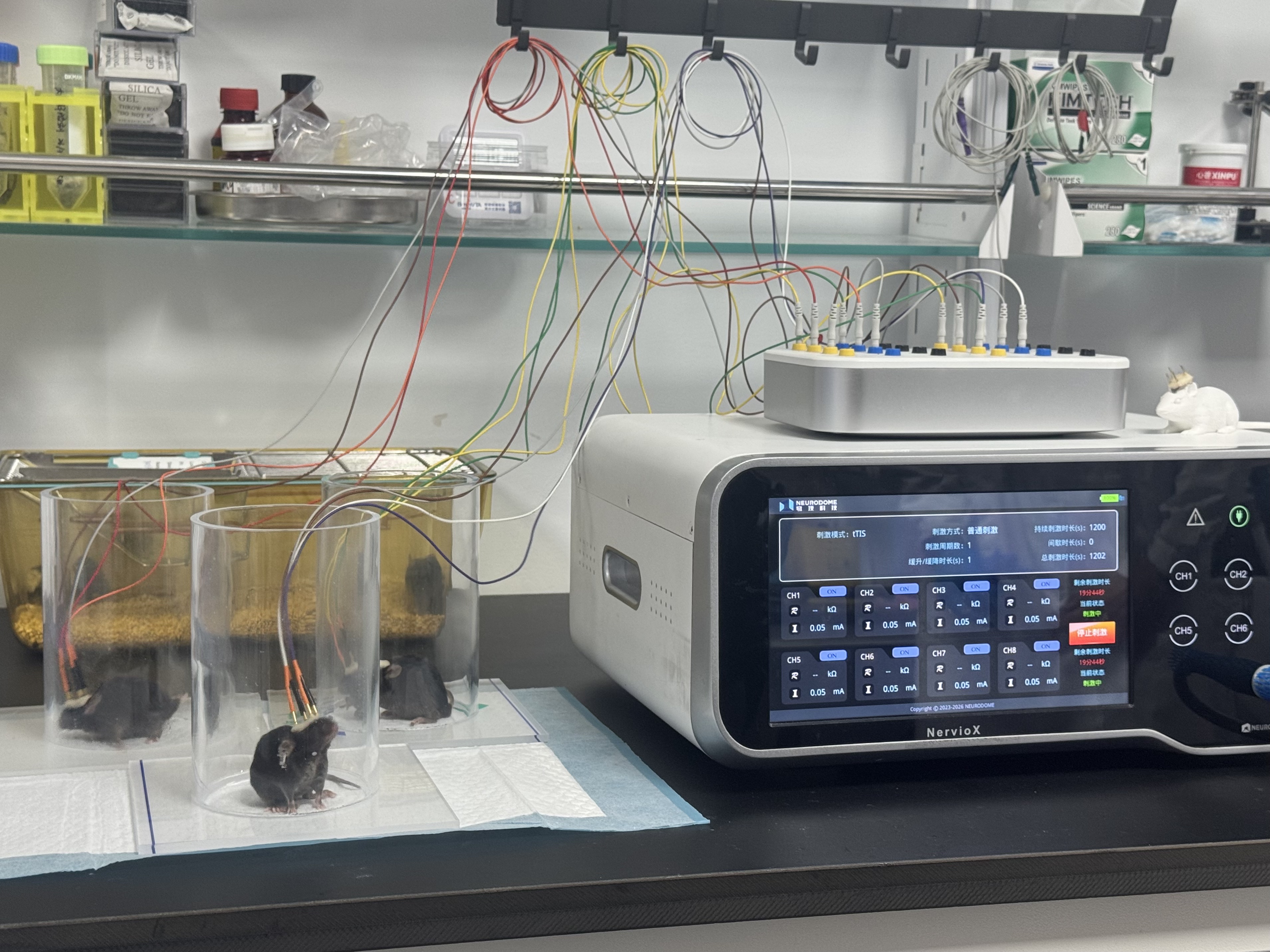
Researchers from the Songjiang Research Institute of Shanghai Jiao Tong University's School of Medicine have optimized a noninvasive brain stimulation technique for chronic pain.
Led by researcher Wang Jie, the team optimized transcranial temporal interference stimulation (tTIS) targeting the medial prefrontal cortex and examined how the technique helps relieve chronic pain. The research established precise stimulation parameters that could support a new noninvasive treatment for intractable chronic pain.
Brain nuclei play a key role in regulating emotions, sensations, and memories. Precisely targeting these deep brain areas can be extremely difficult. Traditional drug treatments may cause side effects, while surgical procedures are invasive. The tTIS technology studied by Wang's team offers a way to stimulate deep brain areas without surgery.
The technology employs two pairs of electrodes positioned on the scalp to send different high-frequency currents. When these currents converge deep within the brain, their interference creates a low-frequency envelope that stimulates the target region while avoiding activation of the surface cortex and minimizing impact on adjacent cortical areas.
In the experiment, the mice, initially limping from pain, were able to walk normally again after just 20 minutes of noninvasive stimulation. After seven consecutive days of treatment, the pain-relieving effect lasted for more than 72 hours.
Wang said the results suggested that the treatment may do more than provide temporary pain relief, potentially reshaping neural networks in the brain and producing longer-lasting effects.
The positive results from the animal study prompted further clinical research, during which the team collaborated with Professor Luo Yan's group at Ruijin Hospital to modify the treatment for human application.
Early clinical findings included reports from several patients with severe sciatica. One patient told a doctor that sitting for even half an hour before treatment was unbearable. After a month of treatment during the Spring Festival, the patient was able to sit and chat with family members for three hours without pain.
According to the team, preliminary data indicated that 40 to 50 percent of patients with chronic pain experienced noticeable pain relief after their first treatment. The team also reported improvements in patients with severe insomnia.
The team's animal study was published online in Biological Psychiatry on March 27. The technology could offer a new non-drug treatment for chronic pain, while the team is also investigating its potential benefits for conditions such as insomnia and depression. In addition, researchers are developing more portable devices that could eventually allow patients to receive treatment at home.
Source: Songjiang district government