Shanghai infrastructure investment exceeds targets in 2025
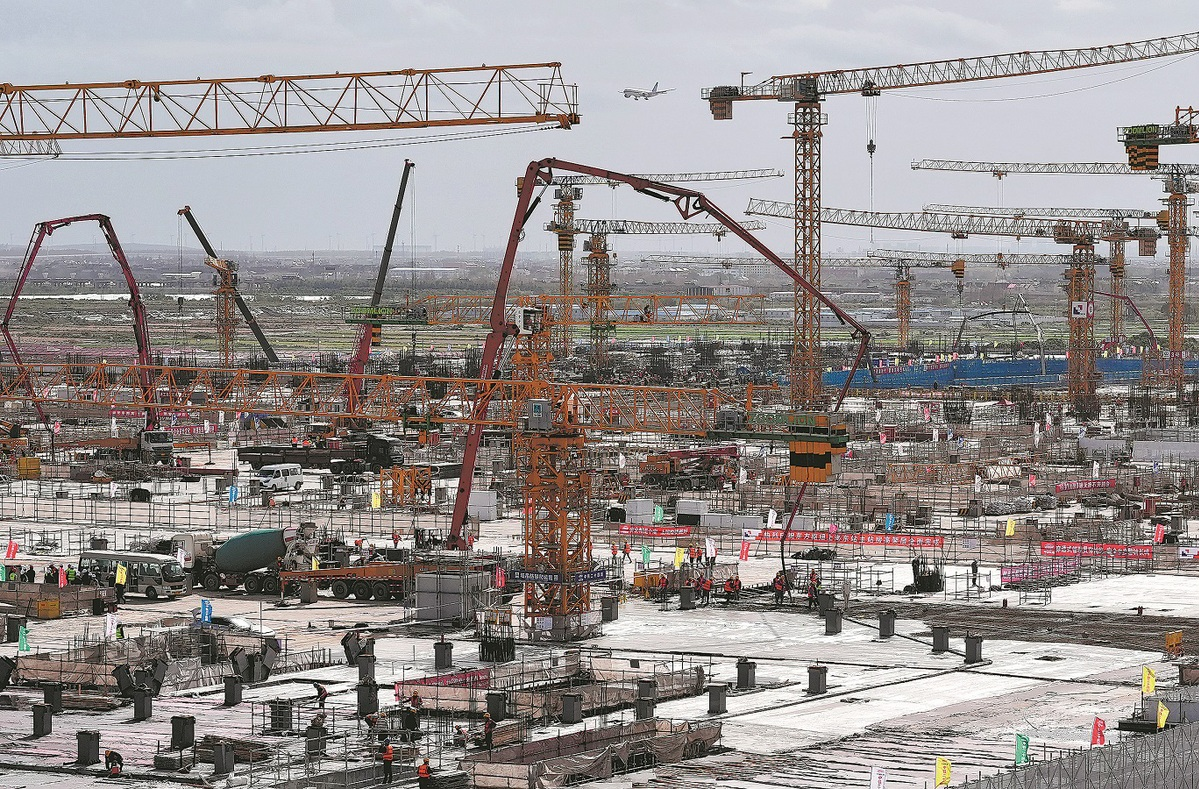
Shanghai's key construction projects exceeded annual targets in 2025, with total investment reaching 251.01 billion yuan ($35.94 billion), up 5.3 percent year-on-year and 4.6 percent above the annual plan, according to the Shanghai Municipal Commission of Housing and Urban-Rural Development.
It marked the fourth consecutive year that investment in key projects topped 200 billion yuan. During the year, construction began on 30 projects, 16 more than planned, while another 30 projects were completed, exceeding expectations by nine.
Several major projects aligned with national strategies made major progress. Construction started on the second phase of Luojing Port, while work advanced on the north area of Xiaoyangshan Island. The main structure of Shanghai East Railway Station neared completion, and the fourth phase of Shanghai Pudong International Airport moved forward steadily.
Projects aimed at improving the quality of life have also advanced. Legoland Shanghai Resort completed construction and opened to the public, while the Shanghai Grand Opera House approached completion.
In education, new facilities such as the Pudong campus of Shanghai Jiao Tong University School of Medicine opened, and expansion work began at Shanghai University's Jiading campus.
Large-scale infrastructure projects recorded a combined investment of more than 100 billion yuan, including Shanghai East Railway Station, the fourth phase of Shanghai Pudong International Airport, and the Wusong River project.
Efforts to optimize the city's urban layout continued, with the Jungong Road Expressway and the reconstruction of the eastern section of the Outer Ring Road being completed and opened to traffic.
Additionally, the western extension of Shanghai Metro Line 2 and the second phase of Line 18 became operational, improving public transportation.
In line with Shanghai's green initiatives, ecological and environmental projects set new standards. Five suburban wet waste resource utilization projects were completed and entered trial operations, boosting the city's waste processing capacity.
The Sanlin wedge-shaped green space urban forest project took shape, while offshore wind farms were connected to the grid, supporting the city's energy transition.
Source: Shanghai Observer