Outdoor seating sparks street scene in Shanghai
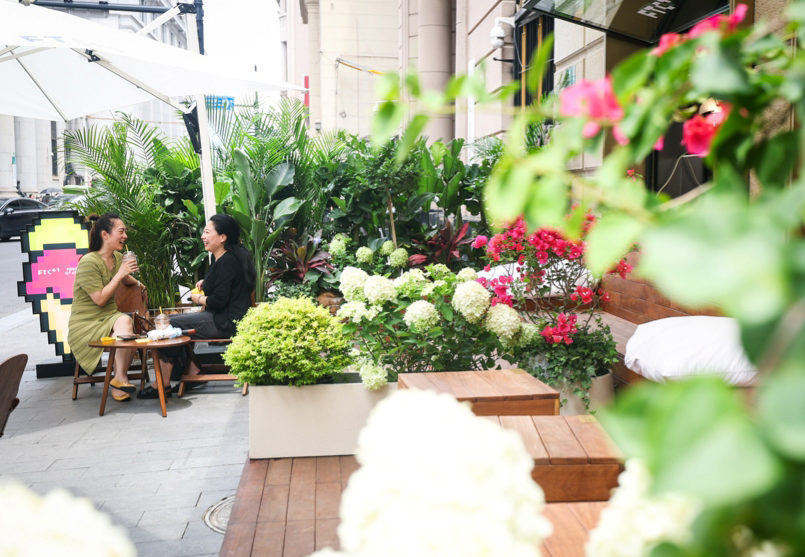
For those wandering through Shanghai's bustling Nanjing Road area, a casual glance may settle on the inviting outdoor seating of an eatery called Gaga. Amidst the urban hustle, a cluster of tables adorned with flowers and softly glowing heating lamps draws passersby to pause.
The scene is more than a charming addition to the streetscape. It offers a tangible example of Shanghai's evolving approach to balancing commerce, community, and civic order.
In a move to bolster its position as a global business hub, Shanghai’s Huangpu district is rolling out updated regulations governing outside seating for businesses.
The latest policy, an expansion of a pilot initiative launched two years ago, refines guidelines for location, type of business, and required amenities, representing a significant step in promoting a vibrant commercial environment.
"Our outdoor seating is more than just extra space; it's a magnet," said Tong Tianci, a manager at gaga's Raffles City branch. She noted that customers are drawn to the outdoor ambiance, particularly international tourists, who are keen to soak in the city's atmosphere.
The shop reports a stable customer base with average spending of about 120 yuan ($17). Tong added that the business would not be as successful without the addition of the outside seating.
The revised regulations introduce two notable expansions. For the first time, restaurants will be able to utilize not just the area within the building’s 'red line' but also areas shared among tenants, including rooftops. Moreover, individual business owners will now be able to apply directly for permits. This development directly aligns with Shanghai's broader efforts to enhance its standing as a global business center.
One particularly successful example of the expanded regulations can be seen at the cafe FTC+1 located in the FTC building on Jiujiang Road.
The FTC building, a hub for content creators, has found its ground-floor cafe’s outdoor area transformed into a popular social space, becoming an appealing backdrop for photoshoots. The space has become a place for residents and tourists to rest and chat, which has increased traffic to the cafe.
The updated rules also acknowledge the rise of nighttime consumption, removing fixed time constraints for outdoor operations and allowing businesses to flexibly extend their hours. As a result, some businesses in the area saw business hours extended to midnight.
At the same time, the application process has been streamlined, particularly for small, independent businesses. This allows smaller businesses, such as flower shops and cafes, to apply directly to local authorities.
Large chain operators are likewise able to submit unified plans covering multiple locations, simplifying procedures for brands such as Starbucks and McDonald's.
Greater flexibility, however, comes with clearer responsibilities. The aim, Xu said, is to "balance the rights of businesses, residents, and pedestrians, so that lively commerce and order can coexist."
The regulations prohibit sidewalk obstruction and excessive noise that could disturb nearby residents. In historic districts, outdoor seating must align with surrounding architectural styles, ensuring commercial activity complements the city's heritage.
A mechanism for ongoing evaluation has also been introduced. Authorities will assess the impact of outdoor seating on traffic flow, the environment, and residents’ quality of life, while soliciting feedback from nearby merchants and residents during the permit review.
Source: Shanghai Observer