Virtual Silk Road platform unveiled at Shanghai Jiao Tong University
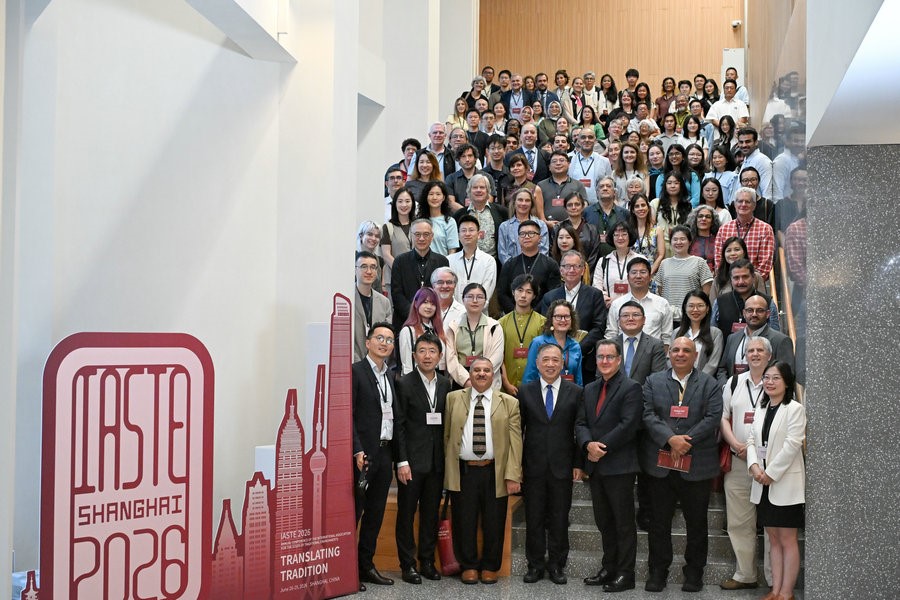
The 21st annual conference of the International Association for the Study of Traditional Environments concluded in Shanghai on June 29, marking the first time that the prestigious event was held on the Chinese mainland.
Hosted by the School of Design at Shanghai Jiao Tong University, the four-day conference brought together more than 250 experts and scholars from more than 30 countries and regions, setting a new attendance record for the nearly 40-year-old event renowned in the fields of architectural history, habitat heritage, and urban renewal.
During the conference, a lab specializing in spatial intelligence and virtual-reality design at the university launched the "Virtual Silk Road" — a digital heritage protection platform. The lab also introduced SITU, a cultural heritage AI agent.
The platform — developed in collaboration with leading domestic AI model enterprises — uses a 3D database covering more than 30 historical cities along the Silk Road, built over nearly a decade. It aims to digitally safeguard endangered cultural heritage threatened by war, climate change, and urban expansion, creating a timeless 3D digital memory library of the Silk Road.
The SITU AI agent — developed by faculty and students in collaboration with leading AI enterprises — enhances heritage modeling and historical restoration workflows. It is based on the advanced capabilities of existing 3D AI models and is tailored for heritage applications. The agent ensures the transparency and traceability of its processes within a rigorous academic framework.
During the conference, an immersive exhibition was held, allowing attendees to virtually "walk into" ancient cities along the Silk Road — such as Chang'an (today's Xi'an, capital of Shaanxi province) and Dunhuang — experiencing preserved memories of these civilizations firsthand.
Experts at the conference said that this project uses digital technologies to create a permanent digital record of the Silk Road civilizations, offering a Chinese approach to cultural heritage cooperation under the Belt and Road Initiative framework and establishing a novel digital bridge for global cultural exchange and mutual learning.


FAQs
- Do I need a physical marriage certificate when applying for a residence permit for private affairs?
- Do I need to declare my ADHD medication to customs during an airside transit at Shanghai Pudong Airport?
- Is Wusongkou International Cruise Terminal an eligible port under the 240-hr visa-free transit policy?
- What are the customs and quarantine requirements for pets entering or leaving China via Shanghai Pudong airport?