Shanghai unveils measures to boost vitality of commercial areas
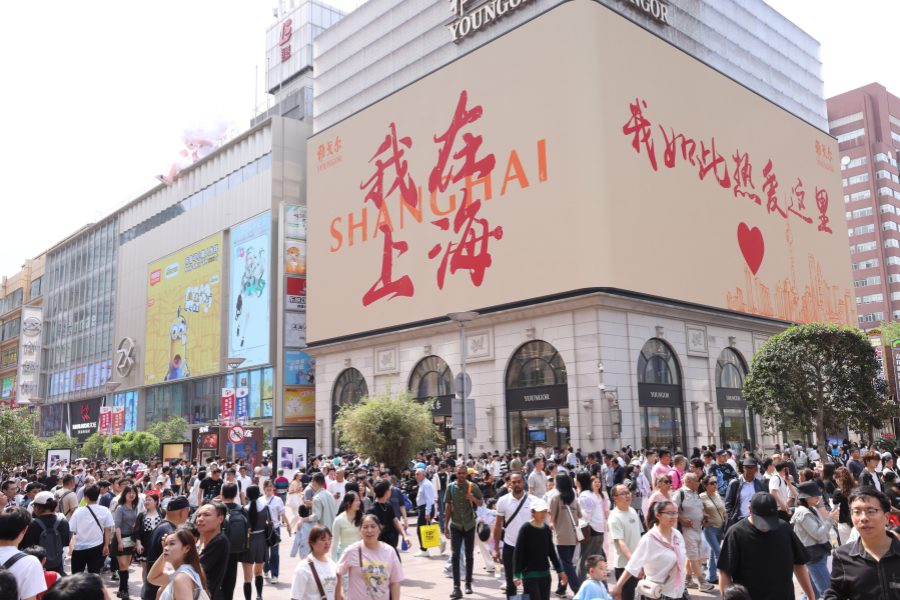
To further enhance the vibrancy of commercial areas across the city, the Shanghai Municipal Commission of Commerce, in collaboration with six other government departments, released the Several Measures on Enhancing the Vitality of Commercial Areas in Shanghai on May 30. Here are the key points:
1. Optimize community planning
The city will engage street designers, urban planners, and other stakeholders to collect proposals aimed at revitalizing street-level commerce.
Efforts will focus on redesigning public spaces, building facades, street interfaces, signage and lighting to promote inclusivity, diversity, and walkability in local commercial blocks.
2. Integrate "main street + side street" in key commercial zones
Eight major commercial zones — East Nanjing Road, Middle Huaihai Road, Yuyuan Garden, West Nanjing Road, Lujiazui, Xujiahui, the North Bund, and Hongqiao International Central Business District — will be upgraded through coordinated development of main and side streets. Underutilized spaces will be revitalized to provide more flexible commercial venues.
3. Create distinctive new commercial scenarios
In key areas such as distinctive Shanghai-style streets, creative industry parks, Jiangnan-style ancient towns, waterfront piers, and suburban villages, the city will encourage the adaptive reuse of old factories, pier warehouses, and green spaces to develop themed commercial areas.
4. Launch an annual list of unique small shops
Shanghai will compile annual lists of distinctive small stores at both district and municipal levels. Support will be given to the development of uniquely designed youth-oriented shops, youth markets, and other youth-friendly commercial formats.
5. Promote convenient neighborhood commerce
The city will continue piloting the "15-minute community life circles" initiative to enhance everyday convenience for residents. Measures include upgrading traditional wet markets into standardized smart markets, adding or improving breakfast outlets, and increasing the number of pickup points and lockers for online orders.
6. Strengthen market supervision with balanced approach
Shanghai will adopt a flexible yet prudent approach to managing street markets. The city will designate specific vending zones and locations, streamline application and management procedures, encourage the development of distinctive vendor sites, support the formation of self-regulated vendor associations, and implement a responsibility system to ensure urban sanitation and environmental standards.
7. Professionalize street-level operations
Districts will be encouraged to engage professional street operation entities to oversee business upgrades, brand promotion, marketing, environmental management, and maintenance. Shared platforms will be built to facilitate collaboration and resource sharing.
8. Launch policy support package
A new policy toolkit will include tax and utility fee reductions, entrepreneurial loan guarantees, and incentives for the development of low-rent, short-term "pop-up" shops. Districts will also be encouraged to establish incubation platforms to support local, start-up, and innovative brands.
Source: shanghai.gov.cn