International students explore modern countryside in Jinshan district
A group of students from Shanghai International Studies University, joined by peers from Egypt, Morocco, Vietnam, Russia, the Republic of Korea, Mongolia and Nigeria, set off on a special journey to discover how China's rural areas are evolving in the new era.
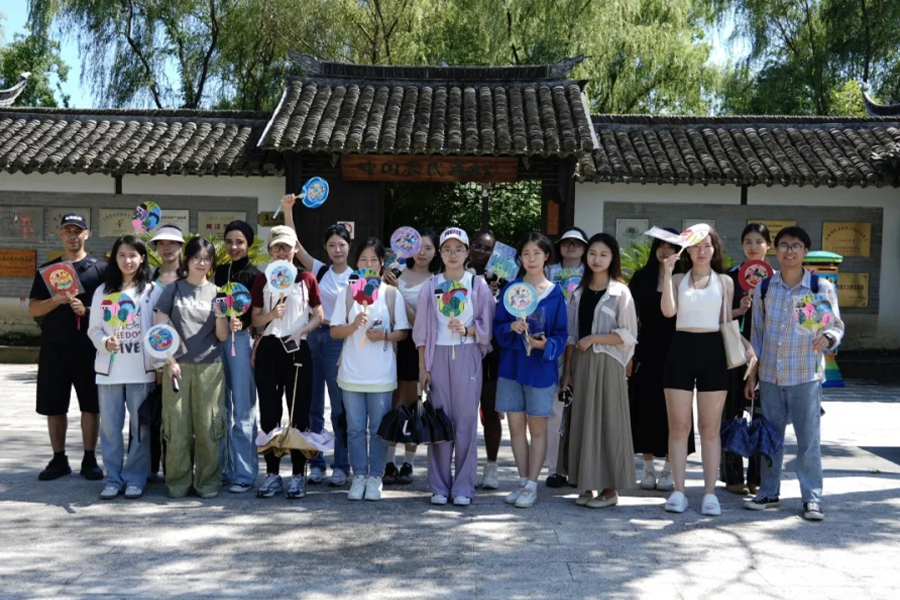
From July 2 to 4, the students visited Jinshan district to experience the progress the region has made in rural vitalization, industrial upgrades, and preserving its cultural heritage — all while gaining a deeper understanding of Chinese modernization through local stories.
Jinshan is the first district in Shanghai to be selected as a national pilot zone for youth-friendly city development, making it a fitting destination for a practice trip centered around growth, innovation, and cultural exchange.
At the Caojing Digital Nomad International Village, the students embarked on a boat tour through Caojing Country Park. Floating past lotus-filled ponds and into the heart of the village's scenic waterways, they saw firsthand how rural charm and modern innovation can coexist. The Nomad Land library, a former residential building now repurposed into a co-working space, left them with a strong impression.
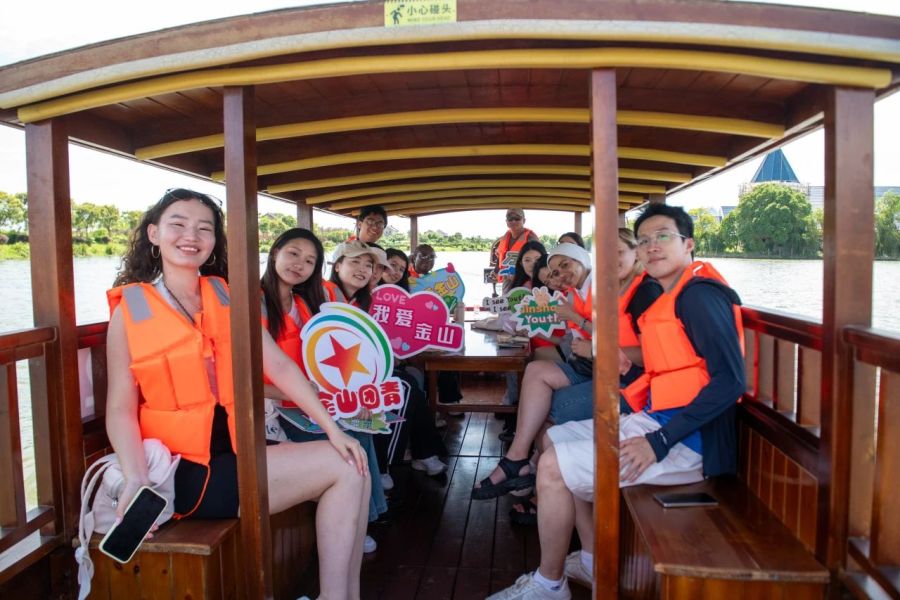
"I was stunned by how clean and beautiful it is here," said Byun Ji-weon from the Republic of Korea. "Modern facilities perfectly blend with charming rural scenery. It completely overturned what I imagined a Chinese village to be."
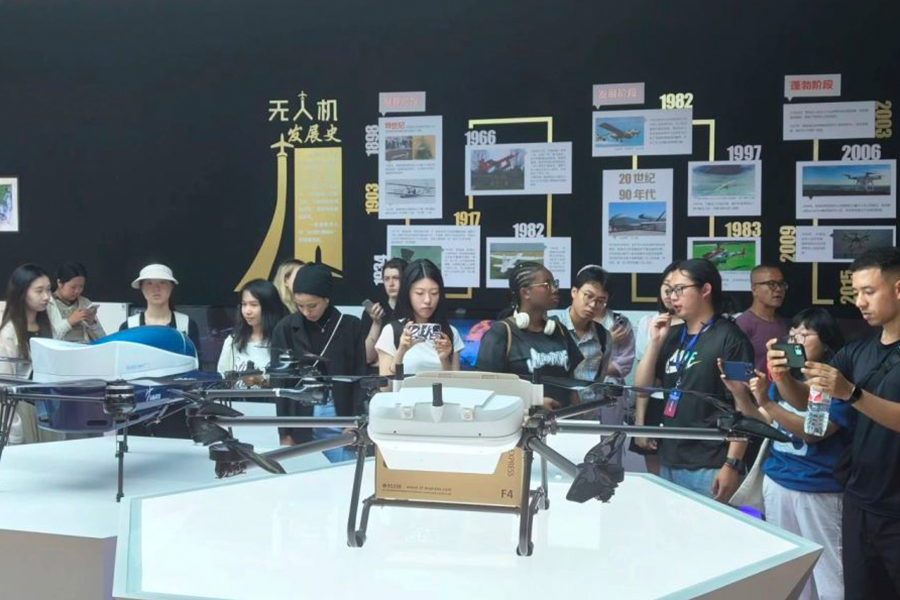
At the East China UAV Base, the students witnessed the latest in drone technology, getting an up-close at various models — from multi-rotors to fixed-wing aircraft. The experience shed light on Jinshan's thriving high-tech industries, particularly in areas such as low-altitude logistics, smart cities, and agricultural applications.
The group also explored the thousand-year-old Fengjing ancient town, where they strolled through stone lanes lined with historical buildings. While many homes retained their original look, students were intrigued to find them now housing trendy cafes and photo spots — evidence of new life being breathed into this traditional town.
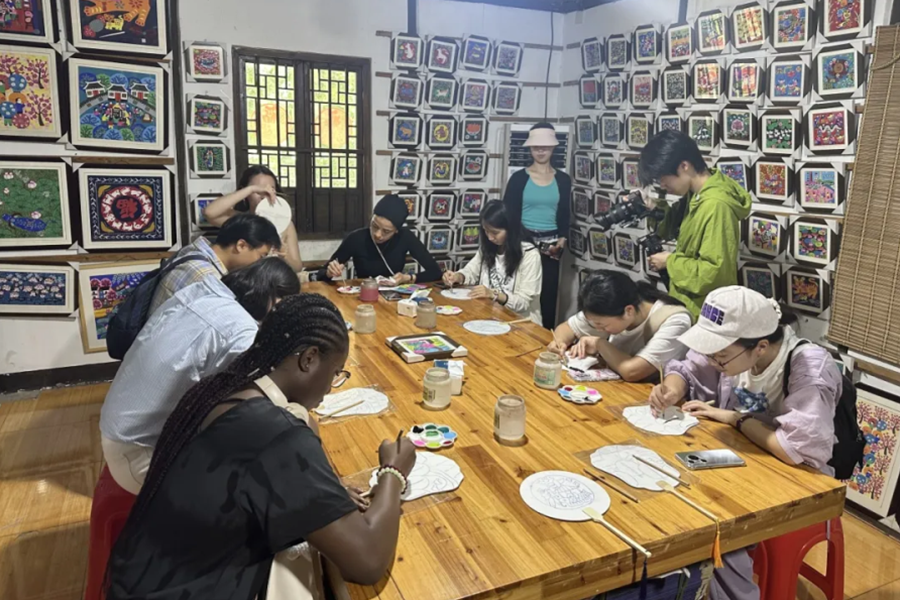
But this wasn't just a sightseeing trip. The students also rolled up their sleeves for hands-on cultural experiences. In China's Farmer Painting Village, they joined a local folk artist in coloring farmer paintings — an intangible cultural heritage items known for its vivid depictions of rural life.
Another highlight was a visit to the Chinese Herbal Museum, where students got a crash course in traditional Chinese medicine. They learned how various herbs grow and function, tried making moxa sticks, and even experienced a pulse diagnosis by a TCM practitioner.
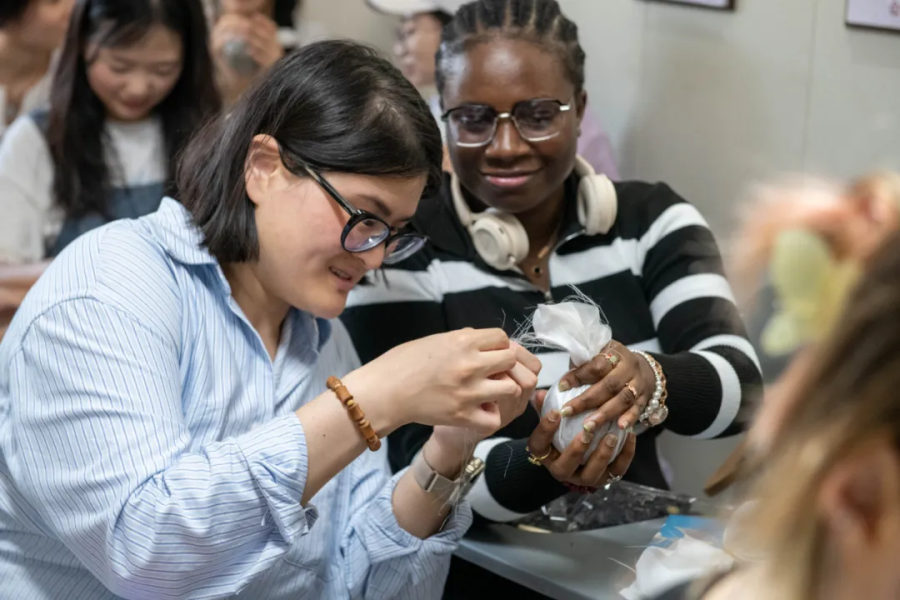
Tazarni Yassine from Morocco found this segment both fun and intriguing. "Making the herbal sachets and seeing how doctors read the pulse — it felt mysterious in the best way."
As the trip wrapped up, many students expressed their reluctance to say goodbye.
"It's my first time in a Chinese village, and I've been completely amazed," said Byun Ji-weon. "My only regret is that we just got comfortable and now we're leaving. I really wish we had more time here."
Source: Official WeChat account of SISU Office of International Student Affairs at "Study_in_SISU"