How to escape a residential building fire
When a high-rise fire breaks out, every second counts. This guide explains the steps that can improve your chances of survival.
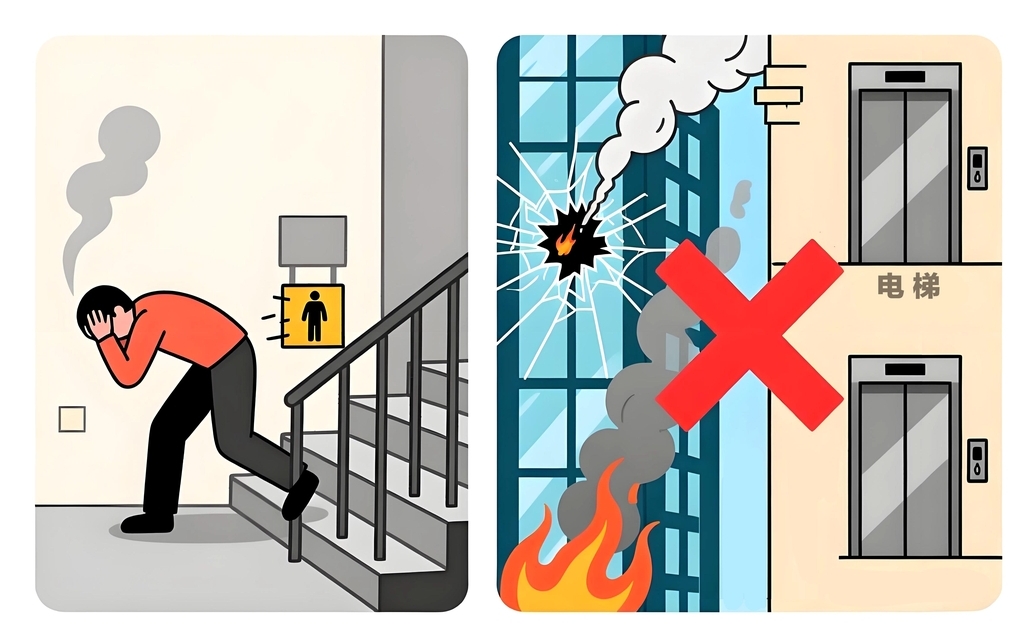
If a fire breaks out on an upper floor
Quickly move downstairs through the emergency stairwell. While evacuating, cover your nose and mouth with a wet towel or piece of clothing to reduce the risk of smoke inhalation.
If the fire is on your floor or below and smoke is seeping under your door
Do not open the door. First, check the door handle and look under the door. If the handle is hot or smoke is entering through the gaps, the corridor is filled with toxic smoke. Do not open the door blindly — even a few breaths of thick smoke can cause unconsciousness and suffocation.
Seal the gaps around the door with wet towels or clothing to slow the entry of smoke. Call 119 to report your location and wait for rescue. Meanwhile, pour water over the door continuously to cool it and delay the spread of the fire.
If the fire is on your floor or below, but the stairwell is clear of smoke
Evacuate immediately via the stairs. Always close fire doors behind you, and never return to retrieve personal belongings.

Six key "do nots" in a fire
- Do not panic. Stay calm, assess the fire's location and size, and plan your escape.
- Do not go back for belongings. If you can escape, leave immediately via the evacuation route.
- Do not take the elevator; always use the stairwell.
- Do not open a hot door: If the door handle is hot, keep it closed, seal the gaps, and cool it with water.
- Do not jump from heights. If trapped, signal for help from a window by waving a flashlight or a cloth.
- Do not be unprepared. Familiarize yourself with evacuation routes once moving in a building, participate in fire drills, and learn to use basic escape tools.

Final reminders
Know your building's emergency exits and fire safety equipment, and in heavy smoke, stay low where the air is clearer.
Source: Shanghai Municipal Bureau of Emergency Management