Shanghai's beverage grading system to reveal second round results in May
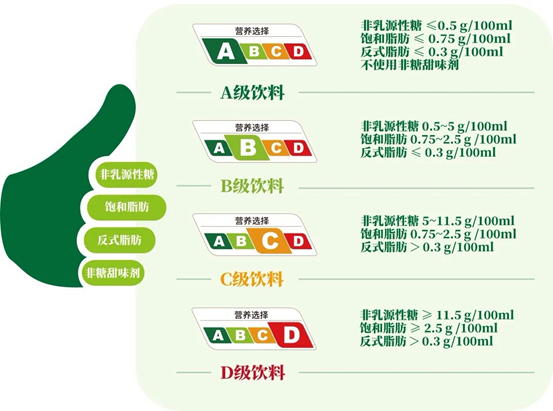
The grading of beverages is based on their content of non-dairy sugars, saturated fats, trans fats, and non-sugar sweeteners. [Photo/eastday.com]
Shanghai's pioneering beverage grading system, also known as nutrition grade labels, is poised to announce the results of its second round review in May.
The system, overseen by the Shanghai Municipal Center for Disease Control and Prevention, classifies beverages into four levels—A, B, C, and D—based on the presence and use of non-dairy sugars, saturated fats, trans fats, and non-sugar sweeteners. This provides consumers with clearer guidance and greater convenience.
Beverages without sugar substitutes and those with a non-dairy sugar content ranging from 0.5g to 5g per 100ml fall into the healthier A and B categories, signifying the highest health standards and competitiveness in the consumer market.
Industry insiders anticipate that Shanghai's grading policy, while in the trial phase, will lead to a sustained increase in A and B-level products, fostering ongoing innovation among companies and benefiting consumers.
The market for sugar-free beverages in China has experienced significant growth, surging from 2.26 billion yuan ($312.25 million) in 2015 to 199.6 billion yuan in 2022, with an estimated market size of 748.9 billion yuan by 2027. This expansion has attracted both traditional beverage companies and new players to focus on healthier products.
Established beverage companies such as PepsiCo and Coca-Cola are venturing into the sugar-free market, while emerging brands like Genki Forest have allocated over 70 percent of their portfolio to sugar-free offerings, including tea, carbonated drinks, and functional beverages.
An unnamed industry analyst observed that while some traditional beverage companies are transitioning to healthier options, challenges persist, including redefining product strategies and addressing research and development costs.
The grading labels are now visible on beverage sales pages, product packaging, and vending machines in Shanghai.
Source: eastday.com