Shanghai expands green urban areas, bolsters green finance
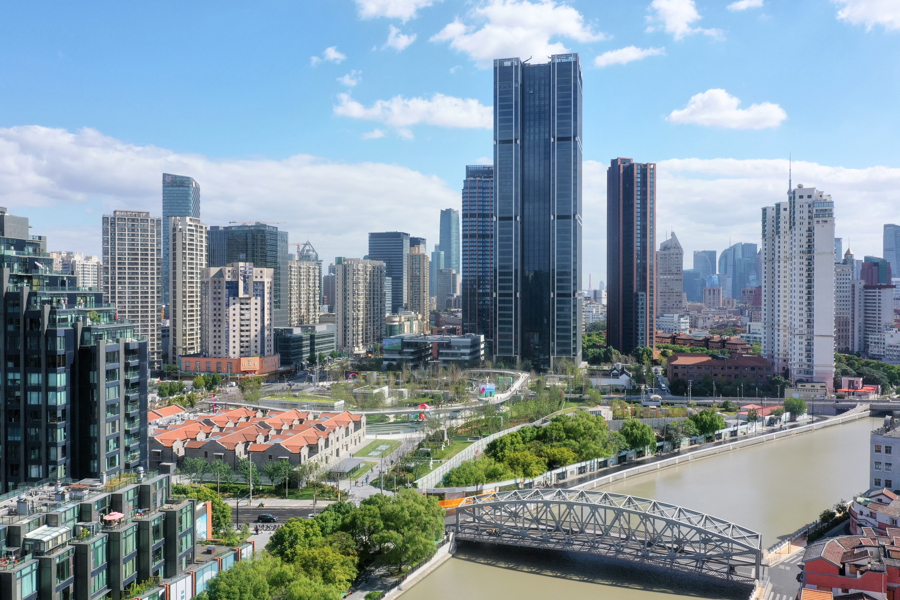
Shanghai is actively expanding its green and ecological urban areas, with the city establishing 37 such zones, encompassing 89.38 square kilometers, according to the Shanghai International Green Building Forum on June 24.
The city's "green footprint" increased in 2024 with the addition of 11 new green and eco-zones.
Newly-designated areas include Lin-gang Special Area's Dishui Lake Financial Bay and Jing’an district’s Suhe Bay area, alongside areas in Hongqiao Business District, Zhenru town in Putuo district, and the city's suburban Chongming Island.
The expansion of green districts requires significant financial backing, leading to the development of specialized financing mechanisms for green buildings and prefabricated structures.
Shanghai Rural Commercial Bank, for example, had a green credit balance exceeding 80 billion yuan ($11.16 billion) by the end of 2024, with over 40 percent invested in green buildings.
The Shanghai Green Building Council revealed that the green transition is stimulating the construction market and reinforcing the industry chain. Technology transactions in the sector reached 780 million yuan in 2024.
Tongji University, a key player in green building technology transfer, has incubated 153 companies, attracting over 6.8 billion yuan in social capital.
Green finance now supports diverse projects, including energy-saving renovations, rooftop solar panel installations, and centralized heating systems.
Financial institutions are developing new green financial products like distributed photovoltaic loans and sustainable development-linked loans.
By the end of the 15th Five-Year Plan (2026-2030) period, Shanghai aims to increase the proportion of three-star green buildings, monitor carbon emissions of public buildings across 150 million square meters, renovate 80 million square meters of existing buildings for energy efficiency, and fully implement 75 percent energy savings for new construction.
Source: Shanghai Observer