Shanghai-made robots become full-time factory workers
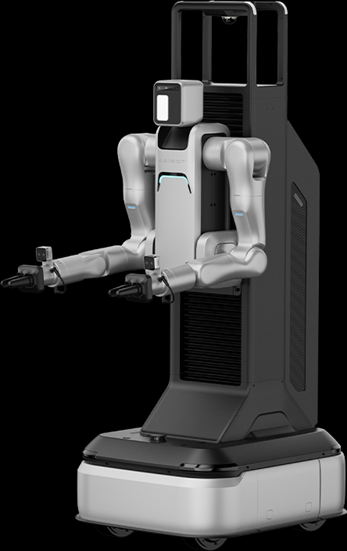
Shanghai-based robotics firm AgiBot announced on Aug 11 that nearly 100 of its A2-W robots will serve as "full-time employees" at an auto parts factory in the southwestern Chinese city of Mianyang, Sichuan province.
These dual-armed, wheeled robots were purchased by Fulin P.M., an auto parts supplier whose clients include Volkswagen, General Motors, BYD, NIO, and XPeng, in a deal worth tens of millions of yuan.
The agreement marks China's first large-scale commercial deployment of industrial embodied robots, highlighting their readiness for real-world manufacturing.
AgiBot described the deal as a milestone, marking the shift of industrial embodied intelligence from the technology verification stage to large-scale commercial deployment.
"Today may be a turning point for a trillion-yuan industry," said Wang Chuang, president of AgiBot's general-purpose business division, predicting major breakthroughs within five years.
The agreement followed a "job interview" in July. In a groundbreaking demonstration of embodied AI's industrial potential, the robots were livestreamed performing real factory tasks continuously for three hours.
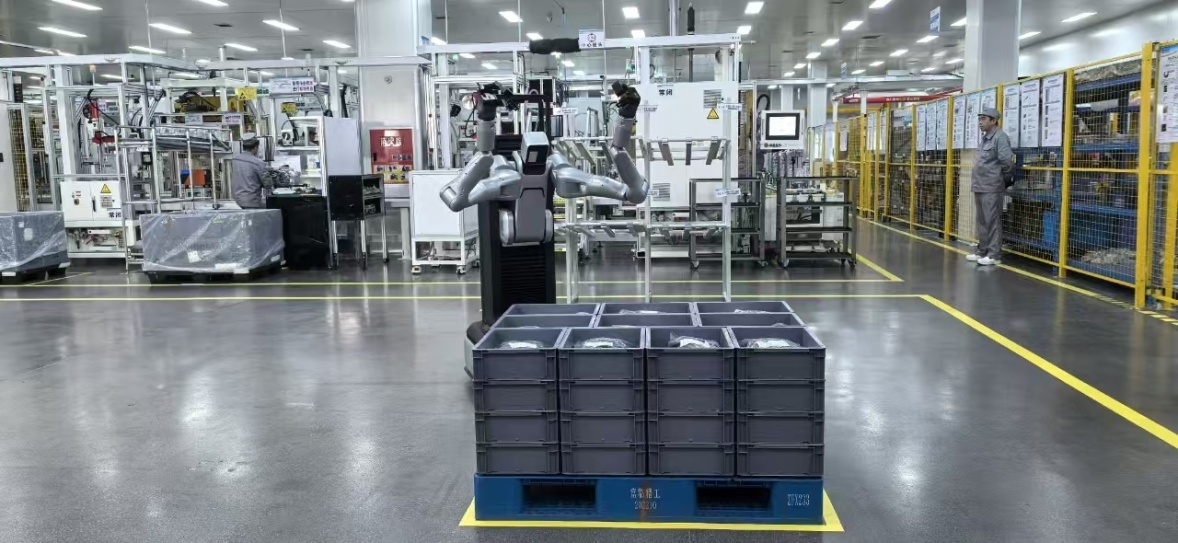
Deployed about a month before the broadcast, the A2-W robot team completed two full logistics shifts during the livestream, moving over 800 cargo boxes per shift between assembly stations with almost zero errors.
The flawless performance convinced Fulin to "hire" nearly 100 robots.
"That was the first live broadcast of routine industrial operations in the robotics industry, which verified the potential for general-purpose embodied robots to be applied in industrial settings," Wang said.
China's robotics sector is booming. According to the Ministry of Industry and Information Technology, the industry's revenue grew 27.8 percent in the first half of this year. China has remained the world's largest market for industrial robot applications for 12 consecutive years.
Deng Yang, engineering director at Fulin P.M., believes embodied intelligence will redefine manufacturing. He noted that these robots outperform traditional automation with superior obstacle avoidance, reliability, and error correction, showing great potential in handling repetitive and hazardous tasks.
Source: Jiefang Daily


FAQs
- Do I need a physical marriage certificate when applying for a residence permit for private affairs?
- Do I need to declare my ADHD medication to customs during an airside transit at Shanghai Pudong Airport?
- Is Wusongkou International Cruise Terminal an eligible port under the 240-hr visa-free transit policy?
- What are the customs and quarantine requirements for pets entering or leaving China via Shanghai Pudong airport?