A teahouse steeped with historic vibrancy
After two years of renovations, famed landmark reopens for people to relax, take a sip, and get a glimpse into the past and present, all in one structure
Huxinting Teahouse, in Shanghai's famed Yuyuan Garden complex, underwent nearly two years of restorations. The city's oldest teahouse reopened its doors to the public last month, breathing new life into the 240-year-old landmark.
Standing in the heart of Yuyuan Garden, the pavilion-style building, the most renowned teahouse in the city, has witnessed Shanghai's transformation from a small trading port into a global metropolis.
"From Huxinting Teahouse, visitors can glimpse at Shanghai's past in the old town area on one side and its present in Pudong's modern skyline on the other," says Rong Xinyu, the teahouse's director.
The structure's history dates back to the Ming Dynasty (1368-1644), when it was originally built as the Fuyi Pavilion by the garden's owner, Pan Yunduan (1526-1601), an official. In 1784, local merchants pooled their resources to rebuild the pavilion and renamed it Huxinting, or "mid-lake pavilion". In 1855, it was converted into Shanghai's first commercial teahouse.
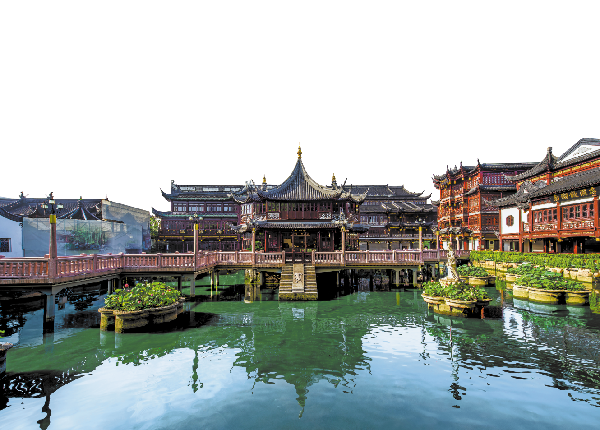
The building underwent several expansions and renovations, with a significant expansion in 1924 that added a rectangular waterside pavilion to shape its current layout. The second floor was enhanced with private rooms, and traditional Chinese music performances became a regular feature.
"Huxinting is one of only three teahouses in China that have operated in their original location for over 170 years," says Rong. "What makes it even more unique is that it is the only one situated in a city center that's also a nationally protected cultural heritage site.
"We've preserved two special tables — one where Chinese literary master Ba Jin (1904-2005) used to sit, and another where Britain's Queen Elizabeth II once enjoyed tea during her visit to China. These tangible historic connections allow visitors to 'touch' the past."
The latest restoration project, launched in October 2023, represents a collaboration between traditional craftsmanship and modern technology. Cao Yongkang, a professor at Shanghai Jiao Tong University, led a team in conducting extensive research of the building's historical structural features before developing a comprehensive restoration plan.
"Historical buildings like Huxinting are living fossils of the city's cultural context," Cao notes. "Scientific restoration and thoughtful utilization not only preserve their vitality but also contribute to Shanghai's cultural landscape through architecture."
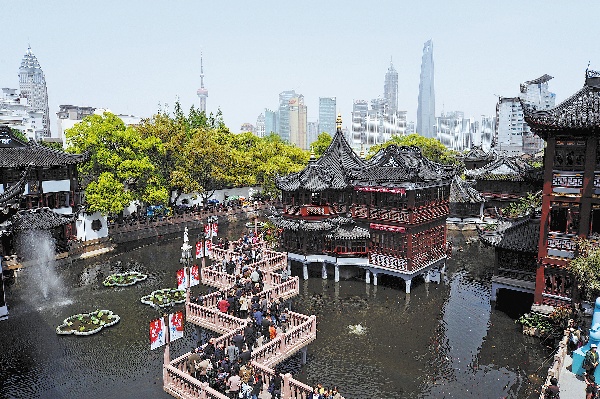
Following the principle of "repairing the old as old", the team addressed multiple challenges, including the settlement of the century-old wooden framework that had caused the building to tilt. Using lever arms and steel cables, they realigned the displaced wooden components in a process likened to "giving acupuncture to a 240-year-old patient".
"This restoration went beyond mere repairs," explains Rong. "We selected materials for longevity, using the same natural lacquer used at the Forbidden City and replicating its golden bricks for the ground floor."
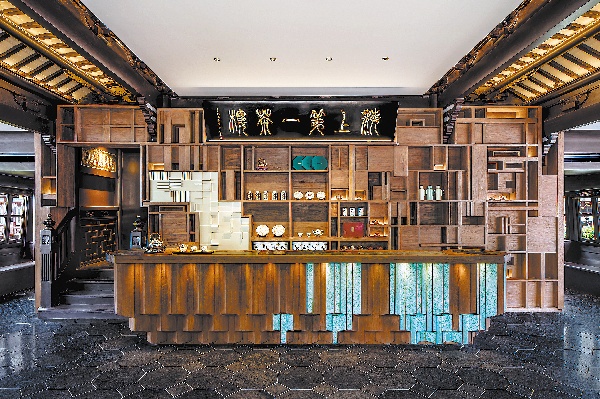
The interior design, led by designer Liang Jianguo, who is known for his work on Palace Museum cultural projects, blends traditional elements with modern functionality.
The ground floor features a tea hall, a casual seating area and a bar, decorated with crackle-glazed lighting that echoes the teahouse's relationship with the surrounding lake. Historical artifacts and tablets are displayed to showcase the building's heritage.
The second floor offers more intimate spaces, including areas for pingtan performances — a form of storytelling and ballad singing — traditional tea ceremonies, and teaware exhibitions.
While preserving its historical significance, Huxinting adapts to contemporary preferences through co-branding initiatives and flexible ordering options.
"Young people prefer single servings over traditional pot service, and they want choices for mixing and matching teas and snacks," Rong explains. "We're adapting while maintaining our core identity."
The teahouse has also attracted foreign visitors. "They will walk here to sit down and drink tea," Rong says. Nearly 40 percent of the teahouse's daily visitors are international tourists. Huxinting's menus come in multiple languages, with an introduction to Chinese tea culture.
"This teahouse is wonderful, with its beautiful, peaceful atmosphere and immersive music. I didn't know its history before, but I'm fascinated by it," says Valeriia Vinokurova, a visitor from Russia.
Most international visitors start with familiar jasmine or black tea, but here, they can experience premium quality, says Rong, noting that many want to try famous teas like Longjing for a taste of authentic Chinese flavors.
Despite its commercial pursuits, Huxinting remains a community gathering space. Every Monday, the teahouse offers a special promotion reminiscent of its 1990s pricing — a pot of tea and a vegetarian bun for just 10 yuan ($1.39), allowing the elderly to revisit memories of the historic venue.
"A 90-year-old patron insisted on reserving a window table on our second day of reopening, where he cherished a dear memory from the past," Rong shares. "Earlier, a college student spent two hours here, explaining it was his custom to visit after important exams — his fourth visit already.
"Huxinting is not just a business, it's a guardian of Shanghai's urban memories and cultural heritage," reflects Rong, who, at 45, feels humbled by the teahouse's long history. "We want to make it accessible to everyone, from tourists to residents, from elderly tea connoisseurs to young people discovering Chinese tea culture for the first time."
Looking ahead, the teahouse plans to expand its evening activities and community engagement. "We're considering increasing evening discussion events and a program for enthusiasts to experience being a store manager for a day," Rong reveals. "Huxinting belongs to everyone, and we're committed to its continued vibrancy."


FAQs
- Do I need a physical marriage certificate when applying for a residence permit for private affairs?
- Do I need to declare my ADHD medication to customs during an airside transit at Shanghai Pudong Airport?
- Is Wusongkou International Cruise Terminal an eligible port under the 240-hr visa-free transit policy?
- What are the customs and quarantine requirements for pets entering or leaving China via Shanghai Pudong airport?