Dragon Boat festivities welcome intl arrivals at Shanghai airports
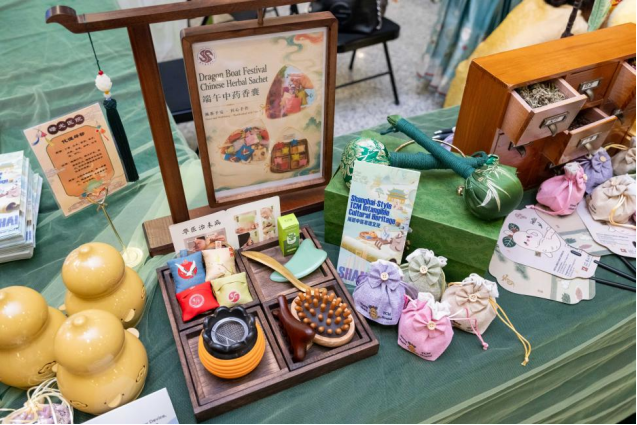
International Services Shanghai is welcoming international arrivals with Dragon Boat Festival activities at its three one-stop service stations at Pudong and Hongqiao airports.
Running through June 21, the program features traditional customs and interactive sessions on traditional Chinese medicine, offering travelers a warm introduction to Chinese culture from the moment they arrive.
The three service stations, run by International Services Shanghai, have been transformed with vibrant decorations, including dragon boat motifs and fragrant herbal sachets, creating a festive atmosphere in the arrival halls. At the main activity area in Terminal 2 of Pudong airport, passengers are invited to practice baduanjin, a traditional Chinese fitness routine. Instructors are on hand to guide travelers through the gentle stretching movements, offering a unique way to rejuvenate after a long-haul flight.

Among those taking part was Kai Hofmaenner from Switzerland.
"It's really relaxing, especially after a flight," he said of the exercise. His arrival also marked a significant milestone. On June 18, Hofmaenner became the millionth visitor served by the three airport service stations since they opened, and he was presented with a special Dragon Boat Festival gift package to commemorate the occasion.
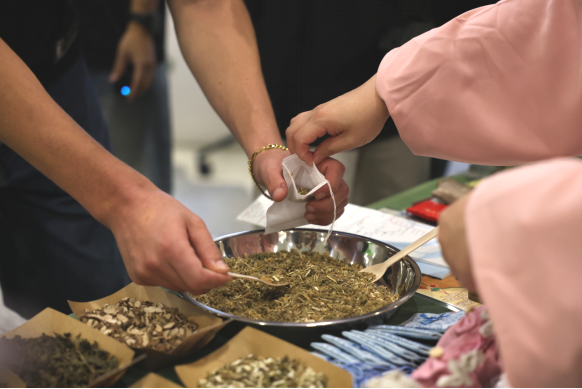
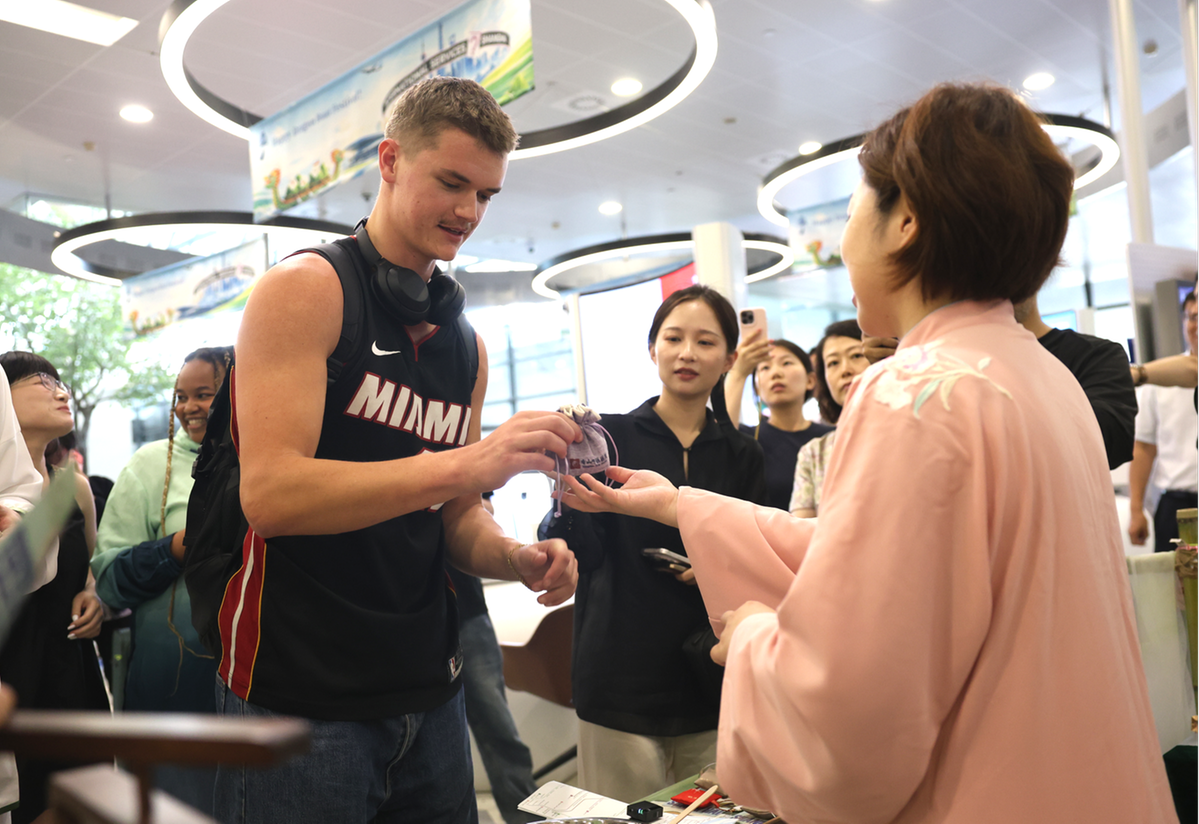
Beyond the physical exercise, the activities provide a sensory introduction to Chinese herbal culture. Staff members are explaining the properties of various Chinese herbs and assisting travelers in selecting ingredients to create their own personalized sachets.
For Nasser Almansouri from the United Arab Emirates, the fragrance stood out. He said he had made a sachet for his wife using a scent he particularly enjoys. Brandon Dodds from New Zealand opted for a mosquito-repellent sachet, describing its ginger-like scent as "distinctive".
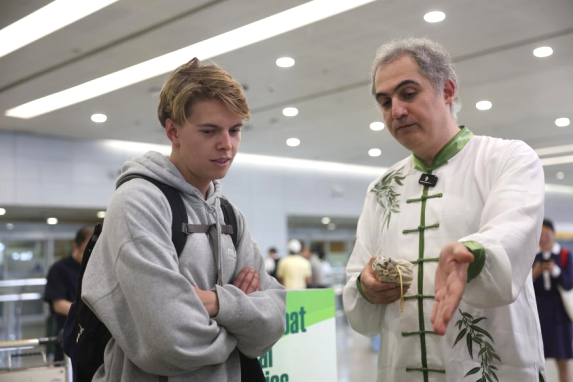
Adding an expert touch to the proceedings is Meghdad Abdi, an Iranian staff member from Yueyang Hospital of Integrated Traditional Chinese and Western Medicine. Abdi, who came to China in 2016 to study traditional Chinese medicine at Shanghai University of Traditional Chinese Medicine, now works in the hospital's international medical department. He explained to travelers how herbal products can fit into daily life.
He said activities such as making herbal sachets and bracelets offer an accessible way for people to learn about non-medicinal herbal products used in daily life.
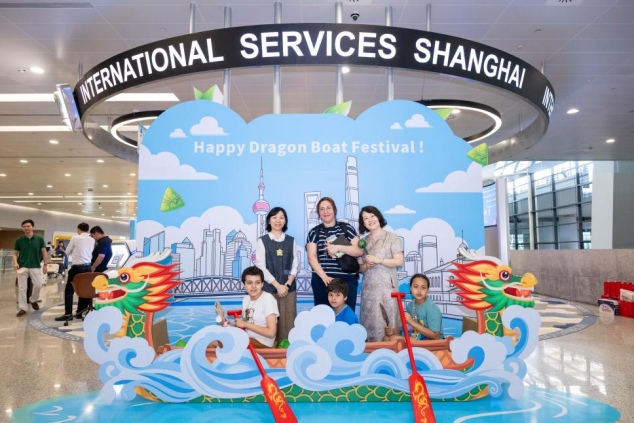
The airport welcome is part of a broader initiative by International Services Shanghai to enhance the visitor experience. Since launching its first one-stop service station in June 2024, International Services Shanghai has expanded its network to four locations. In addition to the three airport service stations, a fourth operates at Jing'an Global Connect in downtown Jing'an district, where short classes on Dragon Boat Festival culture and guides to wellness services have recently been introduced.
All stations provide multilingual services, assisting international travelers with payments, transportation, tourism, and communications.
Hofmaenner also shared his plans for his stay in Shanghai. He said he is looking forward to visiting Shanghai Wild Animal Park to interact with red pandas, and he hopes to try local culinary delights such as braised pork belly and experience a traditional-style banquet with cultural performances.


FAQs
- Do I need a physical marriage certificate when applying for a residence permit for private affairs?
- Do I need to declare my ADHD medication to customs during an airside transit at Shanghai Pudong Airport?
- Is Wusongkou International Cruise Terminal an eligible port under the 240-hr visa-free transit policy?
- What are the customs and quarantine requirements for pets entering or leaving China via Shanghai Pudong airport?