Expats warm to summer TCM therapies in Shanghai
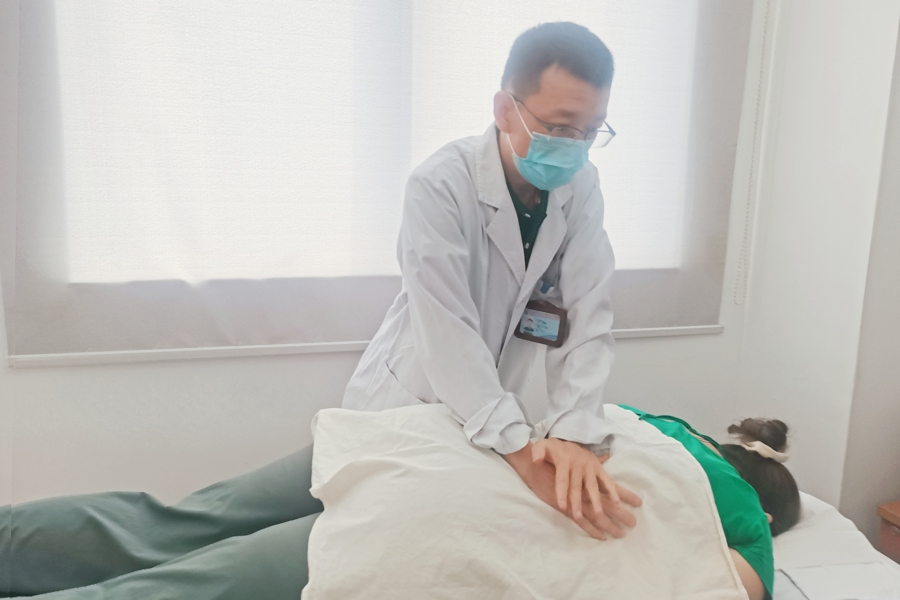
Shanghai's traditional Chinese medicine clinics, which offer dongbing xiazhi (treating winter ailments in summer) therapy, have become increasingly popular among international residents this summer.
The traditional practice draws on the body's heightened yangqi — a concept referring to vital warmth and energy in TCM — during the sanfu days (dog days) to help balance cold-damp body constitutions and alleviate chronic conditions.
Among those seeking care at Longhua Hospital was Susan from the United Kingdom, who suffered from chronic lower back pain and cold legs. Her symptoms were worsened by the city's humid climate and prolonged sitting.
Following friends' recommendations, Susan visited Longhua Hospital, where the tuina massage team created a personalized treatment plan for her.
The treatment plan comprised professional massage to relieve tense muscles and unblock meridian obstructions, herbal fumigation to target underlying cold-dampness, moxibustion to stimulate and boost yangqi, and acupoint patches to enhance overall health.
After completing a standardized course of treatment, Susan experienced significant improvement in her back and leg discomfort, and recurrences during damp, rainy weather became rare.
At Shuguang Hospital, Kevin, an exchange student from the United States, received fire dragon moxibustion, a TCM therapy that applies heated moxa along the spine to address yang deficiency, characterized by an aversion to cold.
Kevin, who previously believed only fitness could prevent colds, sought out the orthopedic department this year.
An experienced physician applied an ointment that activates blood flow and removes stasis along his governing vessel meridian. He then covered the area with a thick ginger paste, followed by the placement and ignition of mugwort floss. This treatment generated a deep, circulating warmth across his back, which Kevin called a "little sun", with warmth reaching the bones and spreading throughout his body.
Similarly, Peter from Italy visited Shanghai Yueyang Hospital's dermatology department for his severe atopic dermatitis, a persistent condition that had left his skin roughened.
Hong Seok-gyeong, a South Korean doctor specializing in TCM at the hospital, recommended sanfutie (acupoint patches) alongside oral medication to relieve the skin itching. After a period of treatment, Peter's symptoms improved significantly, and he enthusiastically reported feeling great.
Hong affirmed that using patches that are blood-activating and yang-tonifying, blood-nourishing and dampness-eliminating, and qi-boosting and exterior-strengthening during sanfu days is a straightforward approach that aligns with natural health principles.
Source: Shanghai Observer


FAQs
- Do I need a physical marriage certificate when applying for a residence permit for private affairs?
- Do I need to declare my ADHD medication to customs during an airside transit at Shanghai Pudong Airport?
- Is Wusongkou International Cruise Terminal an eligible port under the 240-hr visa-free transit policy?
- What are the customs and quarantine requirements for pets entering or leaving China via Shanghai Pudong airport?