Shanghai emerges as global hub for coffee industry
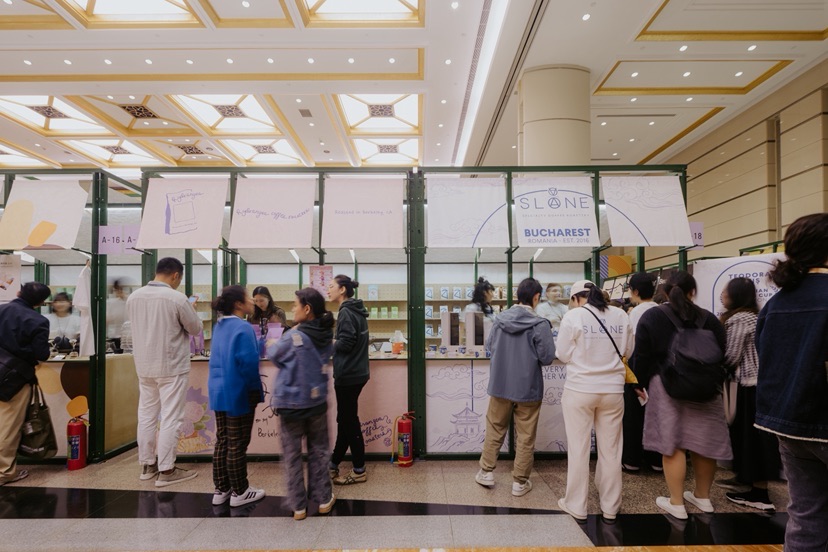
Capitalizing on shorter shipping times between Peru and China following the opening of the Chancay Port in 2025, Peruvian coffee trader Carlos Fernando Raffo Arce established Bilu Coffee (Shanghai) Co Ltd in Shanghai.
The enterprise became the second international investment project attracted to the city through the Lujiazui Coffee Festival since the event's inception a decade ago, following an Australian coffee brand's entry last year.
More than 1,700 Chinese and international coffee institutions have participated in the festival over the past 10 years.
Seeking product innovation
Shanghai has become an incubator for novel retail concepts, giving rise to popular products such as Baijiu-infused ice creams, raw coconut lattes, and ultra-low-temperature brews that have been adopted by cafes nationwide.
Chen Bai, producer of the Lujiazui Coffee Festival, recalled traveling across China for the inaugural event but attracted only 24 independent coffee brands and a modest audience of a few thousand.
Over the years, the festival evolved from a small event into a leading indicator of coffee industry trends, attracting independent roasters and drawing interest from major retail chains looking for the next big hit.
"In the early years, exhibitors primarily aimed to generate direct sales, but within a few years, participants began creating independent brands to showcase lifestyle aesthetics, secure supply chain resources, and building stronger connections with consumers," said Liang Ziwen, co-founder of Cafe Niuniu.
In 2025, 48 independent coffee shops from more than 20 countries showcased world-class coffee beans and top coffee-brewing techniques.
This year's Lujiazui Coffee Festival is expected to draw over 60 international coffee shops.
Accelerating industry integration
Growing consumer sophistication helped drive the clustering of coffee-related businesses, including bean trading, roasting, equipment manufacturing, packaging, and design services around industrial zones in Baoshan, Jiading, and Jinshan districts.
Manufacturing plants in the city's outlying districts offered mature supply chains, specialized talent pools, and strong international market recognition, helping offset Shanghai's relatively high land and labor costs.
Timemore, a coffee equipment maker founded in Fengxian district, has since leased a 1,900-square-meter office in the Qiantan area and sold more than 2 million digital scales globally.
"Talent specializing in industrial aesthetics, brand strategy, and international design remains concentrated in Shanghai," said Yu Yue, design director and co-founder of Timemore. The company has achieved strong global competitiveness, with precision electric grinders priced at 4,000 yuan ($593.5) in China selling for over 6,000 yuan overseas.
Cafe Niuniu developed a commercial grinder priced at 5,000 yuan that matched the performance of imported models costing between 10,000 yuan and 20,000 yuan. Its cost-effectiveness helped the company secure bulk orders from a major domestic tea brand and obtain compliance certifications in Europe, North America, Oceania, and Southeast Asia.
Homegrown coffee equipment makers showcased their technical prowess at overseas exhibitions in London and Paris, where an automatic milk frother made by Linkbar achieved strong sales, and Caye Technology (Suzhou) Co Ltd, an automatic coffee equipment manufacturer, secured 10 million yuan in orders.
Welcoming global brands
This year, the Pudong New Area government formally incorporated the Lujiazui Coffee Festival into its government work report to strengthen the development of the coffee industry.
The Lujiazui Coffee Cultural Industry Center was established in a five-story office building in the Lujiazui area, serving as a hub that manages entry procedures for international baristas and handles customs clearance for 80 to 100 kilograms of raw beans per international vendor.
Festival organizers launched an innovative commercial pop-up venue called Coffee Cube in Lujiazui Center Park, enabling overseas brands to operate month-long pilot run for market testing, rather than relying on the few days of exposure available during the festival.
The initial testing space has assisted more than 20 international labels with extended trial runs since October 2023, helping them achieve some of the highest sales among independent coffee outlets in the city.
Organizers have secured a new location in Jinmao Tower to align with urban renewal initiatives that integrate industrial services directly into commercial landmarks.
International coffee merchants are now following a structured pathway from short-term festival participation in the festival to month-long market testing at pop-up locations, and ultimately to company registration and permanent store openings with support from the Center.
Source: Shanghai Observer