Shanghai community center integrates services for expats
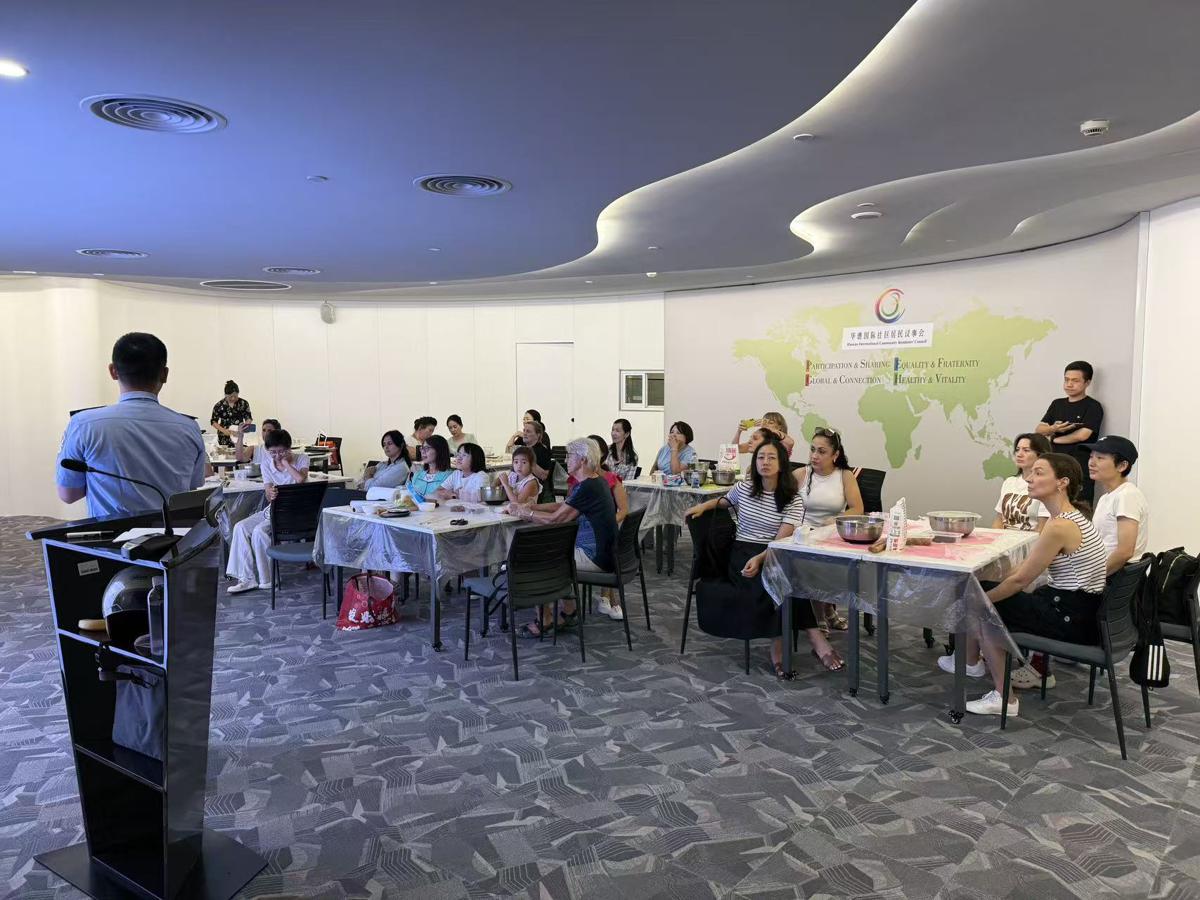
A community center in Shanghai's Minhang district is pioneering an integrated approach to supporting foreign residents by bringing immigration services, dispute resolution, and cultural activities together under one roof.
The Huacao International Community Center has assisted around 10,000 foreign nationals living near international schools and residential communities over the last three years.
Operating within a 1,100-square-meter space, the local exit-entry administration has established a mechanism that integrates immigration management with community governance, focusing on precise policy delivery and multilateral participation in social management.
This year, the center has mediated 12 disputes involving foreign nationals.
"Different cultural backgrounds mean residents often have varying understandings of public space usage rules, which can easily escalate into neighborhood conflicts if not handled properly," said Liu Sheng, a local official.
The center established a coordination mechanism linking police stations, judicial offices, and law firms to create a comprehensive system for conflict investigation, joint mediation, and follow-up visits. The mechanism provides specialized support, including language interpretation and legal guidance.
Yu Biwen, a police officer from Minhang's exit-entry administration, said officers collect residents' concerns through the platform and coordinate with various departments to resolve issues.
"Our main purpose is to bridge the last mile of community service and help them integrate faster," Yu said.
Kym Shirley, an Australian who has lived in Shanghai for more than two years, recently attended her first police service session at the center. "It was fantastic. I learned about traffic regulations for scooters and helmet requirements," Shirley said.
Gerusa Aloi from Brazil, who arrived in February, said the center helped her family adapt to their new environment. "The main thing they helped me with was learning how to communicate and find useful resources in the neighborhood," Aloi said. Her family has participated in summer activities, including cooking classes, tea ceremonies, and handicraft workshops.
Canadian resident Degan Jeffery, who has lived in Shanghai for 17 years, recently attended a Chinese-language lesson on reporting incidents to the police. "I just learned the 122 number for traffic accidents instead of dialing 110," he said.
Shanghai police have established similar platforms at locations with high concentrations of expatriates. The city has built two municipal-level international talent service centers in Zhangjiang Science City and Shanghai Hongqiao International Central Business District, and four district-level branches in Huangpu, Jing'an, Qingpu, and Yangpu.
The Hongqiao platform offers services from six police departments, nine types of government affairs, including professional title evaluation and enterprise registration, and numerous social services, such as legal consultation and document translation.
Source: China Daily