Sci-tech breakthroughs unveiled at Pujiang Innovation Forum
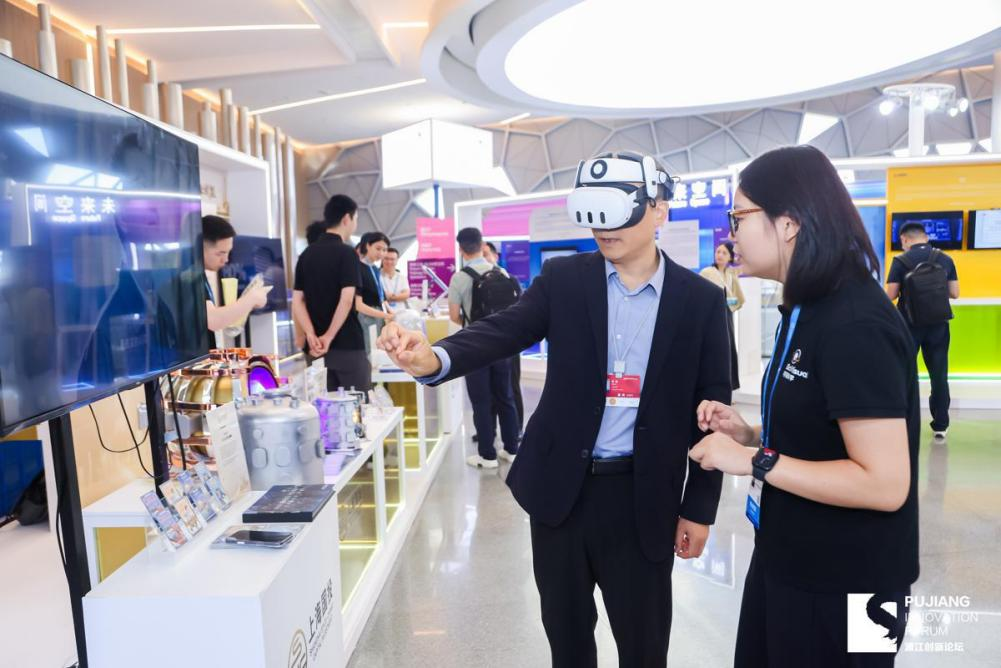
A wide range of cutting-edge scientific and technological achievements were unveiled at the 19th Pujiang Innovation Forum in Shanghai, showcasing China's innovation across diverse sectors including brain-computer interfaces, next-generation computing, fusion energy, chip manufacturing processes, life sciences, and healthcare.
In brain-computer interfaces, the Lingang Laboratory released seven original achievements, including breakthroughs in data processing, algorithms, and applications. Together, they are expected to promote the deep integration of brain-computer interfaces and artificial intelligence, drive the development of a new ecosystem for brain-computer data, and enhance the competitiveness of China's brain-computer industry.
SynSense showcased its Rigi series, one of the world's first neuromorphic sensing-computing integrated neural signal acquisition chips, which is designed for advanced medical and frontier neuroscience research. Built on a neuromorphic, event-driven architecture that mimics the asynchronous firing behavior of neurons, it provides a low-power, high-reliability, scalable neuromorphic hardware foundation for invasive brain-computer interface devices.
In the new-generation computing sector, Shanghai Oriental TianSuan Technology Co Ltd launched a project to build a "gigawatt (GW)-class space-based computing infrastructure". It aims to extend intelligent computing capabilities from the ground into space and gradually form a space-based intelligent service network, which can provide a robust computing foundation for the future development of the digital economy and AI.
In fusion energy, Startorus Fusion introduced the compact-tokamak-based repetitive reconnection-heated fusion reactor-1 (CTRFR-1) device. Featuring a domestically developed and globally unique technological approach, the device is conducting technical validation for more compact and cost-effective fusion reactors.
Source: China Daily


FAQs
- Do I need a physical marriage certificate when applying for a residence permit for private affairs?
- Do I need to declare my ADHD medication to customs during an airside transit at Shanghai Pudong Airport?
- Is Wusongkou International Cruise Terminal an eligible port under the 240-hr visa-free transit policy?
- What are the customs and quarantine requirements for pets entering or leaving China via Shanghai Pudong airport?