Shanghai advances digital transformation in shipping and trade
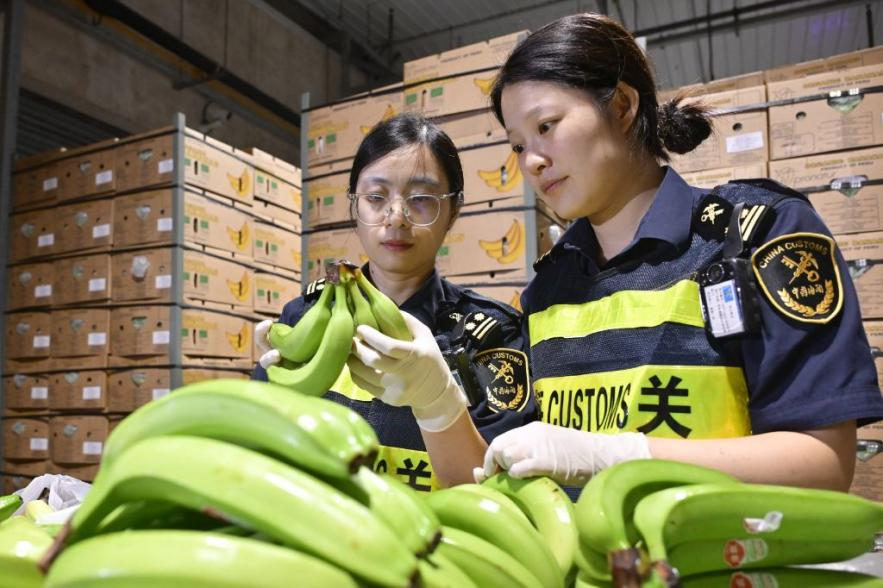
Shanghai has been advancing the digitization of entire shipping and trade chain, linking foreign trade companies, carriers, port operators, logistics firms, and regulatory authorities through shared data platforms and electronic documents.
In September, a shipment of bananas traveled some 17,000 kilometers from Peru to Shanghai, marking the first time bananas from the South American country had entered the Chinese market.
Peru is one of the world's leading suppliers of organic bananas. Until recently, however, its bananas were primarily exported to markets such as the Netherlands, the United States and South Korea.
According to COSCO Shipping Lines, the entry of Peruvian bananas into China can be partly attributed to the opening of the 23-day direct shipping route from Peru's Chancay to Shanghai, which is about 10 days faster than conventional sea routes, and, more importantly, to the application of IoT-enabled smart refrigerated containers that can dynamically adjust oxygen, carbon dioxide, and ethylene levels to preserve freshness of fruits.
Since the Chancay-Shanghai route's launch in late 2024 through Sept 1, 2026, Shanghai Customs had handled 355,000 metric tons of imports and exports worth 9.87 billion yuan ($1.48 billion), with cargo categories rising from 34 to 75.
According to Shanghai Customs, the value of Peruvian fresh fruit imports through Shanghai Port rose more than 120 percent year-on-year in the first eight months of 2026. Import volumes of blueberries and avocados increased 142 percent and 97 percent, respectively.
In a major bid to digitalize the entire shipping and trade chain, the Shanghai Municipal Commission of Transport and Shanghai International Port (Group) Co Ltd jointly launched the Shipping MaaS Platform in September 2024. The platform integrates blockchain, distributed storage, and computing technologies, aiming to provide one-stop services for international container shipping.
Through the platform, cargo owners can see real-time information such as the location and status of their goods, and can trace information on each stage and time node the goods have gone through, including rail transport, road transport, port unloading and vessel loading, and transoceanic shipping.
In 2026, nine large shipping agencies began sharing data with the port group, enabling the port to obtain cargo transport information in advance. Meanwhile, a multimodal transport distributed collaborative data chain, led by Shanghai and involving 11 provinces and municipalities along the Yangtze River Economic Belt, has made further progress. The platform now covers 13 terminal nodes along the river.
The upstream river journey from Shanghai to Wuhan, Hubei province, which previously took 14 days, now takes 10 days with improved connections and as little as seven with scheduled services. Switching from road to water transport saves 2,000 to 4,000 yuan per container.
Electronic bills of lading are also gaining wider adoption. The blockchain-based Global Shipping Business Network has brought together more than 50 partners worldwide in fields such as shipping, logistics, trade, finance, and government regulation, including COSCO Shipping Lines, and serves over 20,000 enterprises. It has reduced average import cargo release times from 48 hours to less than four hours.
More than 1 million electronic bills of lading have been issued through the Global Shipping Business Network.
Source: Jiefang Daily


FAQs
- Do I need a physical marriage certificate when applying for a residence permit for private affairs?
- Do I need to declare my ADHD medication to customs during an airside transit at Shanghai Pudong Airport?
- Is Wusongkou International Cruise Terminal an eligible port under the 240-hr visa-free transit policy?
- What are the customs and quarantine requirements for pets entering or leaving China via Shanghai Pudong airport?