Chinese idioms related to animals
[Photo/VCG]
Aesop (伊索, yī suǒ), the famous Ancient Greek storyteller (古希腊著名寓言家, gǔ xī là zhù míng yù yán jiā), is well known for teaching moral lessons through the adventures of animal characters. In China, there are a wealth of idioms and words related to animals, many of which are miniature fables in their own right.
Some of these idioms may already be familiar to you. 卧虎藏龙 (wò hǔ cáng lóng, Crouching Tiger, Hidden Dragon) is not just a movie title, but also an idiom. It refers to undiscovered talent, like a crouching tiger or hidden dragon in the shadows unseen by others. 龙 (lóng, dragon), represents authority. Anything related to the emperor has this character as the prefix, such as 龙袍 (lóng páo, imperial robe). Parents who wish their child to be successful in the future can be described as 望子成龙 (wàng zǐ chéng lóng), literally meaning "hoping for the child to become a dragon". 龙卷风 (lóng juǎn fēng, tornado) means “swirling-dragon wind” word for word, obviously referring to the shape of the violently rotating column of air.
In Chinese culture, 虎 (hǔ, tiger) is the king of all animals and is known for its fierceness and power. In Romance of Three Kingdoms, an intrepid character 吕布 (lǚ bù) was called 虎将 (hǔ jiàng, the tiger warrior), echoing French history where World War I leader General Clémenceau was called le Tigre. 骑虎难下 (qí hǔ nán xià, meaning "it's difficult to get off when riding a tiger") is used when one is in a tricky situation and cannot back out but must follow it through to the end. The Chinese American Amy Chua is dubbed 虎妈 (hǔ mā, Tiger Mom) for her strict parenting style. A heavily built man is often described as 虎背熊腰 (hǔ bèi xióng yāo), which means he has a back like a tiger and a waist like a bear.
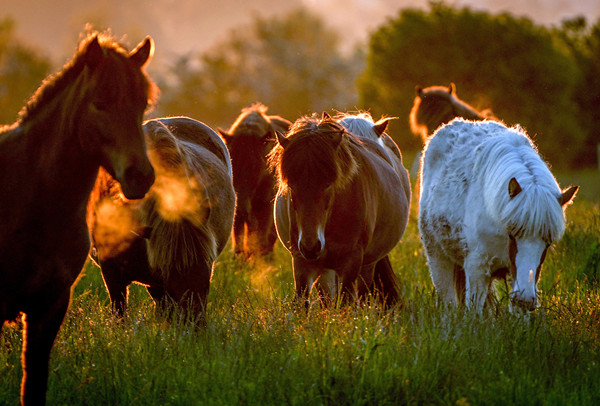
马 (mǎ, horse) appears often in Chinese idioms, maybe because it was the major form of transportation for a good part of history. 猴年马月 (hóu nián mǎ yuè, monkey year horse month) refers to a time that will never come, similar to the English phrase, "when pigs fly". In China, business owners like to display paintings of horses, wishing 马到成功 (mǎ dào chéng gōng, swift success). 马上 (mǎ shàng, on the horse) means promptly or very soon, relating to the fast speed of a horse.
塞翁失马 (sài wēng shī mǎ, blessing in disguise), sums up an ancient story. An old man lost a horse, but it later returned bringing with it another horse of valuable breed. People came to congratulate the old man, but then when his son rode the horse he fell and broke his leg. People commiserated with him over his injury, but soon after a war broke out and the son's disability got him out of military service and saved his life.
牛 (niú, cattle) represents strength and persistence. If you take a moment and look closely at the character, you can see that it resembles a bull with horns. A strong person can be described as 气壮如牛 (qì zhuàng rú niú), which is very close in meaning to the English idiom "as strong as an ox". A capable person can be described as 很牛 (hěn niú). When people boast about themselves casually, they are 吹牛皮 (chuī niú pí). Additionally, 对牛弹琴 (duì niú tán qín, playing music to a cow) is similar to "preaching to deaf ears", meaning it is useless to talk about profound things to an idiot.
The attributes of the animals discussed above are generally complementary, but some others – such as pig, rat, rabbit, monkey, and dog – are used for more negative characteristics. 猪 (zhū, pig) usually denotes stupidity. Rats are degrading, timid, or sly, like 胆小如鼠 (dǎn xiǎo rú shǔ, timid like a mouse), and 贼眉鼠眼 (zéi méi shǔ yǎn, the nervous look of a thief whose mannerisms resemble those of a mouse). 狗腿子 (gǒu tuǐ zi) is a lackey or a henchman. When an article is badly written, it can be mocked as 狗屁不通 (gǒu pì bù tōng, mere trash). 耍猴 (shuǎ hóu) means to use a trained monkey to entertain people, but in its figurative sense, "耍猴" describes unfair or disrespectful behavior, where someone manipulates or mocks others as if controlling a monkey.
夜猫子 (yè māo zi, night owl) is a person who tends to stay up until late at night. 猫哭老鼠假慈悲 (māo kū lǎo shǔ jiǎ cí bēi, a cat crying over a mouse) implies someone who pretends to show sympathy for a person, similar to the phrase “crying crocodile tears”.
画蛇添足 (huà shé tiān zú, add feet to a snake) is the Chinese equivalent of gilding the lily. 画龙点睛 (huà lóng diǎn jīng, bring the painted dragon to life by putting in the pupils of its eyes) is to add the finishing touch to your work. 虎头蛇尾 (hǔ tóu shé wěi, a tiger's head with a snake's tail) refers to an event that started fine but finished poorly.