Shanghai charts a course for green and smart global shipping
The 2025 North Bund Forum opened in Shanghai on Oct 19, drawing participants from over 50 countries and regions to explore sustainable growth in global shipping and aviation.
Themed "Collaborating for Sustainable Global Shipping & Aviation", the three-day event, co-hosted by China's Ministry of Transport and the Shanghai Municipal People's Government, marks the forum's fifth edition. It features an opening ceremony, main forum, sub-forums, thematic sessions, and more than 10 special activities.
Strengthening global cooperation
Among the forum's key outcomes were three new international green shipping corridor projects:
- the Shanghai–Barcelona Digital Green Ro-Ro Shipping Corridor
- the Shanghai–Antwerp-Bruges Green Ro-Ro Shipping Corridor
- the Shanghai–Melbourne Green Shipping Corridor Joint Initiative
The projects promote clean-energy vessels, (near) zero-carbon ports, and stronger green fuel infrastructure. They also aim to establish a shared certification system for sustainable maritime fuels and deepen cooperation among governments and enterprises to advance innovation and share best practices.
Expanding connectivity

China Eastern Airlines unveiled its Global Passenger and Cargo Network Development Report, announcing 23 new international routes and expanded coverage across 21 countries involved in the Belt and Road Initiative. By the end of 2025, the airline will serve all six continents, further solidifying Shanghai's role as a global aviation hub.
Meanwhile, Shanghai Airport Group launched the new "Shanghai to the World, Seamless Transfers" brand to enhance connectivity for both passengers and cargo. The initiative improves transfers between air and ground, as well as between Pudong and Hongqiao airports, boosting efficiency and convenience.
Innovating for the future
Innovation remains the driving force behind Shanghai's rise as a world-class shipping and aviation hub.
During the forum, the Shanghai Municipal Commission of Science and Technology, Shanghai Airport, and East China Normal University unveiled breakthroughs in sustainable aviation fuel technology. Using a new hydrogen-free targeted conversion process, the project achieves high yield, low cost, and low freezing point, representing a major step toward greener aviation and China's dual carbon goals.
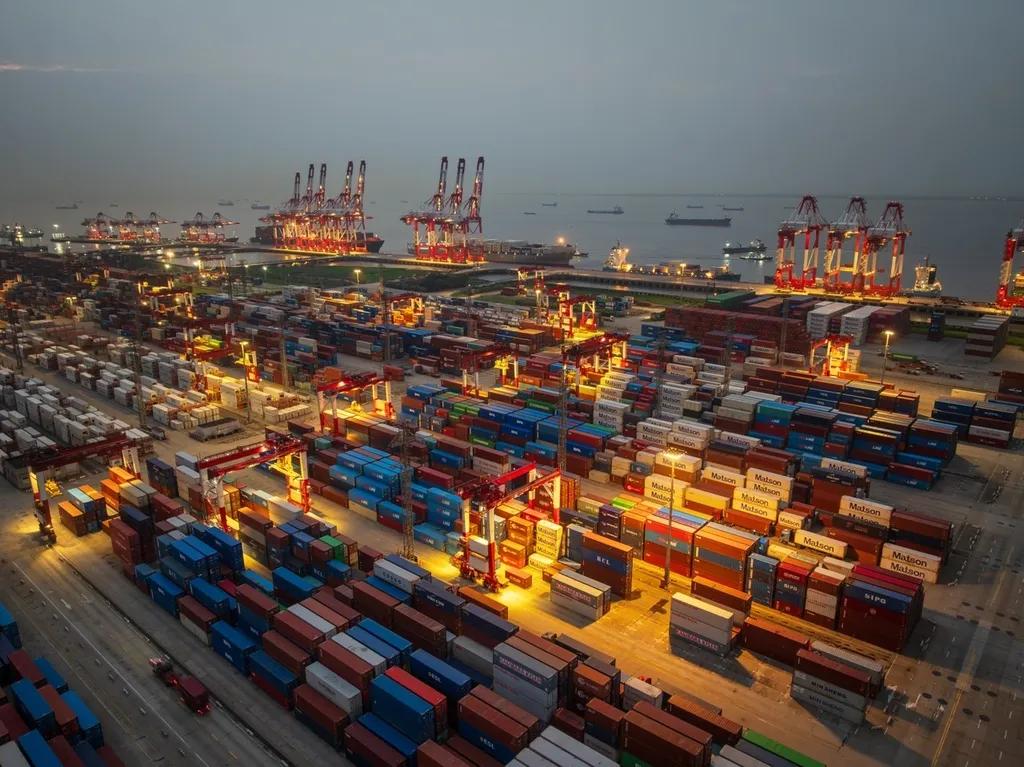
On the maritime front, Yangshan Deep-Water Port Phase IV continues smooth operations. Shanghai Port's smart command and control center (Phase I) is now complete, while new digital trade and blockchain infrastructure further strengthen Shanghai's position as an intelligent, data-driven logistics hub.
Shanghai's expanding global influence
Since 2021, Shanghai has steadily advanced its position as a global shipping center, now ranking third worldwide in overall competitiveness.
Shanghai Port, the world's busiest container port, handled 51.5 million TEUs in 2024, the first port ever to exceed 50 million, and 41.5 million TEUs in the first three quarters of 2025. During the same period, Shanghai's airports served 100 million passengers and processed 3.29 million metric tons of cargo and mail.
Beyond these figures, Shanghai's influence in maritime governance, finance, and green transition continues to grow:
1. Maritime arbitration
Shanghai has built a comprehensive temporary arbitration system and introduced new regulations supporting an international commercial arbitration center. In 2024, it handled China's first foreign-related maritime temporary arbitration case and the first case linking maritime mediation with arbitration.
2. Shipping finance and insurance
The launch of Containerized Freight Index (Europe Line) futures, China's first internationalized shipping index futures, marked a milestone, with daily turnover exceeding $1.5 billion, ranking among the world's top shipping derivatives.
3. Green shipping
Shanghai Port is now among the few globally offering both LNG and methanol ship-to-ship bunkering services. The establishment of the Shanghai International Shipping Carbon Footprint Label Association, China's first body for sustainable fuel certification, further underscores its leadership in green maritime development.
Source: Shanghai Observer