International students explore traditional Chinese weaving
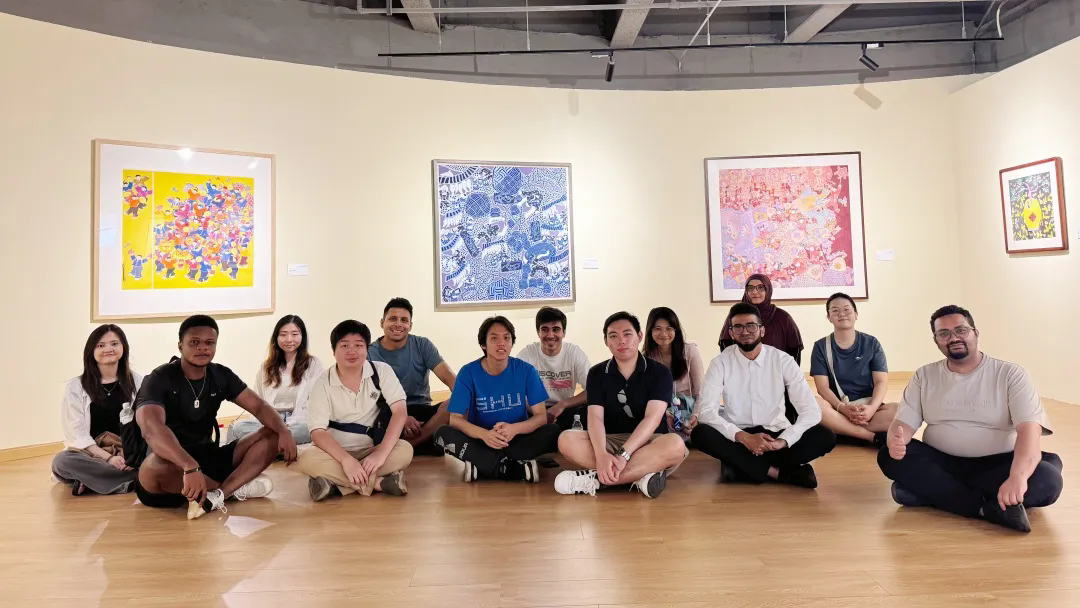
A group of 15 international students from 12 countries at Shanghai University visited the Baoshan Cultural Center to explore the 23rd Jiangnan Spring Art Exhibition on July 23.
Immersed in the exquisite craftsmanship of farmer paintings, lacquer art, and paper-cutting, students experienced the unique cultural charm of Jiangnan, the southern region along the lower reaches of the Yangtze River.
The visit also included a hands-on workshop in traditional Chinese weaving, offering students an intimate introduction to China's ancient weaving culture.
Upon entering the exhibition hall, students were captivated by the diversity and vibrancy of Jiangnan art — from elegant women in qipao on vintage calendar posters, lively street scenes from comic strips, to misty ancient towns depicted in oil paintings — all blending tradition with modernity.
Particularly striking were the farmer paintings, which portrayed festive celebrations in Jiangnan's water towns. Scenes of vibrant markets and glowing lantern displays drew students into the artists' joyful and affectionate view of daily life.
One Indonesian student was especially moved by a weaving-themed painting, saying that there were similarities between China's jacquard weaving technique and Indonesia's traditional batik.
Jiangnan's weaving traditions reflect a timeless dialogue between humanity, nature, and craft. To reinforce this cross-border exchange, the organizers arranged a hands-on weaving workshop to allow the participants to engage directly with this enduring heritage.
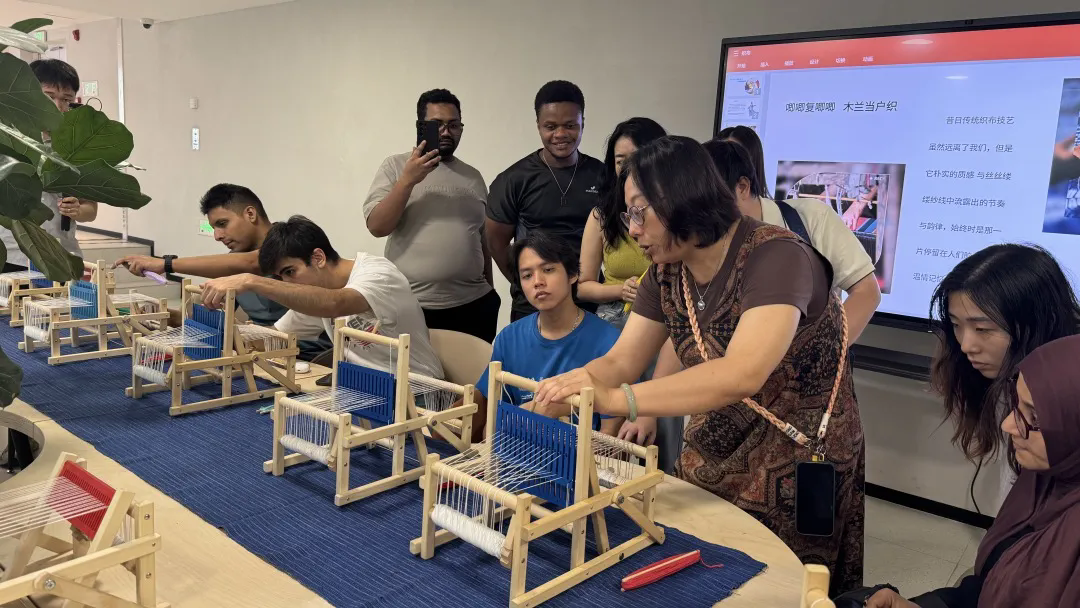
An intangible cultural heritage expert delivered a comprehensive presentation on traditional Chinese weaving, where the students learned about its history, notable figures, and how Jiangnan's cotton-weaving techniques contributed to the prosperity of the ancient Maritime Silk Road.
Using miniature looms, the students created their own woven pieces — some resembling rolling dunes, others shimmering lakes, while a few incorporated colors from their native festivals — all expressing the blend of diverse aesthetics.
The journey represents a cross-cultural dialogue that transcends time and space, bridging cultures through art. Through the immersive experience of traditional Chinese culture, Jiangnan-style art has been transformed from static exhibits into living heritage. Weaving, once an ancient craft, now connects various cultures, echoing all of humanity's universal pursuit of beauty.
Source: Official WeChat account of SHU College of International Education at "StudyatSHU"