Inside Shanghai Foundation Model Innovation Center

In less than two years, the Shanghai Foundation Model Innovation Center has grown into an influential AI startup incubator in China.
Easing the burden for AI startups
High computing costs, limited training data, and funding challenges are common hurdles faced by large model companies.
To tackle these issues, the innovation center has established five key public service platforms. These cover computing power allocation, shared data sets, financial services, talent services, and scenario-based application matchmaking.
This year, the center launched a pioneering computing power ecosystem platform, which consolidates resources from multiple providers into a single system to streamline supply-demand matching.
Through this platform, resident companies can receive a computing power package worth 1 million yuan ($138,659) without the need to submit an application, along with flexible pricing models designed to lower operational costs.
Collaboration is just one floor away
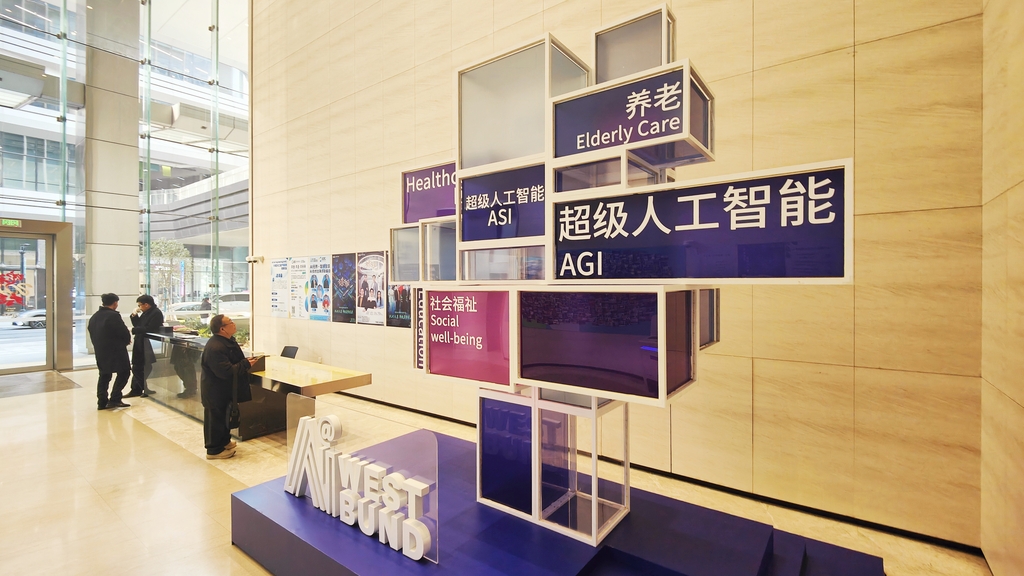
The center unites upstream and downstream players across the industrial chain, often just floors apart. This spatial concentration makes it easy for companies to connect, collaborate, and accelerate innovation at every stage of development.
On the third floor of Zone A, for example, companies cover the full stack of AI: from Infinigence AI, which specializes in foundational computing infrastructure, to application developers like Midu, and Emotionhelper, a pioneer in emotionally responsive brain-computer interfaces.
To further strengthen this tightly woven network, the center has hosted over 400 events, ranging from industry forums and technical seminars to product launches.
Experiencing tomorrow's technology
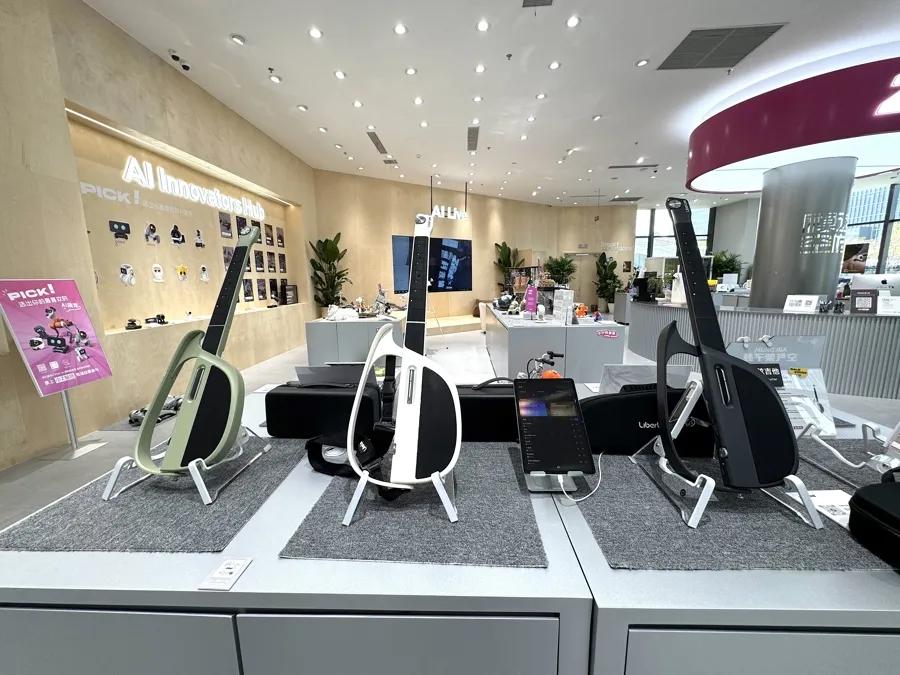
On the first floor, the AI product experience store brings cutting-edge innovations from around the world within reach. Highlights include a smart ring designed to monitor signs of sleep apnea, glasses offering real-time translation and immersive film viewing, and a stringless smart guitar designed for beginners.
Inside Emotionhelper's lab, a device known as the "Emotion X-ray" has already been piloted in hospitals. Unlike traditional psychological assessments, it uses an electroencephalogram and AI to monitor emotional states and evaluate risks of depression and anxiety over a two-week period.
Source: 51ldb.com
Related stories
- Shanghai's foundation model hub expands to meet demand
- Xuhui: Forging ahead on new journey
- Xuhui invites professionals to game industry conference
- Shanghai Foundation Model Innovation Center: A glimpse into a world-class AI incubator
- Xuhui strengthens economic ties with Japan at Tokyo investment conference
- CIIE Bazaar showcases fresh arrivals on Nanjing Road