Yangshan Port expands crane fleet to ease throughput strain
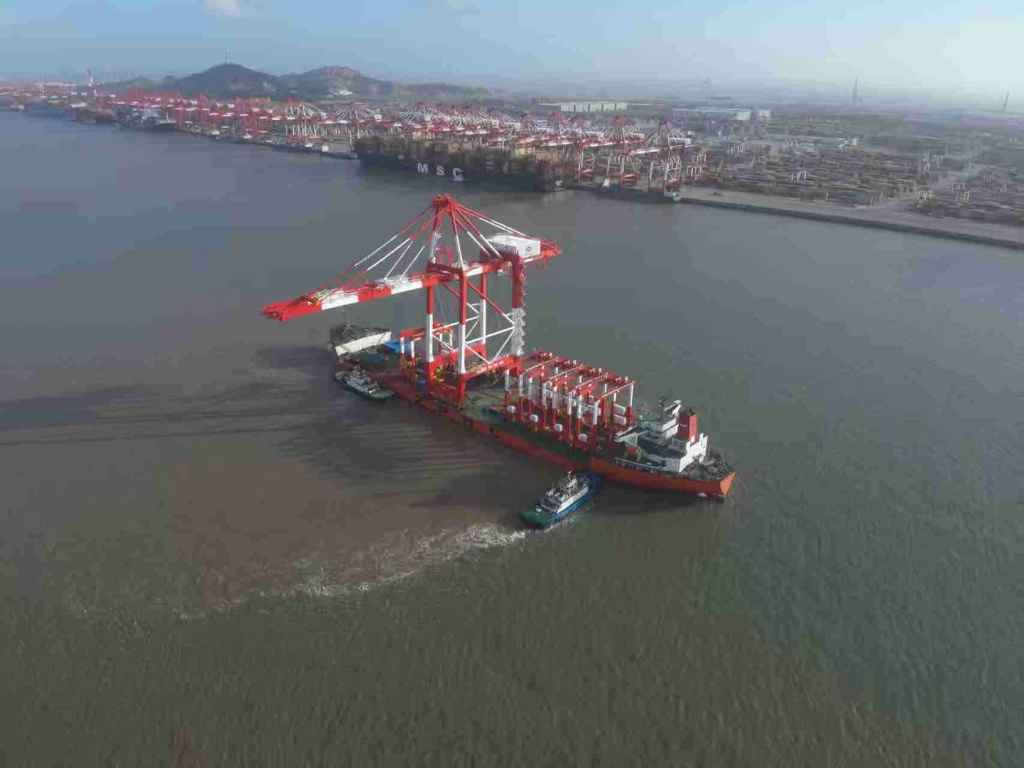
Shanghai's Yangshan Port enhanced its operational capacity on July 21 with the arrival of six new cranes, a move designed to address the port's consistently rising container throughput throughout this year.
The Chinese vessel Zhen Hua 32 delivered one bridge crane and five rubber-tired gantry cranes to the port. This equipment aims to relieve pressure on existing infrastructure as the port experiences sustained growth in shipping volume.
Currently, phases one through four of Yangshan Port operate 103 bridge cranes, a significant rise from the 88 cranes available in early 2021. The port expects to receive an additional bridge crane in September, bringing crane density to approximately one every 77 meters.
Alongside these deliveries, authorities are also modernizing existing cranes to prolong their service life and enhance their functionality. The newly delivered bridge crane, weighing over 2,000 tons, possesses an extendable grasping device with a working range of 120 meters. It is designed to accommodate the world's largest container ships, ensuring efficient handling of mega-vessels.
The five RTG cranes feature enhanced intelligence, remote operation capabilities, and improved energy efficiency, all contributing to increased container transfer efficiency within the port's stacking yards.
Yangshan Port continues to experience robust growth. In the first half of this year, the port processed over 14 million twenty-foot equivalent units, a 7.3 percent increase from the same period last year. Operators are currently working at or beyond full capacity.
On May 28, phases one and two of the port achieved a peak daily throughput of 37,096.25 TEUs, with each bridge crane handling an average of more than 950 TEUs.
Terminal operators estimate that each new bridge crane can add roughly 800 TEUs to daily handling capacity. The increased crane density allows for synchronized multi-crane operations, significantly improving loading and unloading efficiency while reducing operational strain to prolong equipment lifespan.
Source: thepaper.cn


FAQs
- Do I need a physical marriage certificate when applying for a residence permit for private affairs?
- Do I need to declare my ADHD medication to customs during an airside transit at Shanghai Pudong Airport?
- Is Wusongkou International Cruise Terminal an eligible port under the 240-hr visa-free transit policy?
- What are the customs and quarantine requirements for pets entering or leaving China via Shanghai Pudong airport?