Shanghai crafts for Chinese New Year
Paper-cutting
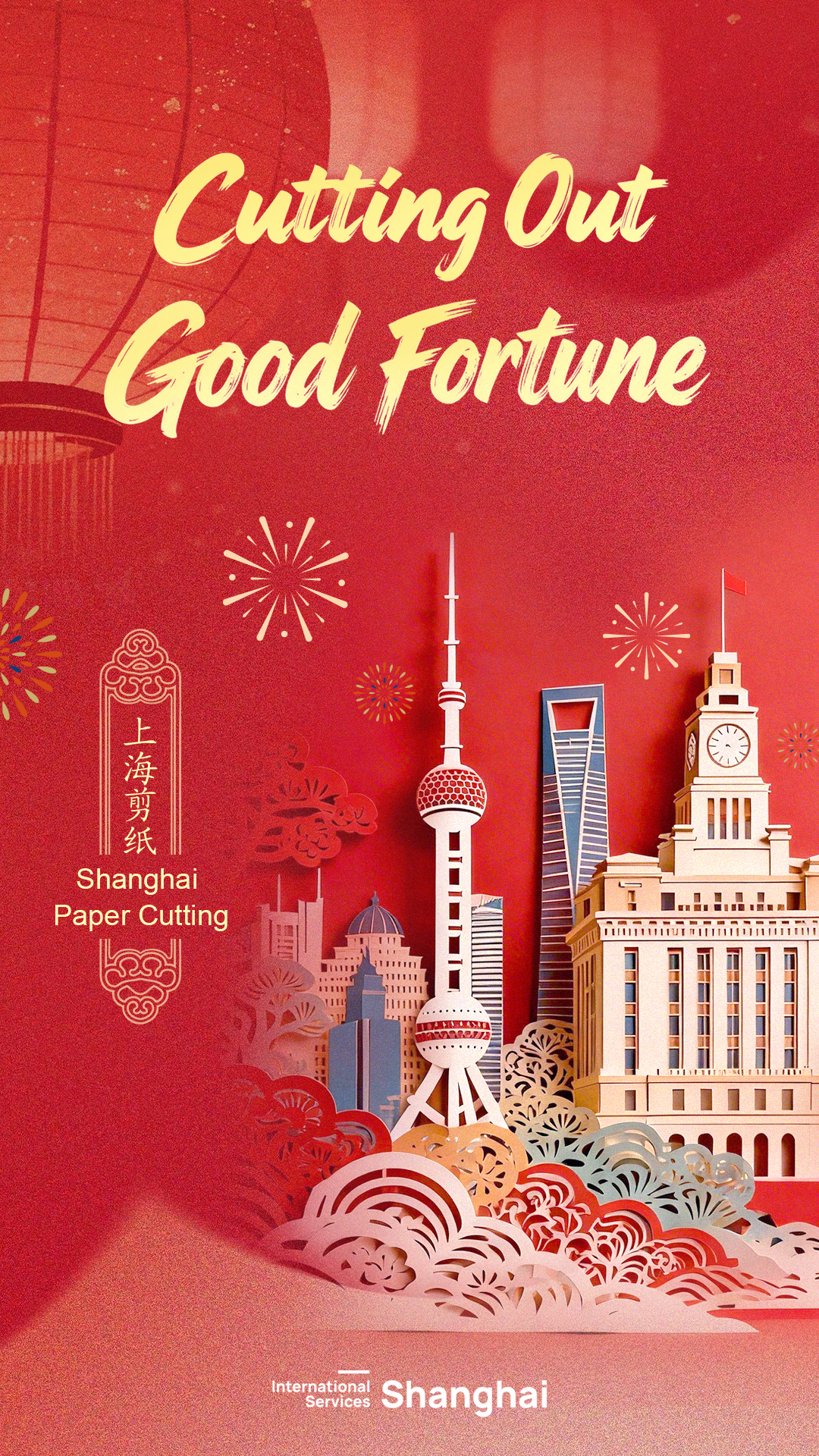
Paper-cutting in China dates back to the Han Dynasty (206 BC–AD 220) and later widely spread as papermaking advanced and paper became widely used across China. As a tradition, paper-cut designs were used as festive decorations on doors and windows or as patterns for embroidery and clothing.
Shanghai paper-cutting took shape in the city's open and cosmopolitan environment. Over the past century, it has absorbed stylistic features from both northern and southern China, combining the bold, simplified compositions typical of northern traditions and the finer, more intricate detailing seen in the south. The result is what is known as the Haipai, or Shanghai-style, aesthetic, expressive yet refined, and lively yet carefully composed.
Nanxiang Xiaolongbao
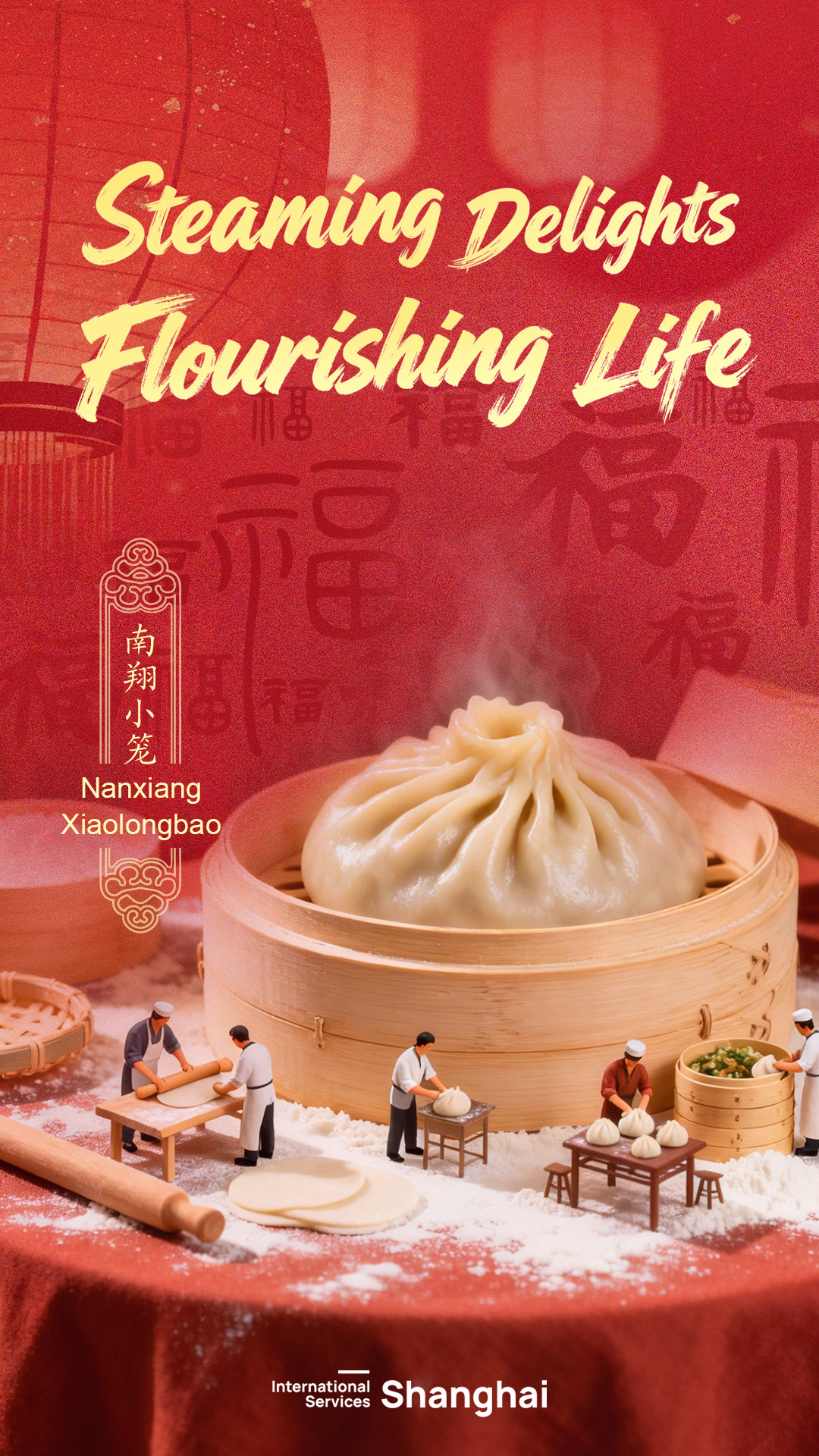
Nanxiang Xiaolongbao, or soup dumplings, originated in Nanxiang town in today's Jiading district around 1871. Its creator, Huang Mingxian, refined the traditional large steamed bun into a smaller version with a thin wrapper and a generous filling.
The dumplings are made with finely milled flour and minced pork, with gelatinized broth folded into the filling so that it melts into rich soup when steamed. Depending on the season, ingredients such as crab meat, shrimp, or bamboo shoots may be added to the filling for extra flavor.
After nearly 150 years of transmission, the craft has become standardized. Each dumpling is small and delicate, with at least 14 evenly spaced pleats, a translucent wrapper, and a spoonful of savory broth inside.
Lantern art
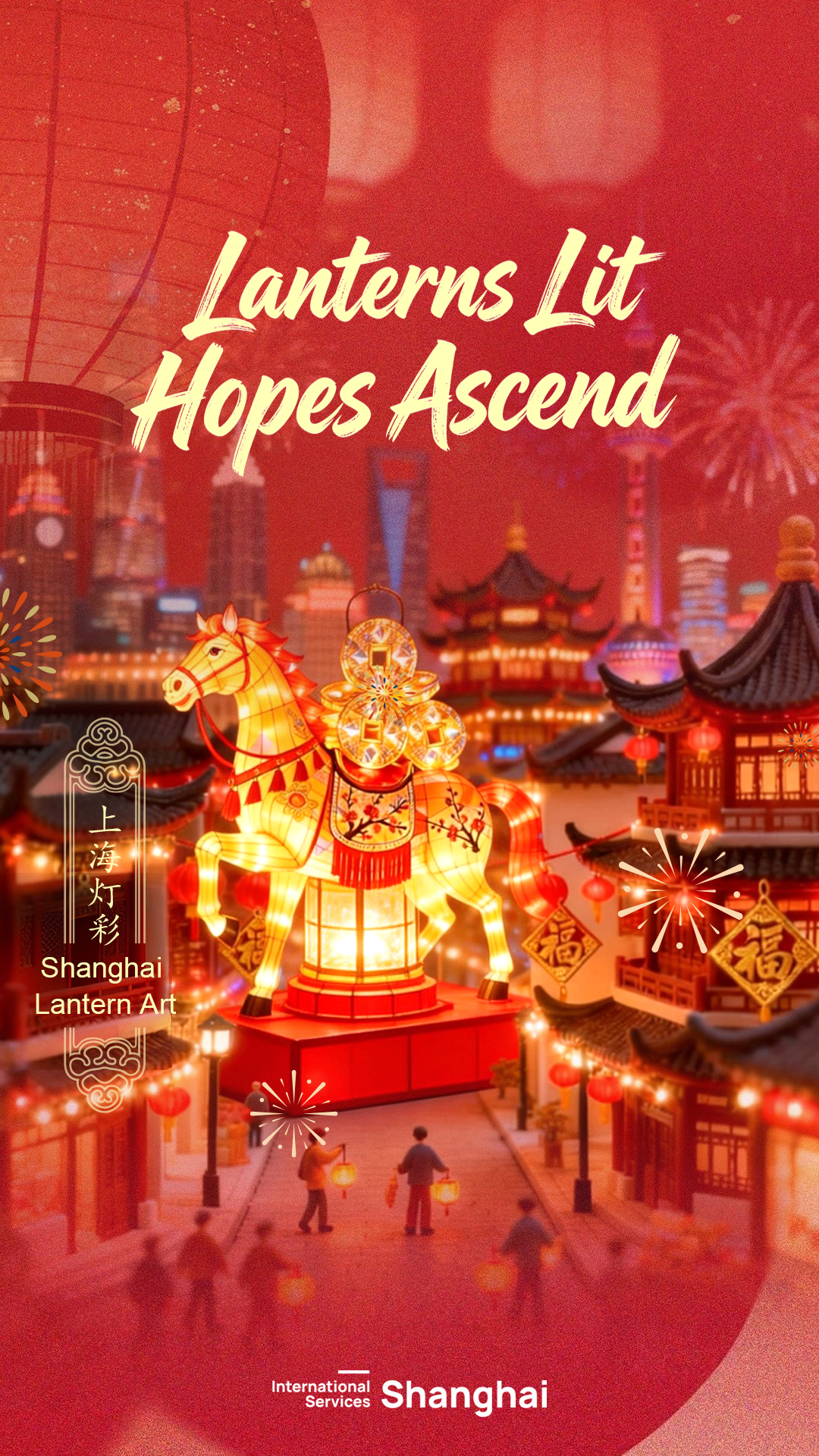
Shanghai lantern art evolved within the city's urban setting, building on traditional lantern-making techniques while introducing new materials and structures. Major forms include revolving lanterns, palace lanterns, and three-dimensional animal lanterns.
The three-dimensional animal lanterns, exemplified by the work of He Keming, represent the most refined aspect of Shanghai's lantern art.
The process of making an animal lantern involves designing the concept, building a wire frame, covering it with silk, decorating, arranging surrounding elements, and installing lighting. By replacing bamboo strips with fine wire and candles with electric light, these lanterns achieve vivid forms, luminous transparency, and rich color effects.
Velvet embroidery
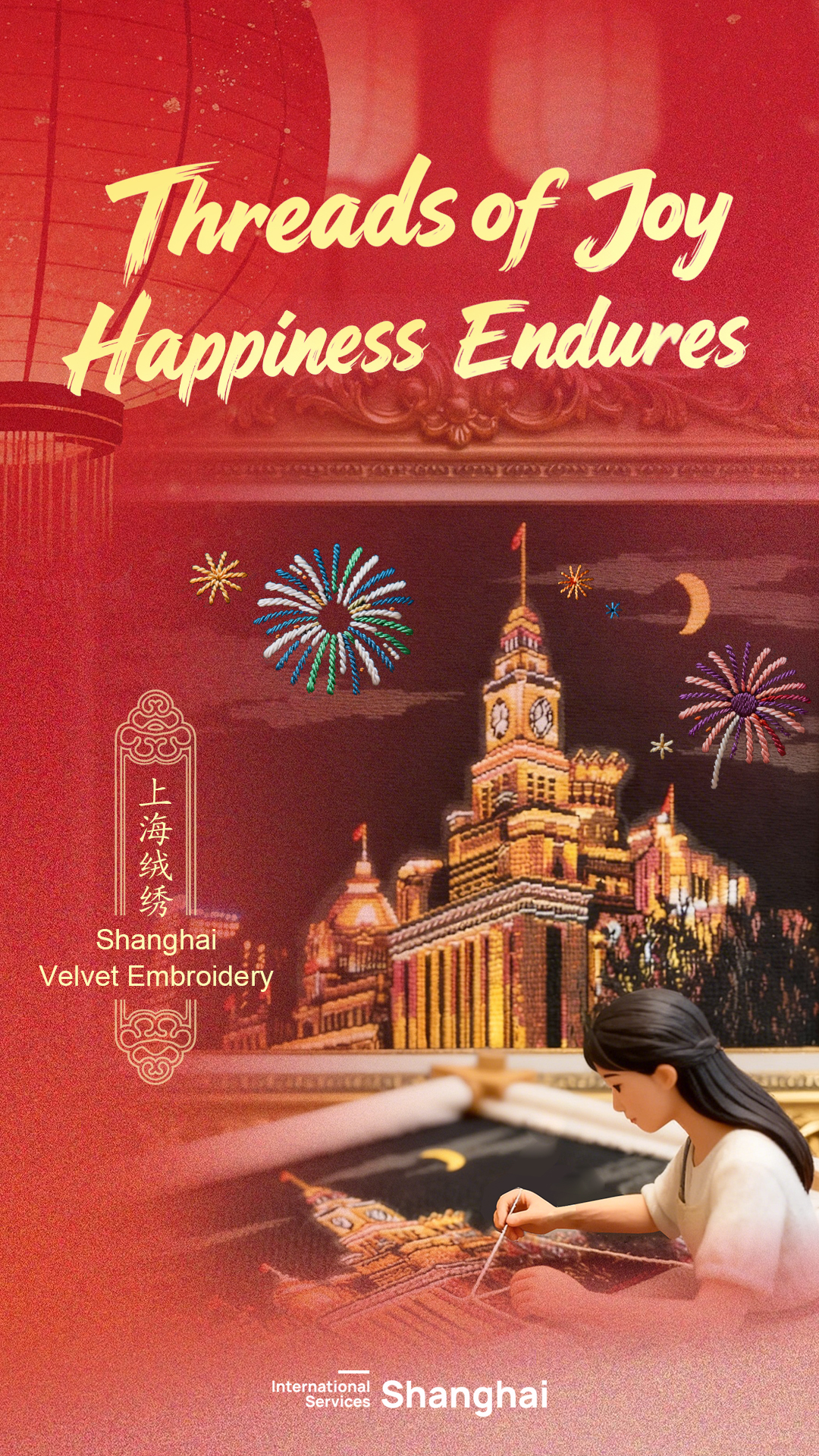
Velvet embroidery originated in Europe and was later introduced to Shanghai, where it was initially used for decorative textiles. In 1943, Liu Peizhen, a renowned velvet embroidery artist in Shanghai, created a velvet-embroidered portrait of Maxim Gorky, marking the beginning of velvet embroidery as an independent art form in China rather than merely a decorative craft.
Shanghai-style velvet embroidery combines Western wool embroidery techniques with elements of traditional Chinese needlework. The matte texture of wool thread lends the works a rich, subdued surface.
With more than 1,700 shades of dyed thread available, artists are able to achieve detailed layering and subtle tonal transitions. The result is highly dimensional imagery that often reinterprets paintings or photographs with striking depth and clarity.
Lao Feng Xiang gold and silver craftsmanship
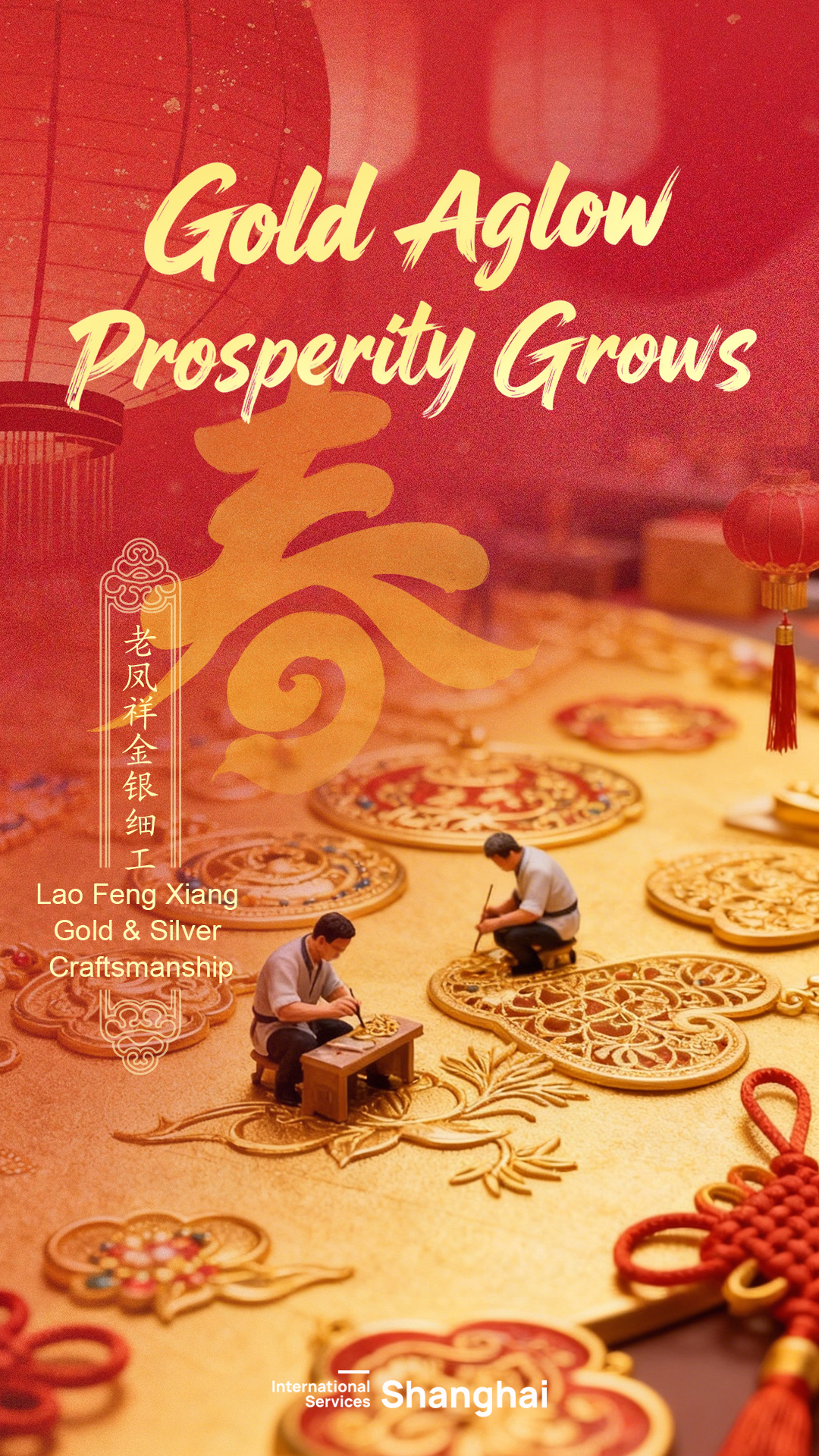
Lao Feng Xiang traces its origins to a silver workshop founded in 1848. Over generations, it has preserved and developed traditional Chinese gold and silver craftsmanship, producing jewelry, decorative objects, enamelware, miniature architectural models, and commemorative items.
Its techniques include gilding, inlay, and engraving, many of which have been passed down for centuries. Award-winning works and commemorative pieces made by Lao Feng Xiang have been collected by museums in China. The craft represents a living record of traditional Chinese metalworking, maintained and adapted within a modern urban context.
Longfeng qipao
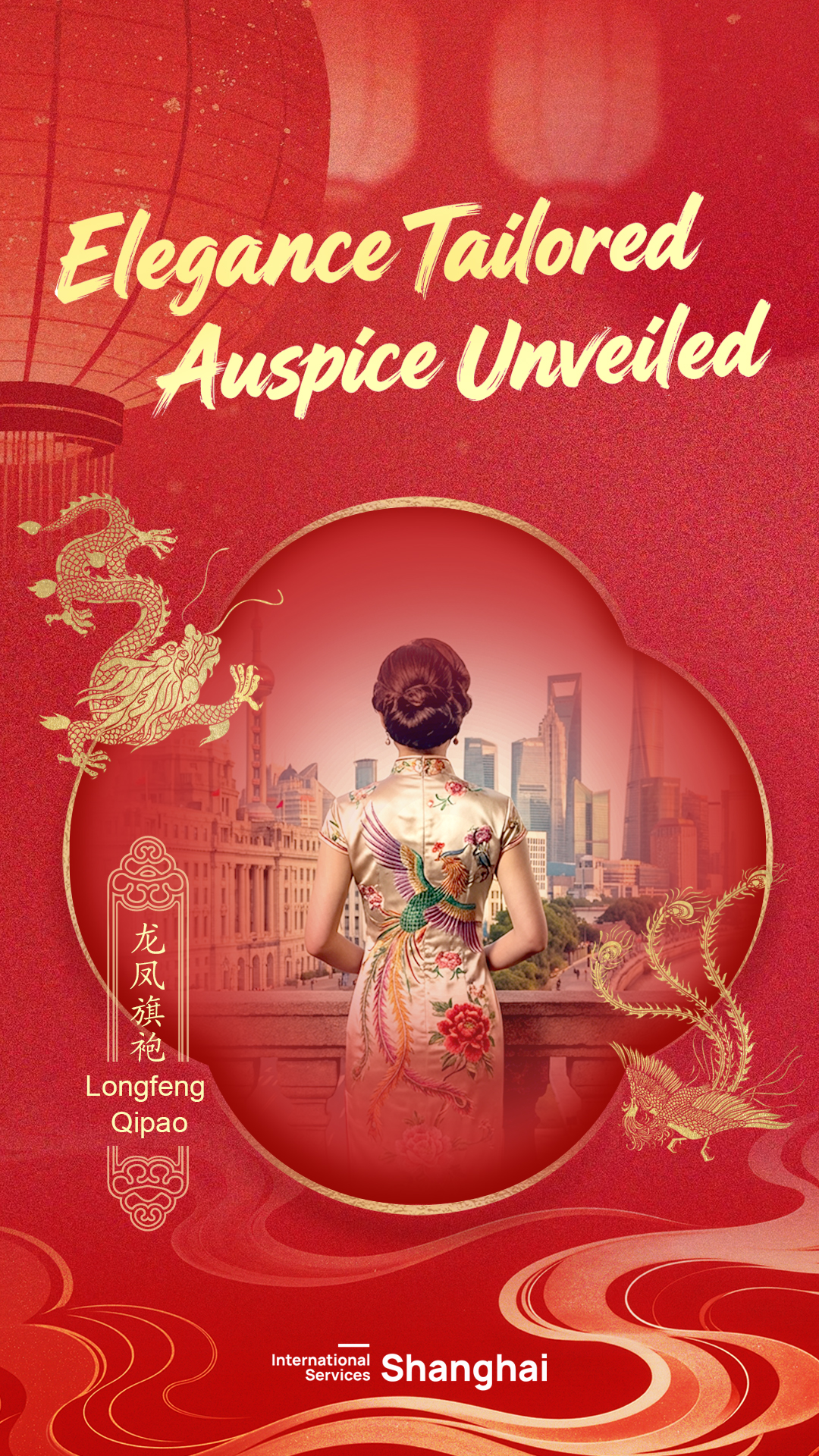
The craftsmanship behind Longfeng qipao can be traced back to early 1790s. By then, Shanghai had developed specialized "Su-Guang" tailoring workshops that combined garment-making techniques from Suzhou, Jiangsu province, and Guangzhou, Guangdong province.
In 1936, the first-generation inheritor of Longfeng qipao craftsmanship founded the Zhu Shunxing Chinese-style Garment Shop, applying these traditions to qipao making. The shop later merged with four others to form the Shanghai Longfeng Chinese-Style Garment Shop, inheriting the distinctive style of "Su-Guang".
Longfeng qipao is defined by careful fabric selection and precise hand stitching, using traditional techniques such as edging, inlay, piping, knotted button work, and embroidery. The atelier retains a fully handmade process, with handcrafted knotted buttons in floral and auspicious motifs as a signature feature.
It is also the only establishment in Shanghai that maintains the traditional “front shop, back workshop” layout, with retail operations in the front and production carried out on-site behind the scenes.
Source: China Intangible Cultural Heritage Protection Center

FAQs
- Do I need a physical marriage certificate when applying for a residence permit for private affairs?
- Do I need to declare my ADHD medication to customs during an airside transit at Shanghai Pudong Airport?
- Is Wusongkou International Cruise Terminal an eligible port under the 240-hr visa-free transit policy?
- What are the customs and quarantine requirements for pets entering or leaving China via Shanghai Pudong airport?