Shanghai strengthens intelligent connected vehicle development
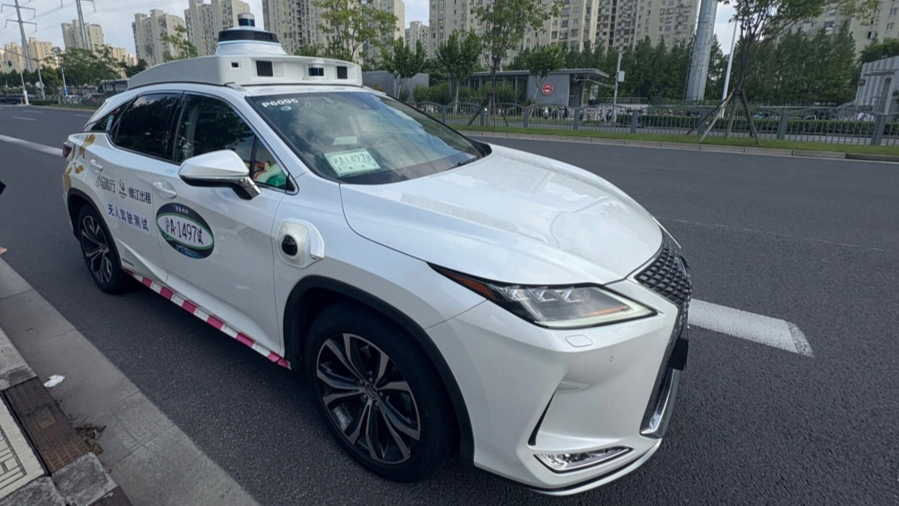
Shanghai is ramping up policy support for intelligent connected vehicles. Earlier this month, the city said in its latest five-year development plan that it will support the technological advancement and real-world deployment of intelligent connected vehicles.
By the end of 2025, Shanghai had opened 3,173 autonomous driving test roads totaling 5,238.82 kilometers, covering about one-third of the city's area.
These roads are mainly located in Pudong New Area (excluding some roads in Lujiazui), most of Jiading district, and Nanqiao town in Fengxian district, as well as Hongqiao town, Grand Neobay, and Xinzhuang town in Minhang district.
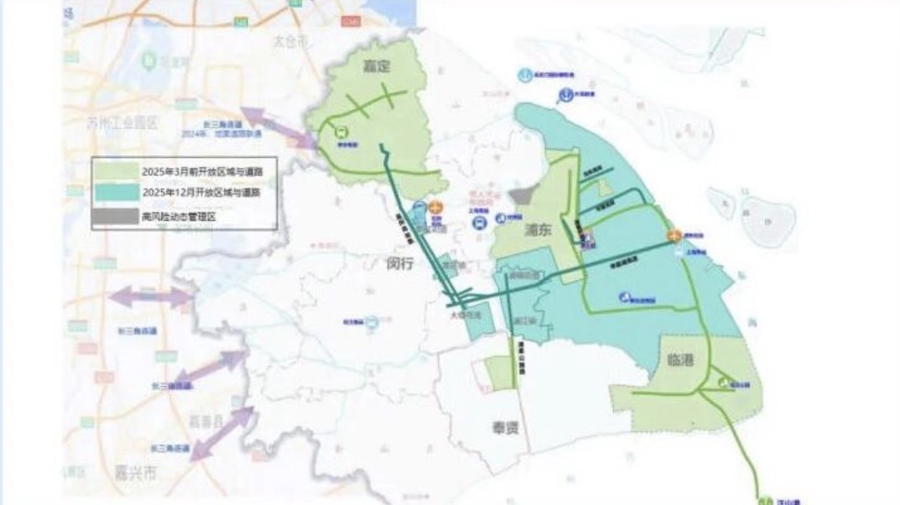
Pudong New Area has achieved nearly full coverage of autonomous driving test roads, offering a multidimensional, real-world environment for testing and validation.
In Jiading district and the Lin-gang Special Area, the testing road network and supporting scenarios are expanding, enabling innovative applications such as smart taxis, intelligent buses, and heavy-duty trucks.
Fengxian district is upgrading its intelligent Bus Rapid Transit (BRT) system and developing dedicated autonomous driving routes.
Meanwhile, Minhang district has established testing corridors centered on the Hongqiao transportation hub, allowing connectivity with other districts, and forming an innovative demonstration zone for connected transportation hubs as well as a multifunctional intelligent mobility network.
At the World Artificial Intelligence Conference in July 2025, Shanghai issued its first batch of intelligent connected vehicle demonstration operation licenses. The city currently offers three main types of licenses: permits for road testing, permits allowing enterprises to provide autonomous taxi services with an onboard safety officer, and permits for the fully commercial operation of autonomous taxi services.
Last year, Shanghai issued various licenses to 932 vehicles from 41 companies, which accumulated more than 34.55 million kilometers of test mileage and around 1.88 million hours of testing.
Of these, 13 enterprises obtained demonstration operation licenses for 192 vehicles, completing about 556,000 passenger orders.
Applications are expected to enter a new stage of city-wide integration during the 15th Five-Year Plan period (2026-30), with coordinated regulations, standards, and open roads supporting large-scale testing and routine operation of Level 3 and above autonomous vehicles, according to Shanghai's Intelligent Connected Vehicle Development Report (2025).
Source: Shanghai Observer


FAQs
- Do I need a physical marriage certificate when applying for a residence permit for private affairs?
- Do I need to declare my ADHD medication to customs during an airside transit at Shanghai Pudong Airport?
- Is Wusongkou International Cruise Terminal an eligible port under the 240-hr visa-free transit policy?
- What are the customs and quarantine requirements for pets entering or leaving China via Shanghai Pudong airport?