'Shanghai takes the lead': Lightelligence founder bets on optical computing for AI era
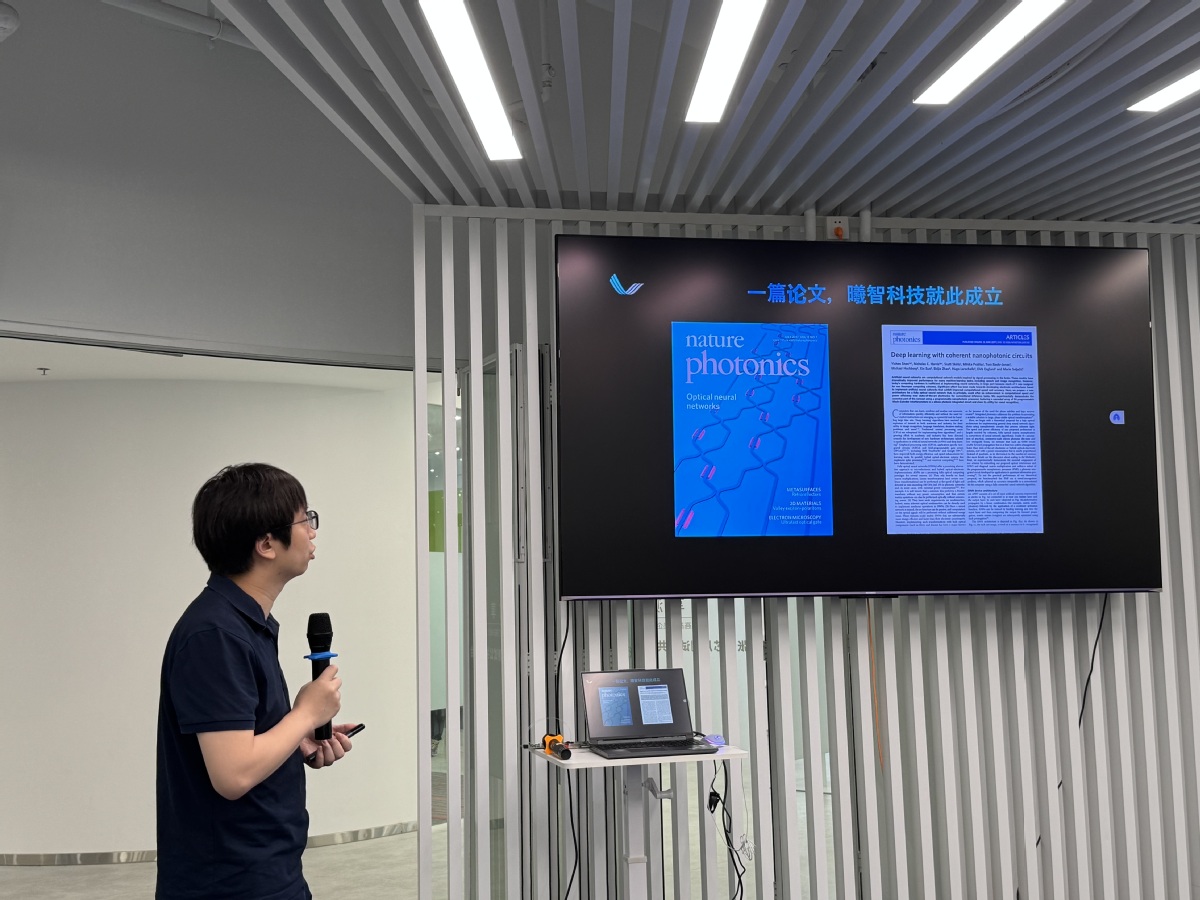
Shen Yichen, founder of Lightelligence in Shanghai, predicts that silicon photonic chips will make up over 30 percent of chips in computing centers within five years, a significant rise from the current less than 3 percent.
Shen made the remarks in a July 8 interview, noting that the company is jointly deploying a 10,000-GPU supernode computing cluster in the city, marking the country's first large-scale commercial application of the technology.
Founded in 2017 by Shen, the company's core technology originated in his doctoral research — the first paper demonstrating the application of silicon photonics to artificial intelligence computing, which was published on the cover of Nature Photonics the same year.
The company shifted its center of operations from Boston to Shanghai in 2020, citing three reasons: a fully integrated semiconductor industry that can "close the loop within a five-kilometer radius", strong local manufacturing capabilities for high-volume production, and Shanghai's willingness to be an early adopter of new technologies.
"For an early-stage technology, people are usually hesitant to adopt it when it is first unveiled. But Shanghai took the lead," he said.
Shen identified photonics-electronics co-packaging technology as a key bottleneck for China's silicon photonics industry. He also said that system-level integration with boards and servers requires faster iteration.


FAQs
- Can a service dog transit through Shanghai Pudong Airport without quarantine?
- Is there a mandatory retirement age for a foreign employee in Shanghai?
- Where to ask about applying for a student visa to Japan in Shanghai?
- How do I apply for a new residence permit when transferring to a university in Shanghai?