Things you may not know about the Dragon Boat Festival

The Dragon Boat Festival, known as Duanwu Festival in Chinese, is a traditional cultural event celebrated on the fifth day of the fifth month of the Chinese calendar. This festival dates back to more than 2,000 years ago, with a number of legends explaining its origin.
Origins and historical background
The origin of the Dragon Boat Festival does not trace back to a single, clearly defined location. Instead, it's linked to multiple regions across many cultural influences. Its birthplace remains widely debated. One prominent view holds that it has strong roots in the ancient state of Chu, which spanned a large area in southern China, including present-day Hubei and Hunan provinces.
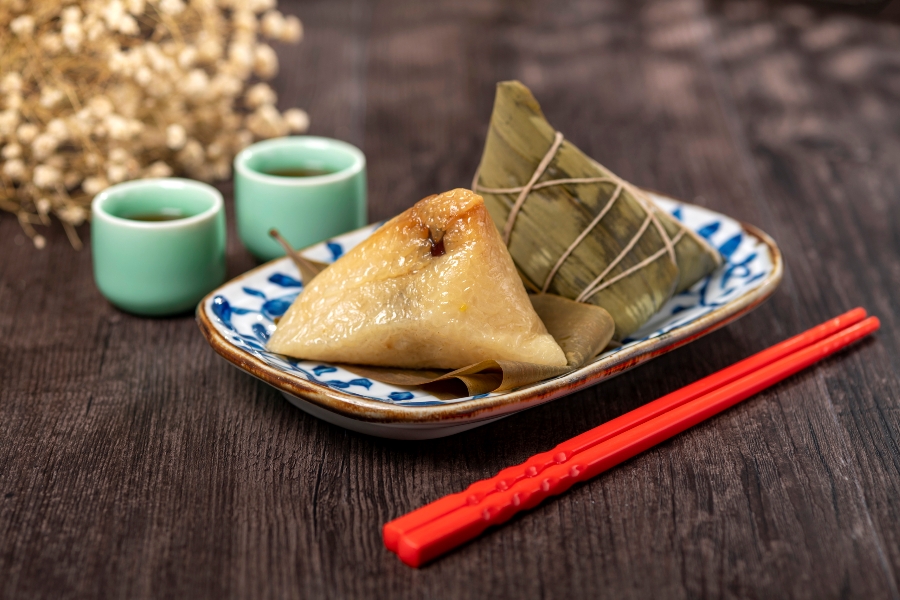
Qu Yuan (340-278 BC), a patriotic poet and statesman of the Chu state, is closely associated with the festival. According to legend, after he drowned himself in the Miluo River, locals rushed to save him by rowing boats and throwing rice balls into the river to prevent fish from harming his body. These actions gradually evolved into the traditions of dragon boat racing and eating zongzi (sticky rice dumplings) during the festival.
However, some also believe that it originated from ancient dragon totem worship among communities living in the middle and lower reaches of the Yangtze River, as well as in regions further south.

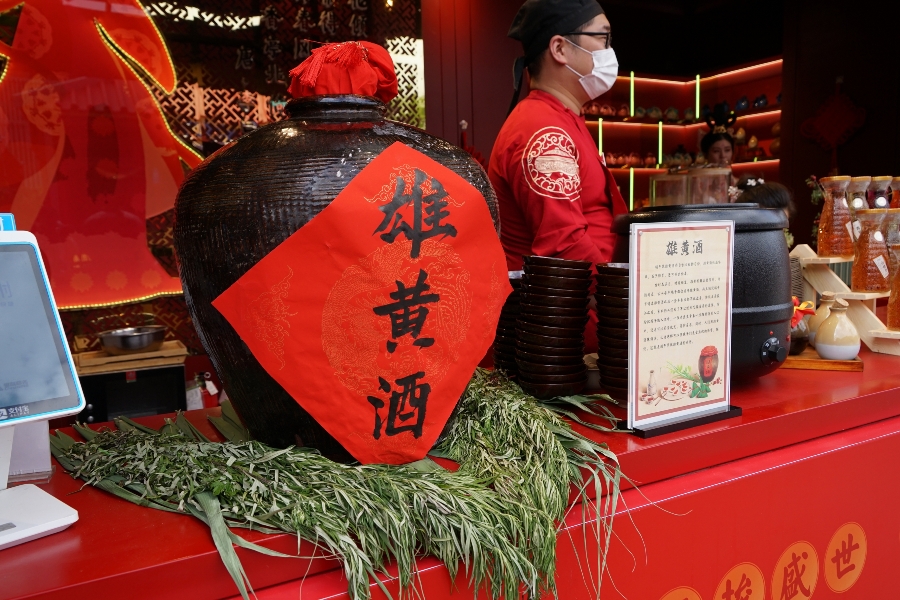
Realgar wine
Consuming realgar wine is another tradition associated with the Dragon Boat Festival. Historically, this practice was believed to ward off evil spirits and disease. The wine, consisting of fermented cereals and powdered realgar, is considered both a medicinal and protective drink.
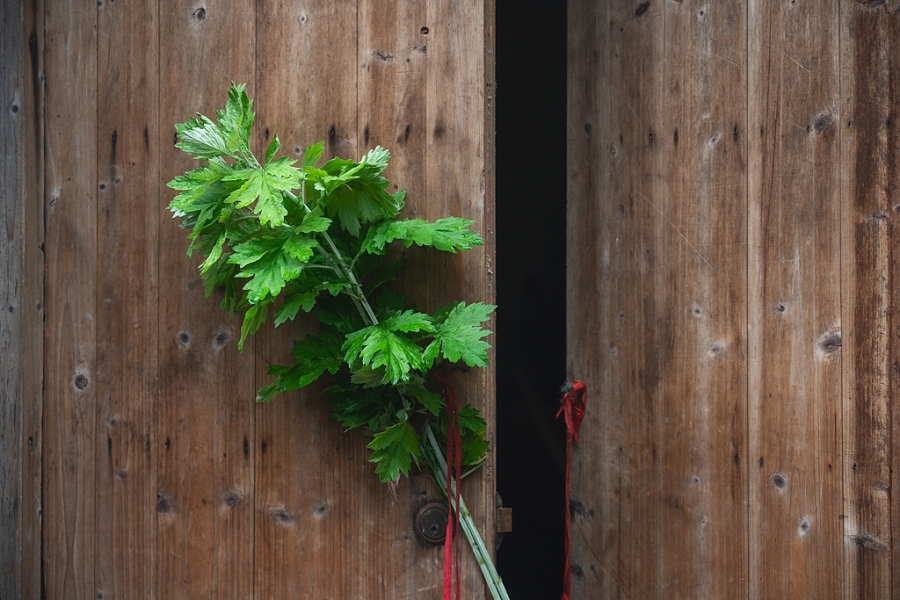
Hanging auspicious leaves
To prevent diseases and repel insects, homes are often decorated with auspicious plants like mugwort and calamus. These plants are believed to have protective properties, aligning with the festival's themes of health and safety.
Wearing scented sachets
On the Dragon Boat Festival, children normally wear scented sachets threaded with five-color silk string to ward off evil. A scented sachet is an ornament worn on the front of the dress.
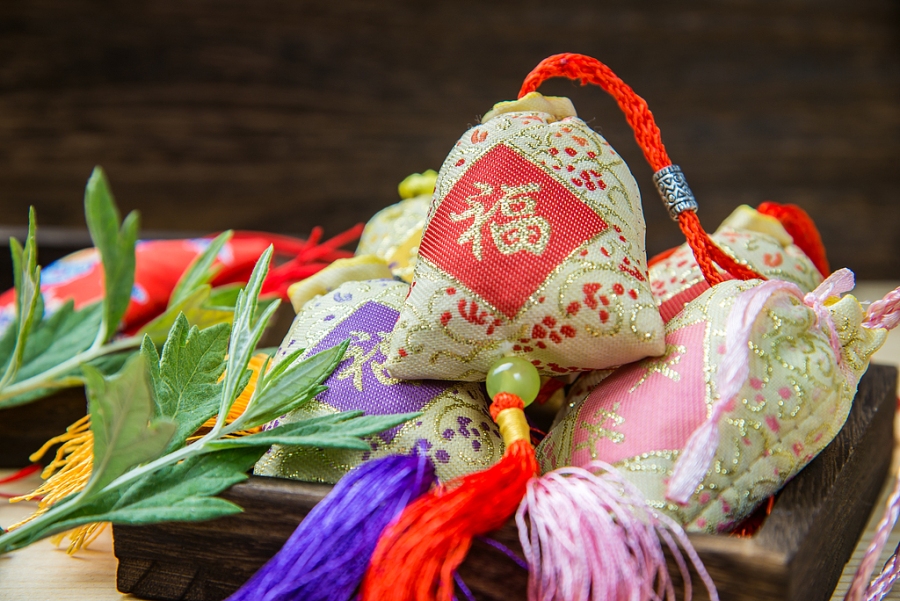
It is usually wrapped in a silk cloth and sometimes embroidered with exquisite patterns. Multicolor silk threads are attached to the sachet as decorative tassels. In some areas of China, a scented sachet is also used as a token between young lovers.
Vocabulary
端午节
duān wǔ jié
Dragon Boat Festival
龙舟赛
lóng zhōu sài
dragon boat race
粽子
zòng zi
sticky rice dumplings
雄黄酒
xióng huáng jiǔ
realgar wine
艾草
ài cǎo
mugwort
香囊
xiāng náng
scented sachets
为了防病驱虫,人们常在家中悬挂艾草和菖蒲等寓意吉祥的植物。
wèi le fáng bìng qū chóng,rén men cháng zài jiā zhōng xuán guà ài cǎo hé chāng pú děng yù yì jí xiáng de zhí wù。
To prevent diseases and repel insects, homes are often decorated with auspicious plants like mugwort and calamus.
在端午节,孩子们通常会佩戴用五色丝线编制的香囊,以驱邪避灾。
zài duān wǔ jié,hái zi men tōng cháng huì pèi dài yòng wǔ sè sī xiàn biān zhì de xiāng náng,yǐ qū xié bì zāi。
On the Dragon Boat Festival, children normally wear scented sachets threaded with five-color silk string to ward off evil.