Eight things to know about Autumn Equinox
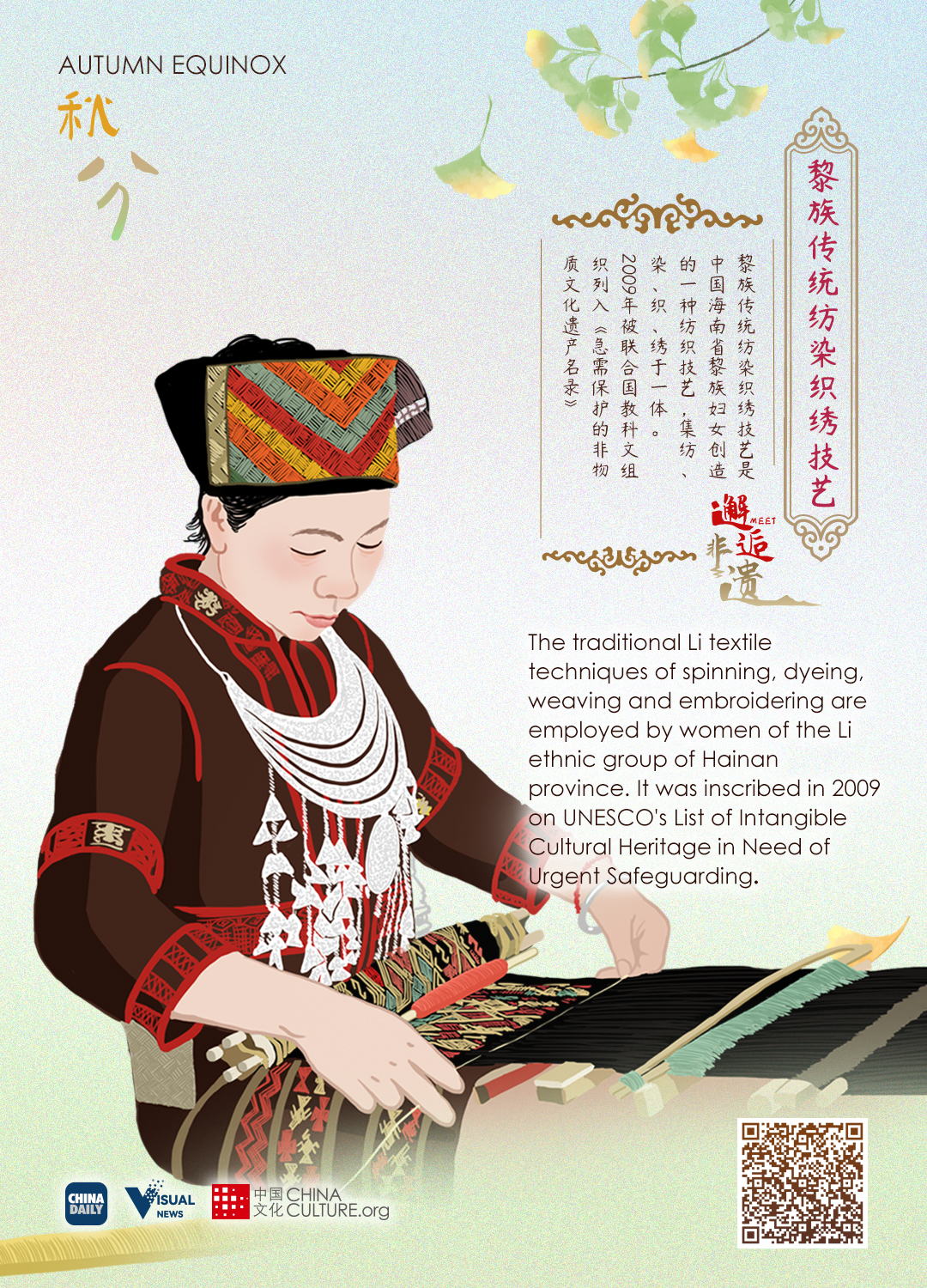
The traditional Chinese calendar divides the year into "24 solar terms". The Autumn Equinox, or qiufen, the 16th solar term of the year, falls on Sept 23 this year.
The Autumn Equinox marks the midpoint of autumn. After this day, the location of direct sunlight shifts southward, making days shorter and nights longer in the northern hemisphere.
Here are eight things you should know about the Autumn Equinox.
[Video provided by chinadaily.com.cn]
Cool autumn
According to the ancient Chinese classic, The Detailed Records of the Spring and Autumn Period (770-476BC), "It is on Autumn Equinox day that the yin and yang are in balance. Therefore, the day and night are of equal length, and cold and heat are evenly matched."
By the time of the Autumn Equinox, most of the regions in China have entered the cool autumn season. When the southward-heading cold air encounters the declining warm and moist air, it often brings precipitation, and temperatures begin to drop frequently during this period.
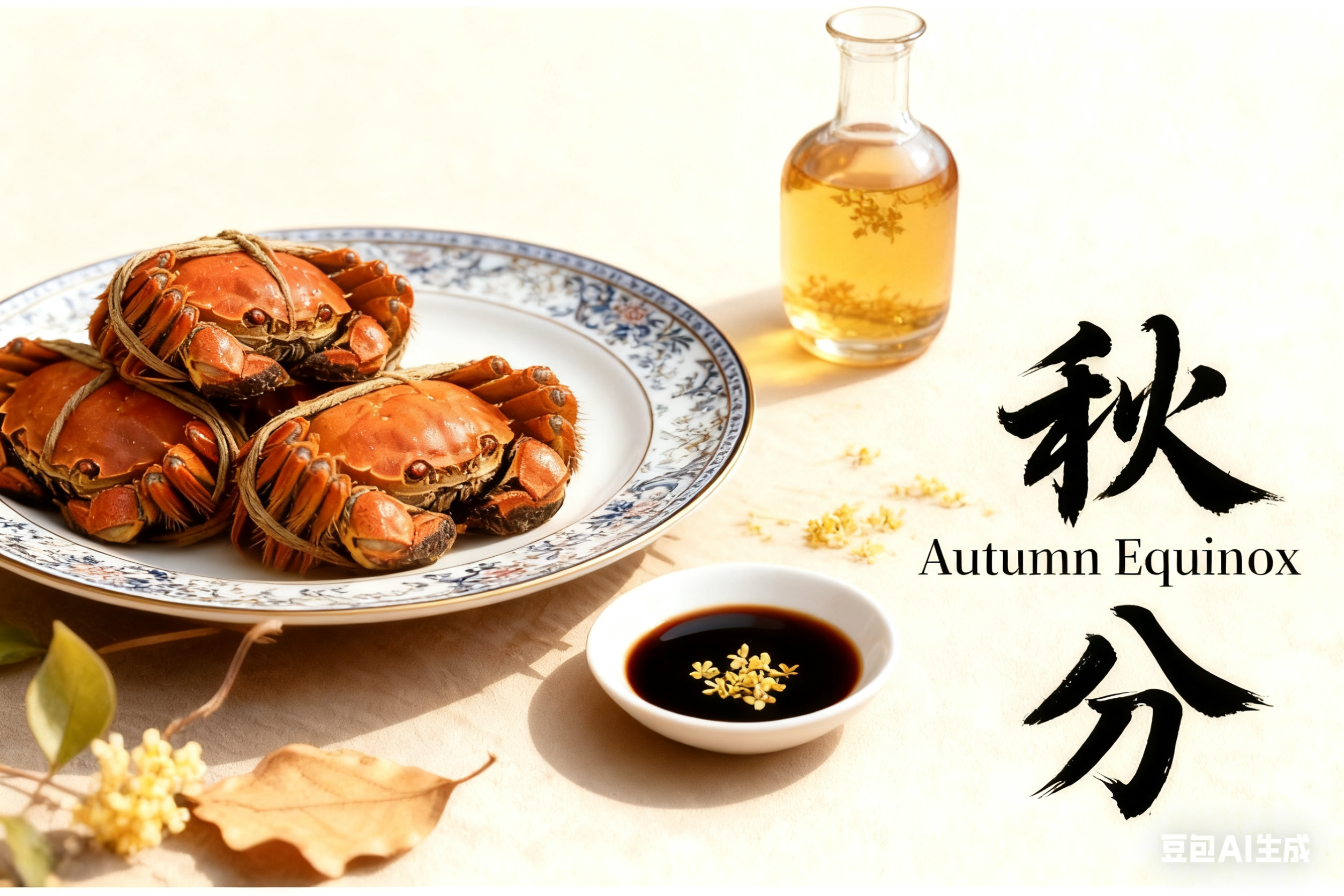
Eating hairy crabs
Hairy crabs are particularly delicious in this season and are regarded as a seasonal delicacy believed to nourish the marrow and dispel internal heat.
Eating qiucai
In southern China, a cherished tradition observed around the Autumn Equinox is known as "eating qiucai", or autumn vegetables. Qiucai refers to a type of wild amaranth. On the day of the Autumn Equinox, villagers often go to the countryside to pick it. The slender, bright green plant, usually about 20 centimeters long, is brought home and cooked into a soup with fish, known as "Qiutang" (autumn soup). As the local saying goes: "The soup cleanses the liver and gut, keeping the whole family safe and healthy."
Eating seasonal plants
The arrival of the Autumn Equinox signals the ripening of many seasonal fruits and crops. Olives, pears, papayas, chestnuts, beans, and more are ready for harvest, making it the peak season to gather and savor them.
Enjoying osmanthus
The Autumn Equinox is the time when the air is bathed in the sweet fragrance of osmanthus. In southern China, this period is characterized by hot days and cool nights, requiring people to wear light clothes during the day and lined garments in the evening. This unique period of the year is named "Guihuazheng" in Chinese, literally meaning "osmanthus dampness".
Season for admiring chrysanthemums
The Autumn Equinox also coincides with the full bloom of chrysanthemums, offering a perfect time for flower appreciation.
Standing eggs on end
A well-known folk custom in China on Autumn Equinox day is trying to balance eggs on end, a practice that has also spread abroad as a playful activity.
Some experts explain that during the Spring and Autumn Equinoxes, the day and night are of equal length in both hemispheres. At this time, the Earth's axis, tilted at 66.5 degrees, is in a balanced position relative to its orbit around the sun, make it easier to stand eggs on end.
However, some also argue that the timing has little effect. The key is to shift the egg's center of gravity to its lowest point. The trick is to hold the egg upright until the yolk sinks to the bottom. For a better chance of success, try using an egg that's about four to five days old, as its yolk is more likely to sink.
Sacrificing to the moon
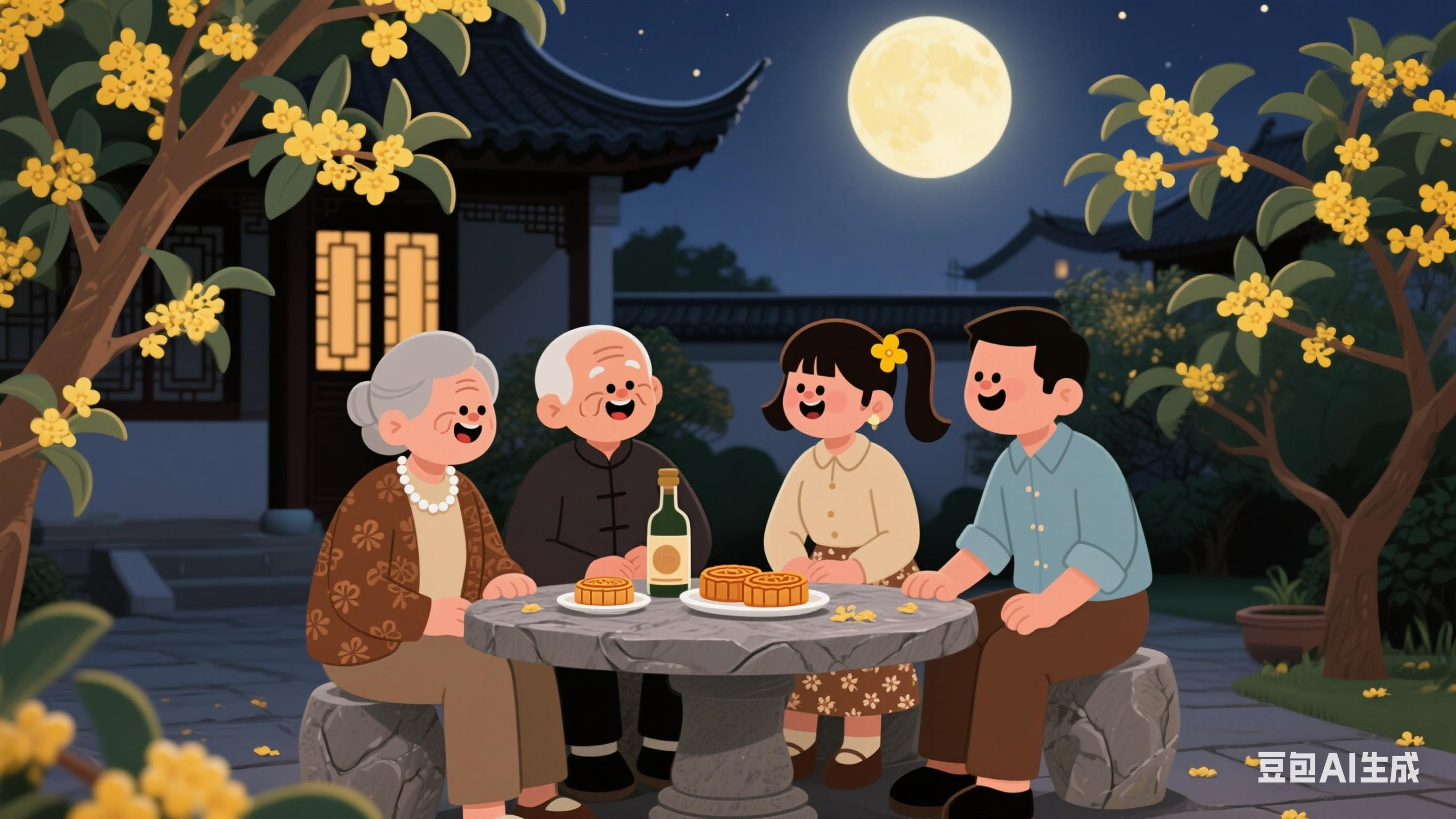
Originally, the ritual of sacrificing to the moon was set on the day of the Autumnal Equinox. According to historical records, as early as the Zhou Dynasty (c. 11th century-256BC), it was customary for the ancient rulers to worship the sun on the Spring Equinox and the moon on the Autumn Equinox.
However, the moon does not always appear full on the Autumn Equinox. Offering sacrifices to an incomplete moon was thought to be inauspicious. Thus, the date was later shifted to Mid-Autumn Festival, when the moon is at its brightest and roundest.
Vocabulary
秋分
qiū fēn
Autumn Equinox
秋菜
qiū cài
autumn vegetables
赏菊
shǎng jú
admire chrysanthemums
大闸蟹
dà zhá xiè
hairy crabs
桂花蒸
guì huā zhēng
osmanthus mugginess
中秋节
zhōng qiū jié
Mid-Autumn Festival
秋分者,阴阳相半也,故昼夜均而寒暑平。
qiū fēn zhě ,yīn yáng xiāng bàn yě ,gù zhòu yè jūn ér hán shǔ píng 。
It is on the Autumn Equinox day that the Yin and Yang are in a balance of power. Therefore, the day and night are of equal length, and cold and heat are evenly matched.
秋分时节,中国大部分地区已步入凉爽的秋季。南下的冷空气与逐渐退散的暑气和暖湿的气流相遇后带来了降雨,气温也随之走低。
qiū fēn shí jié ,zhōng guó dà bù fèn dì qū yǐ bù rù liáng shuǎng de qiū jì 。nán xià de lěng kōng qì yǔ zhú jiàn tuì sàn de shǔ qì hé nuǎn shī de qì liú xiāng yù hòu dài lái le jiàng yǔ ,qì wēn yě suí zhī zǒu dī 。
By the time of the Autumn Equinox, most of the areas in China have entered the cool autumn season. When the southward-heading cold air encounters the declining warm and moist air, it leads to precipitation. Temperatures also begin to drop during this period.