Nine things you may not know about Start of Spring
[Video provided by chinadaily.com.cn]
China's "24 solar terms" is a knowledge system and social practice that was developed through observations of the sun's annual movement and the seasonal, climatic and phenological changes of the year. Start of Spring (li chun), the first of the solar terms, lasts from Feb 4 to Feb 18 this year.
Start of Spring marks the grand opening of the season, where nature awakens. Everything turns green and vibrant, the days grow longer, and the weather warms.
Here are nine things you should know about Start of Spring.
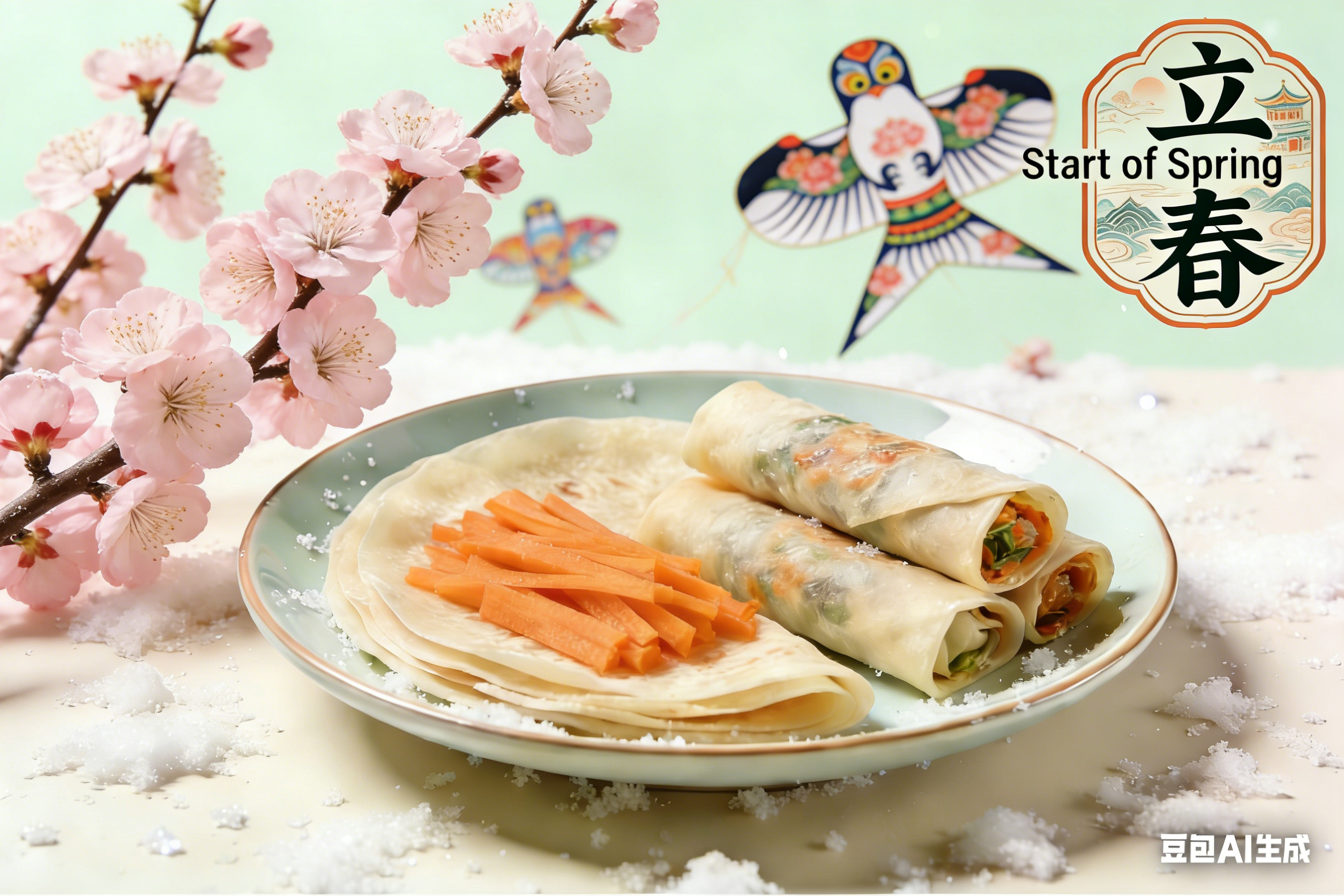
1. Start of Spring and Spring Festival
Start of Spring dates back to the Spring and Autumn Period (770-476 BC). At that time, there were only eight solar terms. According to some experts, the 24 solar terms were first introduced in books during the Western Han Dynasty (206 BC-AD 24), when Start of Spring was once associated with the date of Spring Festival. It was in 1913 that the first day of the first month of the Chinese calendar was designated as Spring Festival.
2. Flying kites
Spring is the best season for kite flying, a traditional folk activity with a history of more than 2,000 years. It can help improve one's health, promote blood circulation, and increase metabolism. Additionally, breathing fresh air outdoors helps clear out the stale energy retained from winter, contributing to overall wellness.
3. Erecting eggs
In China, it is traditionally believed that an egg can be set upright on three specific days: the first day of Start of Spring, Spring Equinox, and Autumn Equinox. There is a Chinese folk belief that if someone manages to make the egg stand on the first day of Start of Spring, they will be blessed with good fortune in the coming year.
However, according to astronomers and physicists, setting the egg upright has nothing to do with the date itself, but with the principles of mechanics. The key lies in shifting the egg's center of gravity to its lowest point. In this way, the trick is holding the egg steadily until the yolk settles toward the bottom. It is also recommended to choose an egg about four to five days old, as its yolk is more likely to sink sufficiently for balancing.
4. Wearing fabric swallows
Wearing fabric swallows during the Start of Spring is a traditional custom in some regions in Northwest China's Shaanxi province. During this period, people are used to wearing a swallow made of colorful silk on their clothing, a custom dating back to the Tang Dynasty (618-907). The swallow is more than just an ornament – it acts as a harbinger of spring and a symbol of prosperity and happiness.
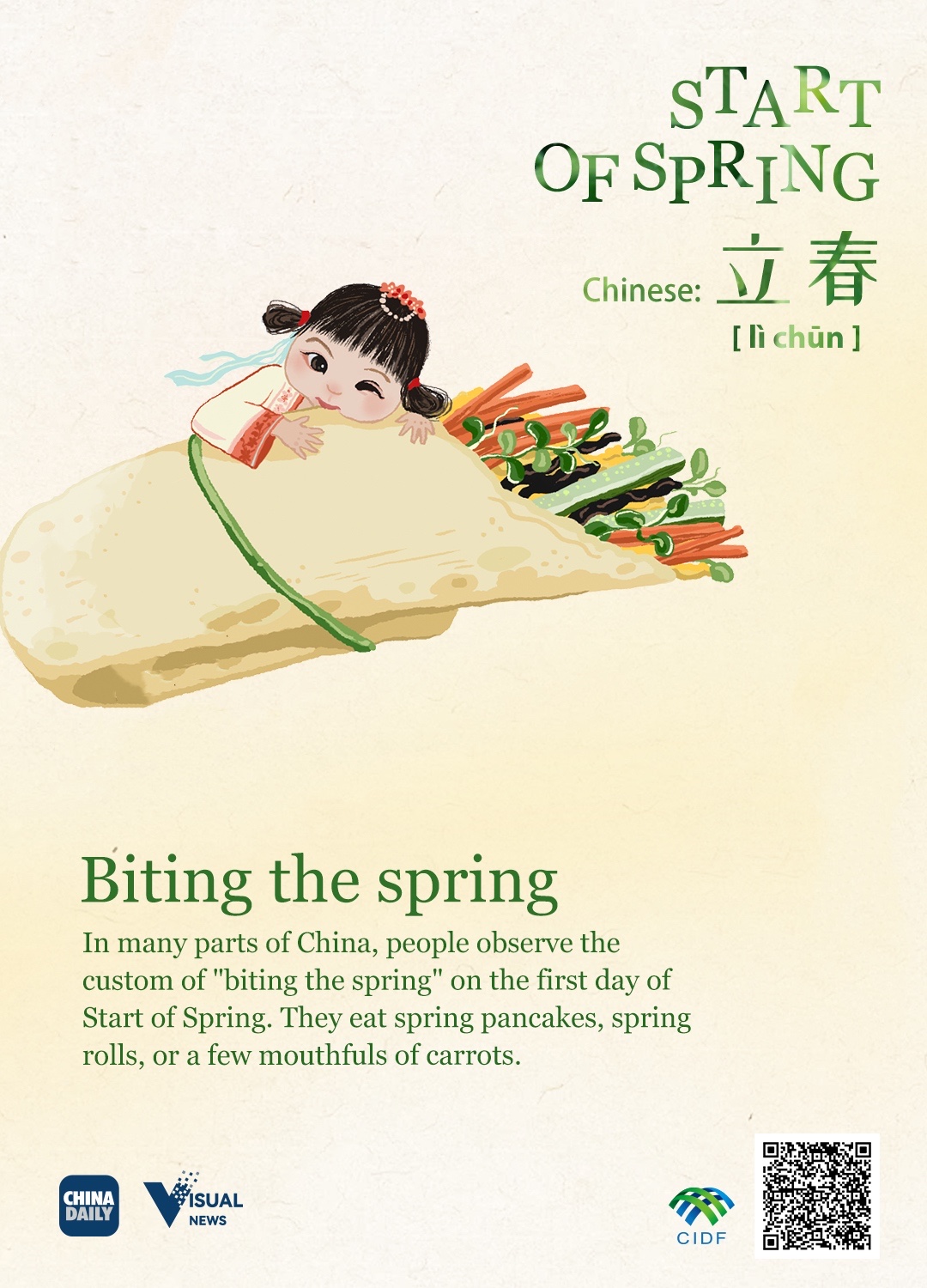
5. Biting the spring
In many regions across China, people observe the custom of "biting the spring" on the first day of Start of Spring. This involves eating special foods such as spring pancakes, spring rolls, or a few bites of carrots, which symbolize tasting the fresh vitality of the new season.
6. Making a Spring Ox
In Shaanxi province, communities practice the custom of making a "Spring Ox" right before Start of Spring. The local government hires skilled artisans to build a bamboo frame with wooden legs, cover it with paper, and paint the ox's likeness. Local people believe that using more red and yellow paper suggests a good harvest that year, while black paper indicates a poor one. Once made, the ox's eyes are painted in a special ritual, and the figure is then placed on an altar for worship.
7. Posting spring calligraphy and paintings
The custom of posting calligraphy and paintings on one's door in the spring first began during the Tang Dynasty (618-907). People would decorate their household gates on the first day of Start of Spring to welcome spring and pray for good fortune.
8. Appreciating plum blossoms
Plums blossom from the 12th month of the Chinese calendar to the second month of the following year. The plum blossoms, as they thrive in the cold, are admired for "fighting against the cold". In Chinese tradition, the plum blossom, orchid, bamboo, and chrysanthemum are honored as the "four gentlemen" of flowers.
9. Welcoming spring
The tradition of welcoming spring in China on the first day of Start of Spring began about 3,000 years ago. People would hold ceremonies to honor Gou Mang, the god of spring, who is in charge of agriculture. By the Qing Dynasty (1644-1911), these ceremonies had evolved into an important folk activity. In Beijing, government officials performed the spring welcome in the wild field near Dongzhimen, known as the east gate of Beijing.
Learn Chinese
立春
lì chūn
Start of Spring
春饼
chūn bǐng
spring pancakes
春卷
chūn juǎn
spring rolls
咬春
biting the spring
yǎo chūn
赏梅
shǎng méi
appreciating plum blossoms
佩春燕
pèi chūn yàn
wearing fabric swallows
制作春牛
zhì zuò chūn niú
making a Spring Ox
春天的开始
chūn tiān de kāi shǐ
beginning of spring
春江水暖鸭先知
chūn jiāng shuǐ nuǎn yā xiān zhī
When the river warms in spring, the ducks are the first to know.
立春到来,民间会举办隆重的仪式迎春。
lì chūn dào lái,mín jiān huì jǔ bàn lóng zhòng de yí shì yíng chūn。
As Start of Spring arrives, people in China traditionally hold grand ceremonies to welcome the season.
立春第一天,人们会在家门前贴春帖、挂春画,迎接春天的到来,并祈求好运。
lì chūn dì yī tiān,rén men huì zài jiā mén qián tiē chūn tiē、guà chūn huà,yíng jiē chūn tiān de dào lái,bìng qí qiú hǎo yùn。
People would decorate their household gates with spring calligraphy and paintings on the first day of Start of Spring to welcome the season and pray for good fortune.