Guide to preparing music and fine arts portfolios for university applications

Dear students,
When applying to arts-related or other practice-based, creation-oriented programs at universities in China, you may find that, beyond the standard application materials, a personal portfolio is also required. You may have questions such as:
- What should a portfolio showcase?
- How should a music portfolio be prepared?
- How should a fine arts portfolio be prepared?
- What rules must be followed when preparing your portfolio?
- What points should be noted when submitting application materials via online systems?
Below is a practical guide outlining key points for preparing music and fine arts portfolios. We hope it will assist you in preparing your application and planning your future studies in the arts.
Q1: What should a portfolio showcase?
A portfolio is a key reference used by admissions reviewers to evaluate you across three main dimensions:
1. Professional fundamentals:
Reviewers assess whether you possess solid professional skills and technical proficiency. For example, applicants to music programs are expected to demonstrate accurate, confident, and fluent instrumental or vocal skills, while fine arts applicants should show effective command and application of basic artistic elements such as color, form, and composition. The portfolio serves as an important basis for evaluating your current professional level.
2. Personal creativity:
A portfolio is more than a display of technique; it offers insight into your artistic individuality and independent thinking. Reviewers look for a distinctive creative perspective, sustained engagement with specific themes, and the potential to express personal ideas through visual or auditory language.
3. Study or research plan:
The content of your portfolio should be closely linked to your proposed study or research plan, demonstrating clear direction, thoughtful preparation, and a well-considered vision for your future academic and artistic development.
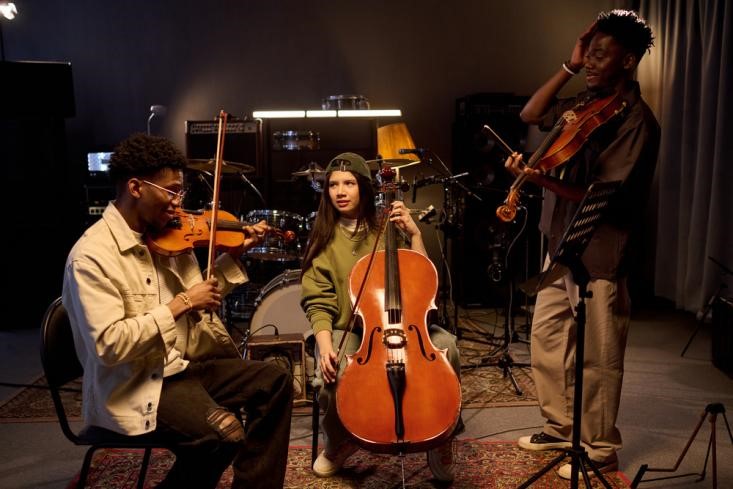
Q2: How should you prepare a music portfolio?
First, consult the official admissions brochure of the university you are applying to, or contact the institution's international student admissions office to learn about specific requirements related to content, format, and submission channels.
In general, a music portfolio typically includes the following items:
1. Performance video for instrumental or vocal majors:
Select two to three pieces of different styles and record complete performance videos to demonstrate your grasp of musical structure and interpretation.
At the beginning of the video, briefly state your name, intended major, and the titles of the pieces.
Ensure audio and video are synchronized, retain the original sound, and avoid post-production pitch correction.
MP4 is the most commonly accepted format. Keep individual file sizes manageable. Use a fixed camera position to fully capture both yourself and your instrument. Dress appropriately and ensure a clean, orderly setting.
Always follow the specific guidelines issued by the university.
2. Composition portfolio (for composition majors):
Applicants are generally required to submit two to three original compositions, including both musical scores and corresponding recordings, accompanied by brief explanatory notes outlining creative intent.
3. Academic papers (music theory or arts theory):
You may submit one to two published or high-quality academic papers. Providing an abstract in Chinese or English is recommended.
Q3: How should you prepare a fine arts portfolio?
A fine arts portfolio typically includes the following items:
1. Main works:
Select several recent, completed works that best represent your current professional level. Your portfolio may include a range of formats such as sketches, oil paintings, designs, sculpture, and digital art, to showcase your comprehensive expression across different media and artistic forms.
2. Creative process:
It is recommended to select one to two series of works with a complete creative workflow. These should systematically present the process from conception and sketches to the final production. This demonstrates your creative thinking and allows reviewers to assess your thought process, problem-solving ability, and potential for sustained development.
3. Study or research plan:
Applicants to postgraduate programs should briefly outline the artistic research topic or creative direction they intend to pursue, drawing on the submitted works. Supporting materials such as concept sketches, project outlines, or theoretical references may be included to demonstrate your preliminary thinking and exploratory approach.
4. Labeling and arrangement:
Each work should be clearly labeled with essential information, including title, creation date, materials, and dimensions. Arrange the portfolio with clear logic, whether thematically or chronologically, to ensure clarity, readability, and flow.
5. Format and technical requirements:
Common image formats include JPG or PDF. Ensure sufficient resolution for details to be clearly visible, with colors accurately reflecting the original works. Avoid excessive post-processing or artificial enhancement. Always comply strictly with the institution's requirements regarding file size, quantity, and naming conventions.

Q4: What rules must be followed when preparing your portfolio?
1. Authenticity:
All submitted works must be your own original creations. Any form of plagiarism, imitation of others' work, or submission of work completed by a third party will lead to application rejection and may negatively affect your academic integrity record.
2. Appropriate content:
The themes of your works should be positive, healthy, and align with the basic direction of cultural and artistic dissemination. Applicants are strongly advised to refer to the research focus of the department and the academic interests of potential supervisors to ensure thematic relevance.
3. Prioritize quality over quantity:
The essence of a strong portfolio is quality, not quantity. Select works that best represent your highest current standard, and avoid padding the portfolio with repetitive or unfinished practice pieces.
Q5: What should be noted when submitting application materials via online systems?
When uploading your portfolio and other materials through online systems such as the Chinese Government Scholarship Information System, university admissions portals, or other designated platforms, please review the specific operational guidelines of the system or university in advance.
Pay attention to the following common requirements:
1. In most cases, only one file may be uploaded for each material category. If multiple documents are required, combine them into a single compliant file before submission.
2. Adjust your work according to the system's specifications for file format and size.
3. Keep filenames concise and clear, generally within the equivalent of 30 Chinese characters. It is recommended to include your name, intended major, and material type. Avoid using special symbols.
4. Do not upload files with passwords or macro instructions, as the system may fail to recognize them.
Tips:
The key to preparing a strong application portfolio lies in careful time planning and sustained creative focus. Working under pressure or rushing close to deadlines can undermine both creativity and quality. Allocate ample time to refine your work, develop multiple preliminary drafts, and select only the most accomplished pieces to present a polished and compelling demonstration of your talent.
We hope this guide helps you prepare your application materials efficiently and successfully gain admission to your ideal arts institution in China!
Source: Official WeChat account of the China Scholarship Council (ID: "gh_afaa09c3e5f3")