Shanghai hosts inaugural low-altitude economy expo
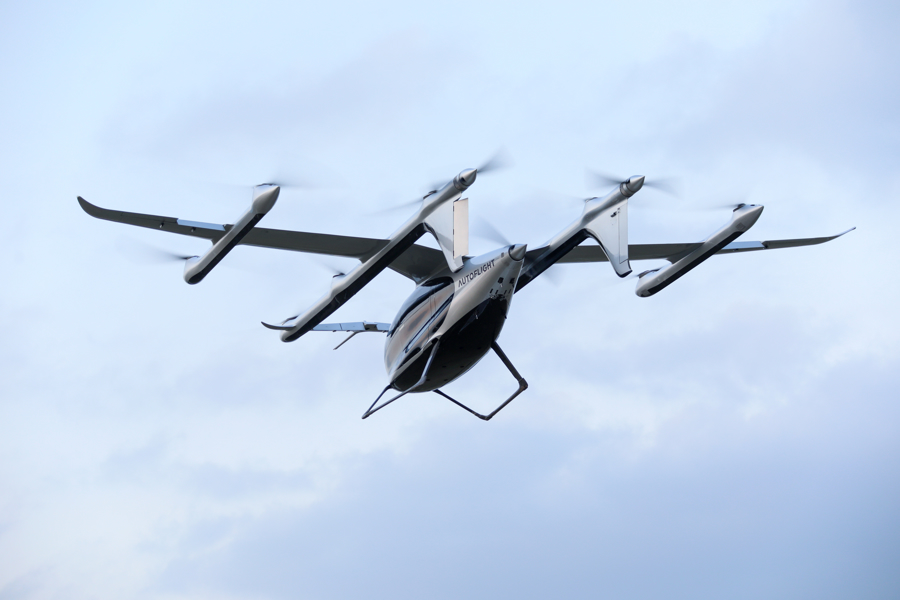
Shanghai, a rising leader in China's low-altitude economy, hosted the inaugural International Advanced Air Mobility Expo on July 23. The event highlighted the latest innovations in electric vertical takeoff and landing aircraft and other technologies shaping the future of aviation.
The expo brought together nearly 300 leading companies to collaborate on propelling China's low-altitude economy toward a sustainable and prosperous future.
Often dubbed "flying cars", eVTOLs represent a new era in aviation, with Shanghai leading the charge in this revolution.
Of the five companies in China achieving initial flights of eVTOLs weighing over one ton, four are based in Shanghai. Their success has elevated China to the top tier, alongside the United States, in this rapidly evolving sector.
The expo underscored Shanghai's commitment to fostering innovation and collaboration in the low-altitude economy.

Gu Chunting, deputy head of the Council for the Promotion of International Trade Shanghai, emphasized that industry, ecosystem, and real-world applications are essential for the full development of the low-altitude economy.
He said the show aims to connect stakeholders from government, academia, and industry to foster the application of the technology in real-world scenarios.
Shanghai's leadership in the eVTOL sector stems from its vibrant ecosystem that nurtures innovative startups. Entrepreneurs such as Xie Ling of Vertaxi and Tian Yu of AutoFlight have found the city a fertile ground to pursue their aviation ambitions.
Yue Tingting, vice-president of Vertaxi, highlighted the company's need for new supply chain partnerships as it moves through the evolving research stages.
She said that they hoped to find companies with the technological and manufacturing ability to come together to promote industry development.
Shanghai is taking a pragmatic approach to low-altitude economic development, with each district leveraging its unique strengths.
Qingpu district draws on its expertise in "Beidou-low altitude-information" integrated technology for industrial logistics applications, while Jinshan district is developing an industrial chain centered around the East China Unmanned Aerial Vehicles Base.
The city is also constructing a comprehensive infrastructure network to support the low-altitude economy, consisting of facilities, airspace, routes, and services.
Shanghai plans to establish a municipal-level low-altitude flight service center to provide streamlined services to operators, setting a precedent for public services in this emerging field.
The expo showcased a range of groundbreaking achievements from Shanghai-based companies. TCab Tech secured China's largest single order for eVTOLs, with a $1 billion agreement for 350 aircraft from Autocraft of the United Arab Emirates.
AutoFlight's cargo eVTOL, CarryAll, received the airworthiness certificate from the Civil Aviation Administration of China on July 21, becoming the world's first fully certified ton-class eVTOL after securing the type certificate and production certificate last year.
As the low-altitude economy takes off, collaboration between companies and regions is more critical than ever.
Insky's project director, Zhang Muhan, expressed enthusiasm about the expo, calling it a great opportunity to explore more collaboration opportunities in UAV software development.
Shanghai is working with cities in the Yangtze River Delta region to establish the first inter-provincial low-altitude air transport network, with the goal of creating a national demonstration zone for the low-altitude economy.

Sources: Jiefang Daily, Shanghai Observer