Shanghai expands driverless taxi service
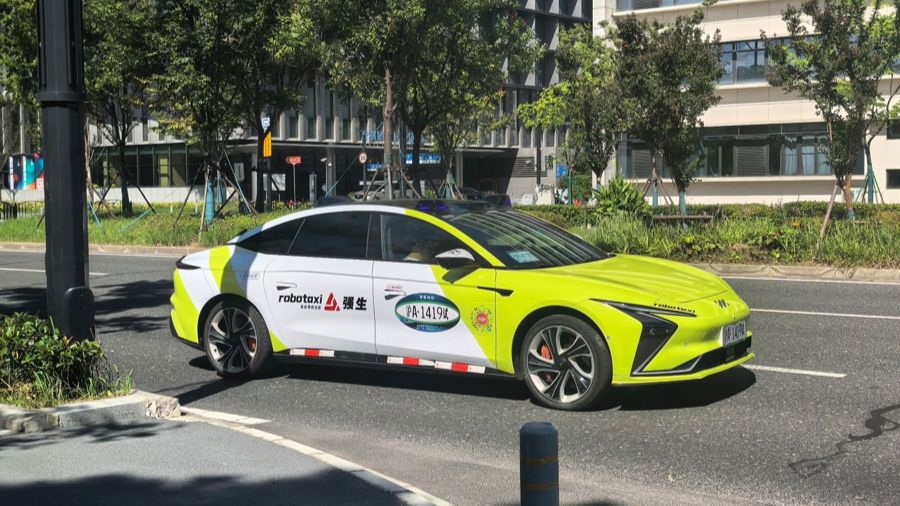
Shanghai's Lin-gang Special Area launched driverless taxi services for public use on Aug 15, marking a significant milestone in the city's autonomous vehicle development.
The launch follows the latest round of demonstration operation licenses issued during the 2025 World Artificial Intelligence Conference on July 26, when multiple intelligent connected vehicle companies were approved for driverless trials and services. This marks a new stage in Shanghai's push for the large-scale and regulated rollout of autonomous mobility.
Passengers can currently access 58 designated pick-up and drop-off locations through the ZhixingZhilian (致行智联) mini-program. The service costs 16 yuan ($2.22) for the first five kilometers, with an additional 4 yuan per kilometer thereafter.
Lin-gang has designated 551.7 kilometers of roads across 245 routes within a 386-square-kilometer area for autonomous driving tests. Currently, 22 companies are operating 364 vehicles for road tests, demonstrations, and driverless trials. A total of 41 test licenses have been issued to five companies, and 14 vehicles have received approval for demonstration operations.
Besides taxis, Lin-gang is applying unmanned technologies in diverse fields, including intelligent bus routes for commuting, university transport, healthcare access, and tourism. Autonomous heavy-duty trucks handle container transfers between the integrated transport hub, the Donghai Bridge, and the Yangshan Port.
Unmanned equipment also supports city management by patrolling for illegal dumping, parking violations, and traffic enforcement.
Looking ahead, Lin-gang plans to further integrate industry, application, and regulation to ensure the safe and scalable commercialization of autonomous vehicles. The area aims to leverage its first-mover policy advantages and wide range of application scenarios to build a robust ecosystem for autonomous driving.
Source: Shanghai Observer


FAQs
- Do I need a physical marriage certificate when applying for a residence permit for private affairs?
- Do I need to declare my ADHD medication to customs during an airside transit at Shanghai Pudong Airport?
- Is Wusongkou International Cruise Terminal an eligible port under the 240-hr visa-free transit policy?
- What are the customs and quarantine requirements for pets entering or leaving China via Shanghai Pudong airport?