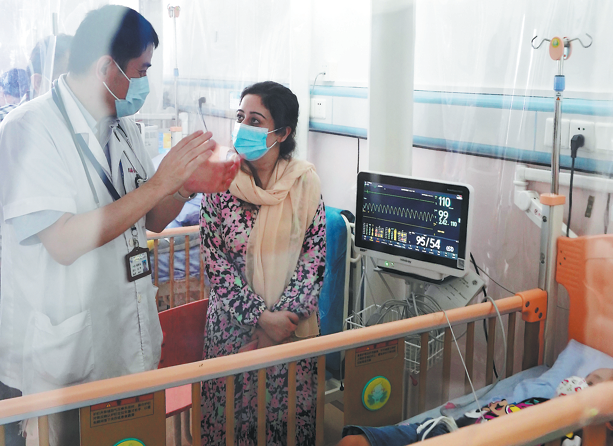
Shanghai hospital, local firm donate patented medical device to Pakistan
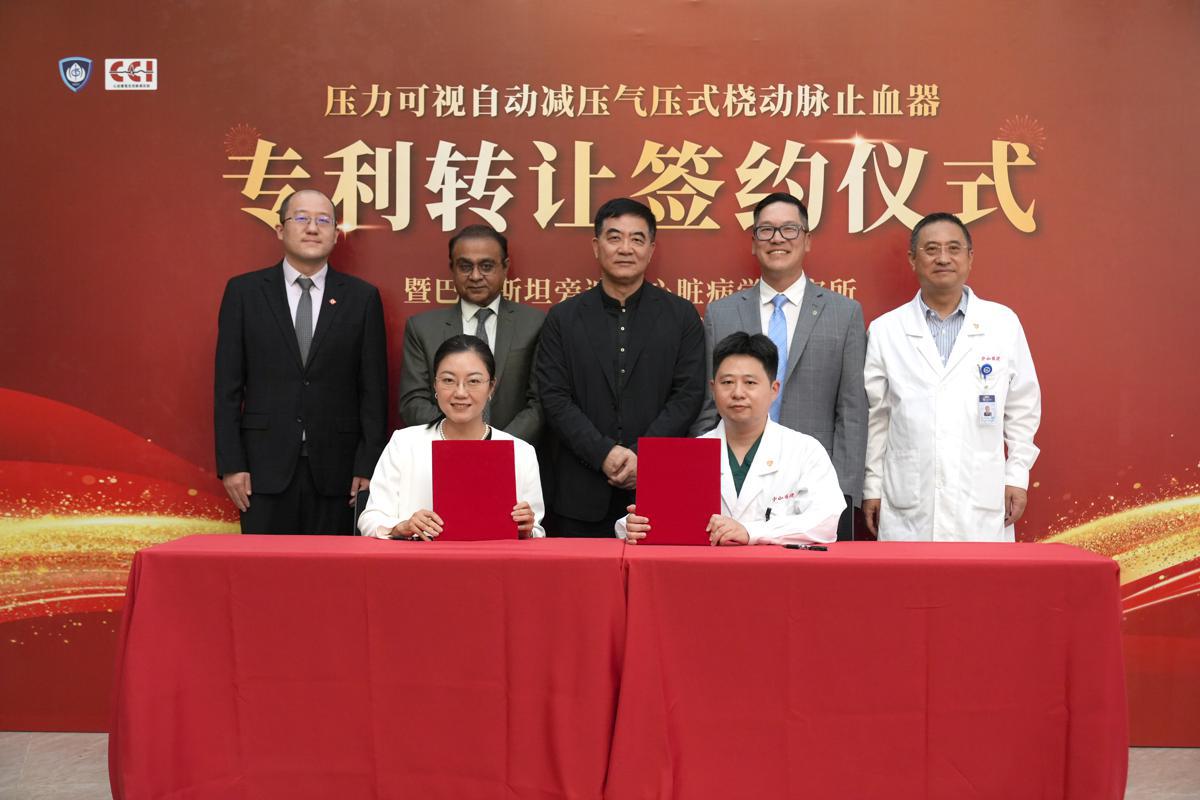
A patent transfer ceremony for a radial artery hemostasis device was held at Zhongshan Hospital Affiliated with Fudan University in Shanghai on Aug 20. At the event, a local company donated 200,000 yuan ($27,870) worth of the devices to the Punjab Institute of Cardiology in Pakistan.
The hospital said the donation marked a new chapter in China-Pakistan medical cooperation, underscoring the humanitarian bond across borders.
The initiative was inspired by a Chinese citizen surnamed Ji, who had been working in Lahore, Pakistan. Four months ago, he returned to China after suffering an acute myocardial infarction. At Zhongshan Hospital, doctors spent three hours successfully reopening his blocked artery.
What impressed Ji most was the small transparent device used after the surgery. Wrapped around his wrist, it provided efficient and painless hemostasis, in sharp contrast to the traditional sandbag compression method used in Pakistan, which often causes discomfort and complications. This experience inspired him to have the idea of bringing the medical technology, which is already widely used in clinical settings across China, to patients in Pakistan.
Ge Junbo, an academician of the Chinese Academy of Sciences and a leading cardiologist, explained that coronary interventions are usually performed through the radial artery in the wrist. Although the procedure is minimally invasive, effective postoperative hemostasis is vital.
The device uses a precision balloon pressure system to stop bleeding while minimizing pressure on surrounding tissues. By contrast, Pakistan’s traditional sandbag method may lead to prolonged bleeding, hematomas, or nerve damage, he said.
Zhou Jian, president of Shanghai Zhongshan Hospital, said, "Doctors understand what patients truly need, while engineers know how to best meet such needs through techniques. Such devices show the power of combining medical expertise with engineering innovation."
"This event symbolizes the cross-national transmission of the medical humanitarian spirit. In the future, we will do more in this area, not only exporting advanced technology but also collaborating with international partners to train talent and share experiences," said Ge.
Consul-General of Pakistan to Shanghai, Shehzad Ahmad Khan, also delivered a speech at the signing ceremony.