AI takes the wheel in Shanghai's traffic battle
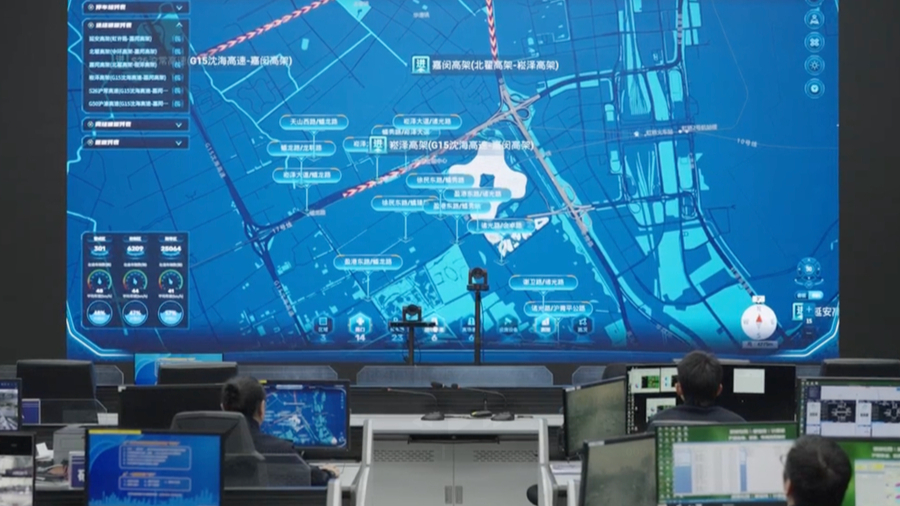
Shanghai has been using an artificial intelligence "traffic congestion management model" to alleviate congestion at intersections, resulting in improved traffic conditions citywide, local police authorities said at a press conference on Jan 15.
Deployed at 360 intersections, the AI model has increased average vehicle speeds by 12.9 percent, thanks to its ability to analyze traffic and generate optimal solutions.
Xiao Bin, head of the Science and Technology Division of the Shanghai Public Security Bureau's Traffic Management Department, said the model, trained with more than 950,000 pieces of professional knowledge and 48 rounds of optimization, learned from frontline officers and signal control experts to address immediate congestion issues.
A tidal lane strategy implemented at the Changhai Road-Hengren Road intersection near Changhai Hospital, for instance, increased traffic flow by 19.1 percent and average vehicle speed by 51.2 percent, from 17.5 km/h to 26.4 km/h, after the AI system identified the hospital's parking lot saturation as the main source of congestion.
The model's congestion alert accuracy has reached 96.7 percent, while alert response time has decreased to 5 to 10 seconds, enabling real-time traffic control.
Shanghai traffic authorities plan to expand the AI system to 1,800 intersections by the end of October, further enhancing the efficiency of the city's road network.
Source: Shanghai Observer


FAQs
- Do I need a physical marriage certificate when applying for a residence permit for private affairs?
- Do I need to declare my ADHD medication to customs during an airside transit at Shanghai Pudong Airport?
- Is Wusongkou International Cruise Terminal an eligible port under the 240-hr visa-free transit policy?
- What are the customs and quarantine requirements for pets entering or leaving China via Shanghai Pudong airport?