Spicy dishes gain popularity among international visitors in Shanghai
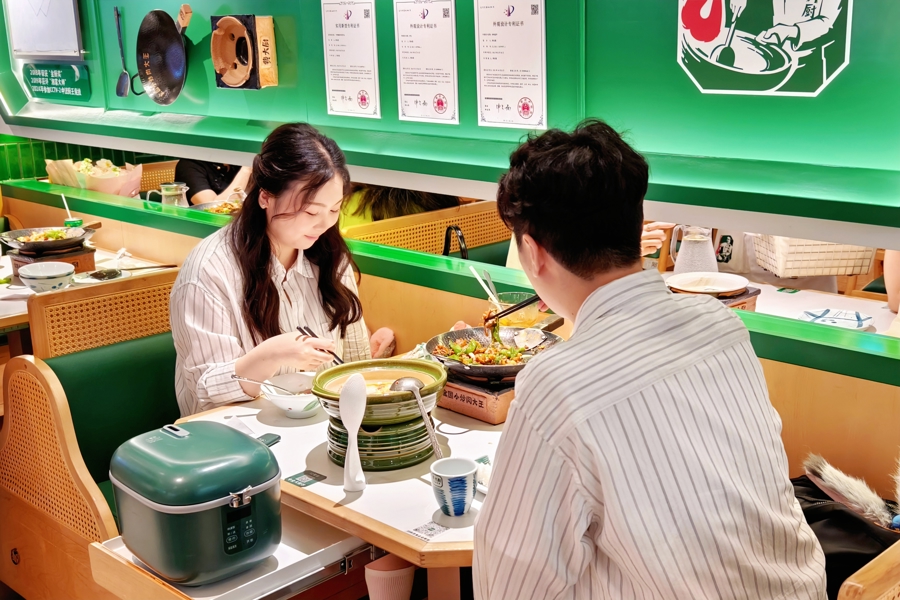
Spicy Chinese dishes are gaining popularity among international visitors in Shanghai, as the city's inbound tourism continues to grow and more travelers seek out local dining experiences shared on social media.
At a Chef Fei restaurant on Nanjing Road Pedestrian Street, many people waiting in line are visitors from overseas. The chain, known for its stir-fried beef with peppers, has become popular among young South Korean tourists after appearing in social media posts featuring South Korean celebrities visiting Shanghai.
A South Korean visitor said she came after seeing recommendations online and added that she already enjoyed spicy food.
Hong Jun, manager of the Nanjing Road outlet, said the number of international diners has increased in recent years, mainly from Southeast Asia, South Korea, Europe, the United States, and Russia. Southeast Asian visitors make up the largest share, while South Korean diners have shown the fastest growth, he added.
Hong recalled that a Thai family of seven or eight people visited the restaurant two or three times during a single trip to Shanghai.
Hong said diners from different regions also show different preferences. Stir-fried pork with peppers is a must-order dish for many South Korean and Russian visitors, with some ordering several servings at a time. Travelers from Thailand, Malaysia, and other Southeast Asian countries tend to prefer spicy shrimp and lemon tea.
The continued expansion of China's visa-free entry policies has played a key role in boosting inbound tourism. In 2025, Shanghai recorded 909,100 visits by South Korean travelers, up 103.62 percent year-on-year.
Since the second half of 2024, spicy restaurants such as Haidilao Huoguo and Long Time Ago BBQ have gained traction among South Korean visitors.
Shanghai's dining scene brings together diverse flavors from across China and around the world, offering international visitors a wide range of choices from local specialties to spicy dishes and global cuisines.
As the 2026 Global Taste in Shanghai: Americas Flavor Season gets underway, more restaurants featuring flavors from the Americas are attracting public attention. Mexican cuisine, known for its use of chili, has also become a popular choice among international diners seeking spicy flavors.
At Pistolera Mexican Cantina, international diners account for about 80 percent of customers, many of them from Europe, the United States, India, South Korea, and Thailand. At Chihuahua Mexican restaurant, Aeromexico crew members stop by for beef tacos almost every time they land in Shanghai.
Beyond restaurants, supermarkets have also become a place for international visitors to discover spicy Chinese products. At the Ole supermarket in New One department store, nearly 200 international customers visit each day, with the number rising to 500 or 600 during holidays and peak travel periods.
Xu Chunying, a supermarket employee, said a Thai blogger with more than 1 million followers had recommended Chinese products including luosifen rice noodles and hot pot base on social media, drawing many Southeast Asian customers to the store with screenshots from the videos. Some buy more than 10 packs at a time, and the products have frequently sold out, she added.
The store has placed these popular products in prominent display areas to make them easier for international shoppers to find.
For many international visitors, dining in China has also become a memorable part of the travel experience.
Haidilao Huoguo, for example, is known for services such as bianlian, a Sichuan Opera mask-changing performance, as well as noodle-pulling shows, unlimited fruit during waiting times, and free manicure services. Some South Korean travelers have listed a meal at Haidilao as a must-do experience in Shanghai travel guides shared online.
Long Time Ago BBQ restaurant has also attracted South Korean customers with Chinese-, English-, and Korean-language menus, number-calling screens, and portable translation devices.
Source: Jiefang Daily