Shanghai tech fair spotlights booming commercial cryptography sector
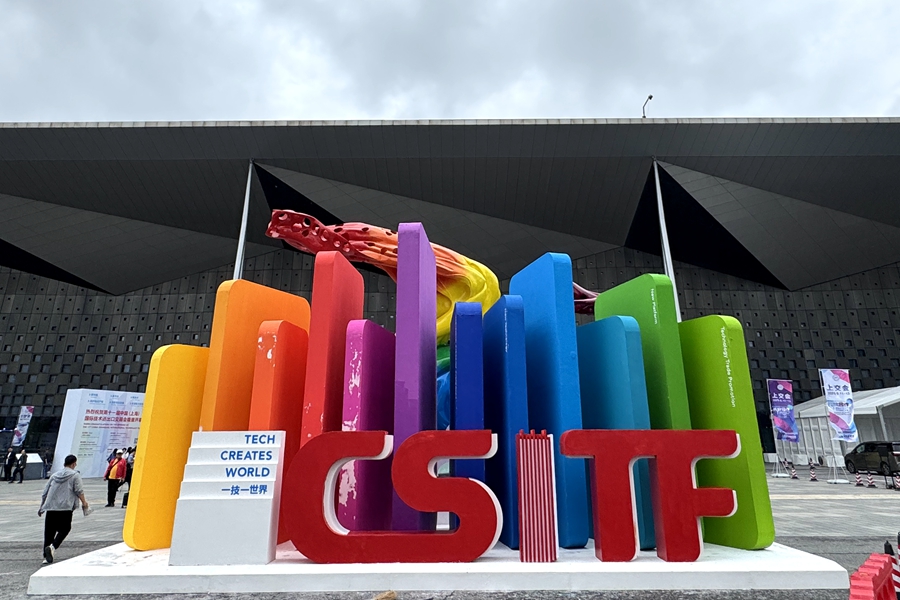
The burgeoning commercial cryptography sector has stolen the spotlight at the ongoing China (Shanghai) International Technology Fair, where key industry players are highlighting innovations, applications, and international collaborations.
Venustech, a cybersecurity firm controlled by China Mobile, emphasized its strategic focus on commercial cryptography in an interview on June 11.
At the fair, which will run through June 13, Venustech showcased a comprehensive suite of one-stop cryptography services, integrating its cybersecurity expertise to enhance the value and resilience of cryptographic applications.
"Venustech views commercial cryptography as a strategic direction, dedicating significant resources to building a one-stop service system for users," said Zhu Zhiyong, head of commercial cryptography business at Venustech.
He added that the company leverages its security insights to assess cryptographic applications from an attacker's perspective, ensuring robust security planning and seamless integration of security capabilities with cryptographic devices.
Koal Software, a veteran in data security and cryptography since 1998, highlights its pioneering work in post-quantum cryptography.
Wei Jie, vice-general manager of Koal Software, said that Koal is the first domestic company to pass the China Academy of Information and Communications Technology (CAICT) testing and certification for its anti-quantum cryptography algorithm products.
According to Wei, the company has also been actively involved in drafting national standards for data encryption and interaction, aligning with the country's evolving cryptographic landscape.
The Shanghai Information Security Testing Evaluation and Certification Center (SISTECC) emphasizes the growing scale and innovation within the commercial cryptography exhibition at CSITF.
Zhu Shaohui, director of the Innovation Research Institute at SISTECC, noted the increased participation from cryptography associations across China, showcasing diverse technologies and solutions.
"This year's commercial cryptography exhibition is larger than last year, with institutions from all over the country participating," Zhu said.
He further mentioned the emergence of new trends, particularly anti-quantum cryptography algorithms designed to address potential vulnerabilities posed by quantum computing, suggesting that the sector will witness significant changes in the next three to five years.
Artificial intelligence (AI) has also made waves. Venustech, for example, promptly launched a comprehensive set of AI model application security solutions after the Spring Festival in 2025, capitalizing on the rising popularity of open-source large model technologies such as DeepSeek.
Zhu from Venustech noted AI's potential in enhancing security product efficiency, reducing user barriers, and improving cost-effectiveness.
He also highlighted that large language models can be used in commercial cryptography for communication protocol implementation analysis and key generation, boosting the randomness and security of the keys.
International collaboration emerged as another key theme. Venustech is expanding its global presence, particularly in Africa and Southeast Asia, and aligning with China's Belt and Road Initiative, becoming one of the first security companies to go abroad.
Koal Software highlighted its success in exporting a complete domestic cryptography system, including domestically produced CPUs, operating systems, and databases, to a North African country.
According to Wei, this project showcased the maturity and viability of China's cryptographic standards and technologies on the international stage.
SISTECC also noted the vital role of international cooperation in advancing commercial cryptography, adding that some Chinese algorithms have already become international standards.
Zhu from SISTECC pointed out that China still has a long way to go in the global cryptography sector. However, with the increasing cooperation on digital economy between China and other countries along the Belt and Road, the potential is limitless.